
Basic Information
Scientific classification
- Chinese name: Snowflake Eel (Echidna nebulosa | formerly known as Muraena pardalis)
- Scientific name: Echidna nebulosa (syn. Muraena pardalis)
- Classification: Medium-sized fish
- Family and Genus: Muraenidae Echidna
Vital signs data
- Body length: 50–80 cm, maximum ~100 cm
- Weight: Small to medium-sized moray eel, varying depending on individual and region.
- Lifespan: Approximately 10–20 years
Significant features
Blunt teeth; primarily feeds on crustaceans; nocturnal; hides in reef crevices; drifts as juvenile willow leaves.
Distribution and Habitat
Tropical Indo-Pacific coral reefs/rocky reefs with hard bottoms of 1–30 m, often with crevices.
Appearance
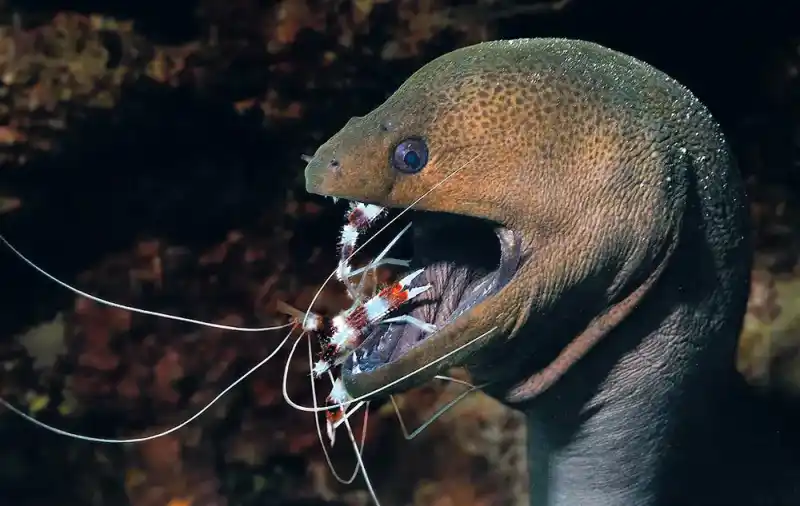
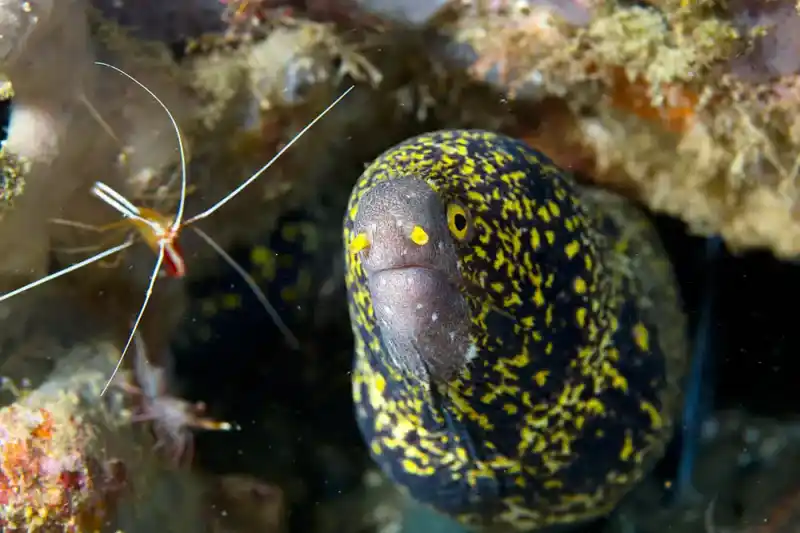
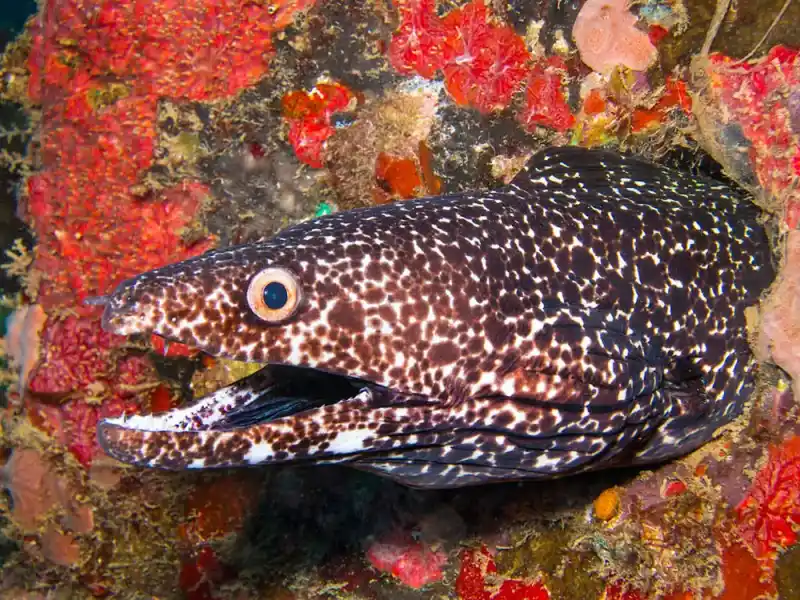
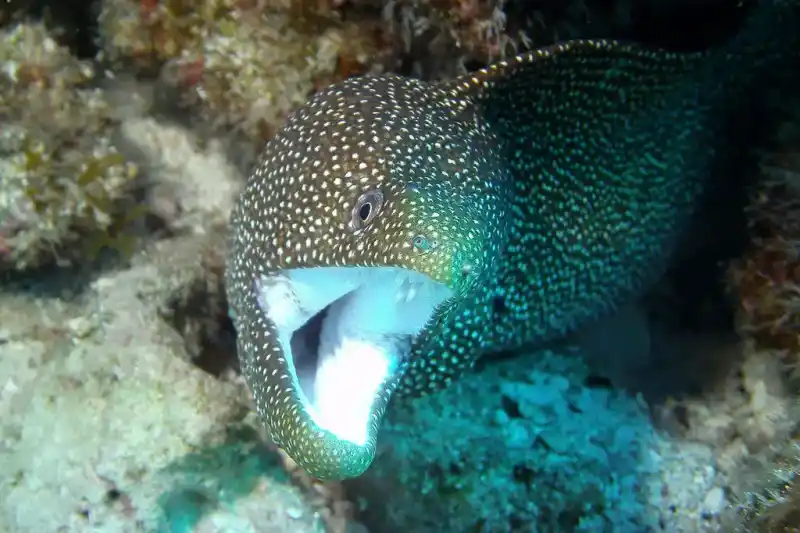
Snake-like body, no pectoral fins; yellow and white cloud-like markings; short, blunt molars; tubular nostrils.
Detailed introduction
The snow swamp eel ( Echidna nebulosa ) is a typical blunt-toothed swamp eel of the Muraenidae family. Historically, it appeared in literature under the old name Muraena pardalis (often mistakenly written as "paradalis"), so attention should be paid to synonyms when searching for this species. Its molarized teeth are adapted for crushing crustaceans , unlike the "sharp-toothed" swamp eels that prey primarily on fish.
Ecology and Biology
Diet: Primarily feeds on hard-shelled invertebrates such as crabs, shrimps, and mollusks , occasionally consuming small fish; highly nocturnal.
Habits: During the day, it hides in crevices and rock gaps , with only its head exposed; it can swim backwards to enter and exit narrow crevices.
Reproduction: Oviparous, the larvae are willow leaf larvae (leptocephalus) , which drift with ocean currents and then metamorphose to settle permanently.
Morphology and Recognition
It has a snake-like body shape and no pectoral fins ; its head and sides have yellowish-white spots and cloud-like patterns ; its teeth are short and blunt , with obvious molarization; its nostrils are tubular and protrude outwards, and it has a sensitive sense of smell.
Body size and lifespan
Body length: Commonly 50–80 cm , with a maximum of approximately ~100 cm .
Lifespan: Estimated 10–20 years (major variation in wild/aquarium).
Distribution and Habitat
Widely distributed in tropical Indo-Pacific coral reefs and rocky reefs, commonly found at depths of 1–30 m ; prefers hard bottoms with crevices , and also inhabits lagoons and harbors.
Human-to-human interaction and conservation
Interaction: They generally do not attack unprovoked , but may accidentally bite when fed or teased; in a few sea areas, large predatory fish may pose a risk of ciguatera poisoning , so follow local advice (science tips).
Conservation: Common species, affected by habitat degradation and ornamental trade; maintaining healthy reefs and regulated harvesting are important.
IUCN: Multiple sources indicate Least Concern (LC) (subject to the latest assessment).
Frequently Asked Questions
Q1: How to distinguish it from the fanged moray eel? The snowflake moray eel has short, blunt molars and prominent yellow-white cloud-like spots; the fanged moray eel has long, sharp teeth and tends to prey on fish.
Q2: Why do I see the old name "Muraena pardalis"? This is due to a classification update; the current valid name is Echidna nebulosa .
Q3: Will it attack divers? Usually not; avoid reaching out to feed it or touching its burrow.
Q4: Is it suitable for beginners? Not recommended; requires stable water quality, sufficient hiding spaces, and a good escape prevention design.


