Basic Information
Scientific classification
- Chinese name: Sea Snakes (Overview)
- Scientific name: Hydrophiinae/Laticaudinae (Elapidae)
- Classification: Squamata
- Family: Elapidae Hydrophiinae Laticaudinae
Vital signs data
- Body length: mostly 60–150 cm; large ones ~200 cm
- Weight: Small to medium-sized snakes, depending on the species.
- Lifespan: Several years to 10+ years (depending on species)
Significant features
Marine cobras; true sea snakes are viviparous, while sea serpents are oviparous; they have elongated single lungs, valve-shaped nostrils, salt glands, and paddle-shaped tails; they feed on fish and eels.
Distribution and Habitat
The main tropical and subtropical shallow sea and open ocean surface zone is the Indian Ocean-western Pacific Ocean; a few pelagic species extend to the eastern Pacific Ocean.
Appearance
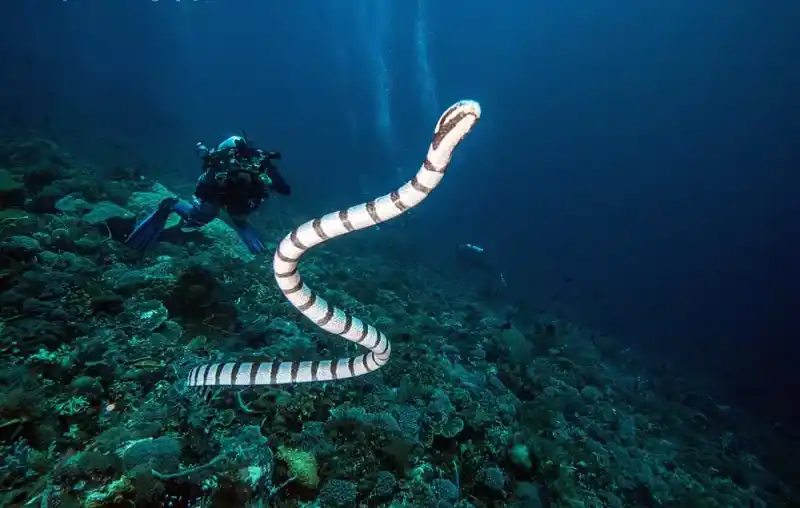
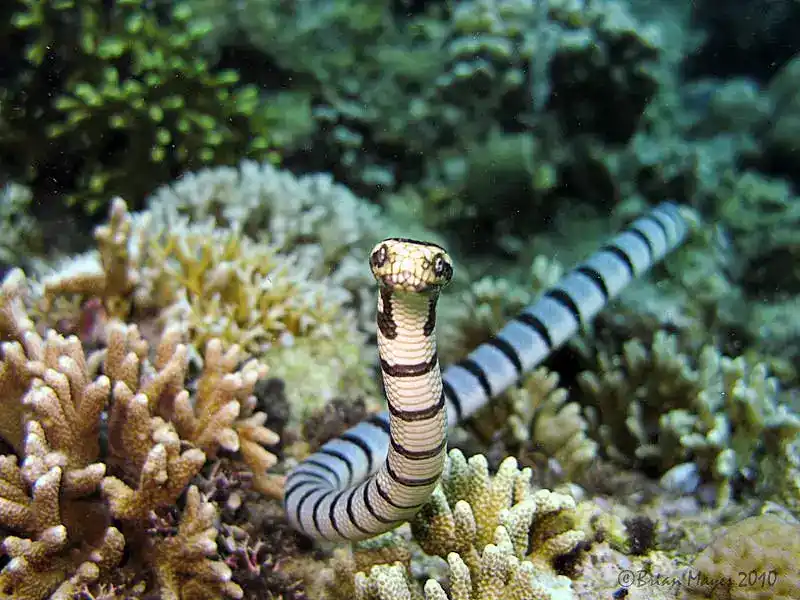
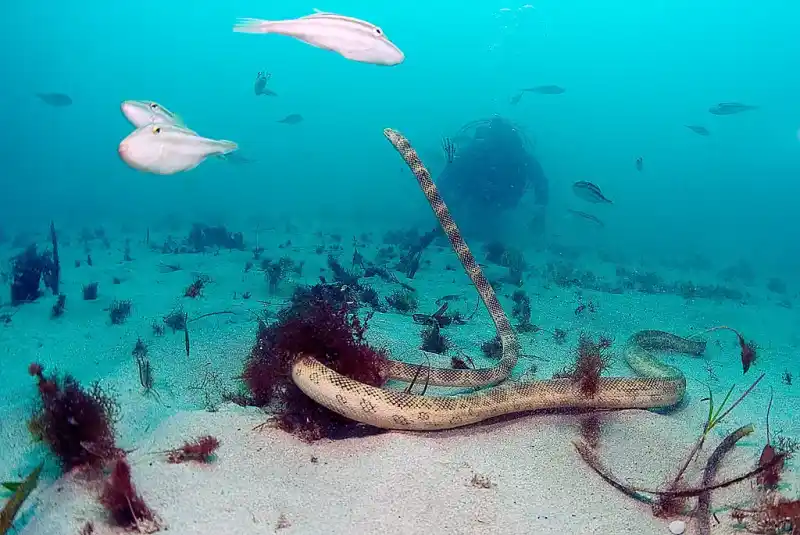
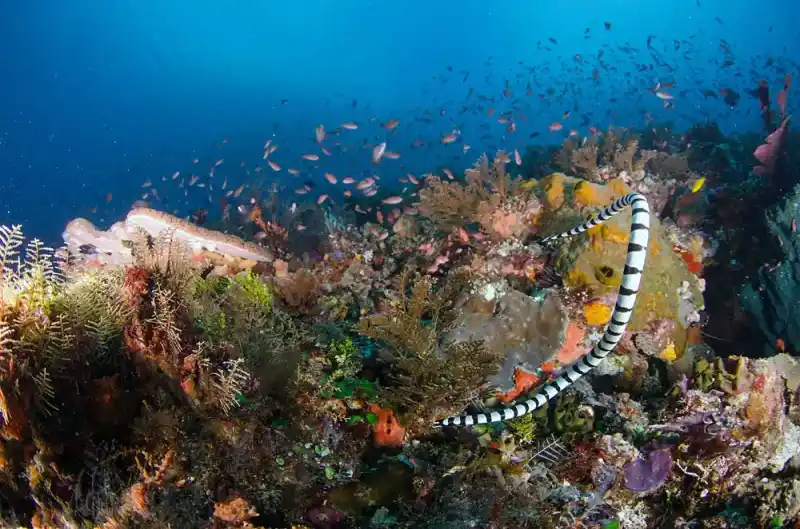
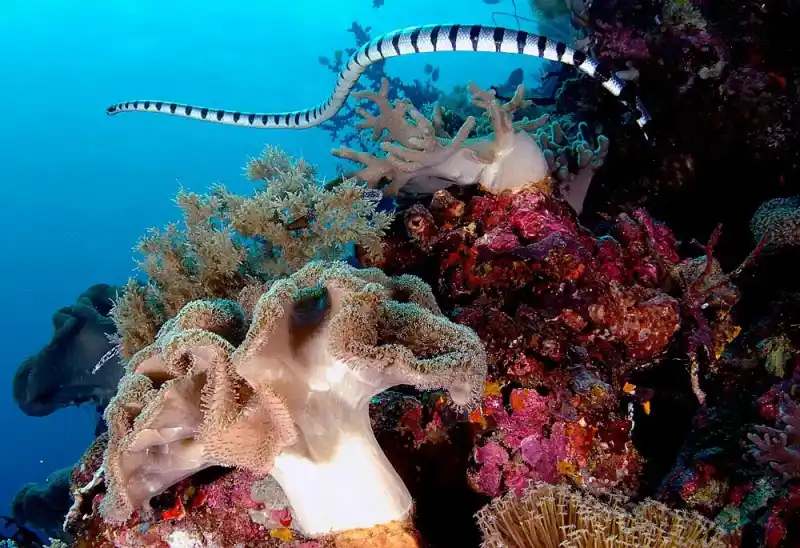
The sides of the body often have rings; the tail is strongly laterally compressed; the head is small and flat, with many smooth scales; the nostrils have valves.
Detailed introduction
Sea snakes generally refer to members of the family Elapidae that live in the ocean, mainly including two categories: true sea snakes (Hydrophiinae, almost entirely marine and viviparous ) and sea snakes/coral snakes (Laticaudinae, often called moray eels/sea serpents , mostly oviparous sea snakes that come ashore to lay their eggs , i.e., "sea serpents"). Both possess neurotoxins , but are generally not aggressive in their natural state.
Ecology and Biology
Respiration and osmotic regulation: It has an elongated single lung and valved nostrils ; the skin can perform a small amount of gas exchange ; it has salt glands to excrete salt to adapt to seawater.
Reproduction: True sea snakes are mostly viviparous and never need to come ashore; sea kraits ( Laticauda ) are mostly oviparous and need to come ashore to lay their eggs.
Diet: Primarily feeds on fish and eels , but also consumes crustaceans and cephalopods; mostly ambush or actively search for prey.
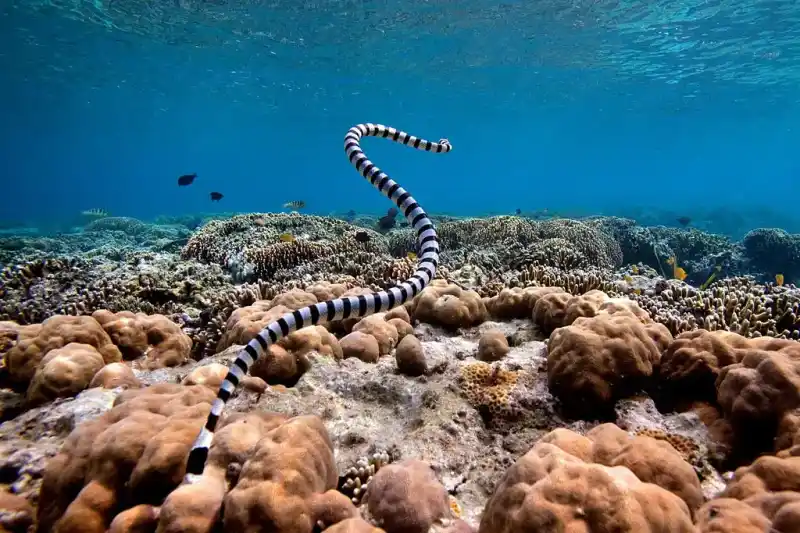
Behavior: Commonly found in shallow waters of coral reefs, lagoons, and continental shelves ; also found in pelagic forms (such as the yellow-bellied sea snake).
Morphology and Recognition
Tail: Typical laterally flattened paddle-shaped tail, improving propulsion efficiency.
Body surface: Scales are smooth or have weak ridges, and some species have black and white/yellow and black rings on the sides of the body.
Head: Small and flat head with valve-like nostrils that can be closed; venomous fangs behind the mouth; belongs to the cobra family.
Body size and lifespan
Body length: mostly 60–150 cm ; large ones can reach ~200 cm .
Lifespan: In the wild, it is mostly several years to 10+ years , depending on the species and environment.
Distribution and Habitat
Centered on the Indian Ocean-Western Pacific , they are distributed in tropical to subtropical coral reefs, seagrass beds, mud bays, and the outer sea surface ; pelagic species (such as the yellow-bellied sea snake) also occasionally reach the Pacific coast of the Americas in the Eastern Pacific.
Conservation and Threats
Threats: by-catch from fishing gear (longline/drift gillnet/trawling), habitat degradation (reef decline, seagrass bed loss), pollution and plastic debris, extreme sea temperature events.
Management: fishing gear improvement and safe release , key habitat protection, marine debris management and public education.
IUCN: This entry is a general overview of taxa (multiple genera and species), with significant differences in assessment among different species (LC–EN, etc.); this site marks it as unassessed (NE) .
Frequently Asked Questions
Q1: Do all sea snakes have to come ashore? No. True sea snakes are viviparous and can live their entire lives without ever coming ashore; ringed sea snakes are mostly oviparous and need to come ashore to lay their eggs.
Q2: Are sea snakes dangerous to humans? They rarely attack unprovoked , but they are neurovenomous snakes , so never touch or catch them (this is a science tip, not medical advice).
Q3: How to identify it in the field? Look for the laterally flattened paddle-shaped tail , valve-shaped nostrils, and possible black and white rings; commonly found on reef slopes and lagoons.
Q4: What should I do if I am accidentally caught? Follow the safe release procedure (use tools to untangle the fish and release it back into the water if possible).