Basic Information
Scientific classification
- Chinese name: Desert Scorpion
- Scientific name: Urodacus yaschenkoi
- Classification: Arthropoda
- Family: Urodacidae Urodacus Urodacus yaschenkoi
Vital signs data
- Body length: Adults are approximately 60–80 mm (with significant individual variation).
- Weight: Medium-sized scorpion; weight varies depending on the individual and nutritional status.
- Lifespan: Approximately 5–10 years (depending on wild and captive conditions)
Significant features
Typical arid-region scorpion; nocturnal; seeks refuge and moisture in deep burrows; uses strong pincers and stinger to subdue prey; viviparous.
Distribution and Habitat
Sandy and gravelly terrain in the arid and semi-arid regions of the Australian outback; self-dug burrows or hiding under rocks/dead wood.
Appearance
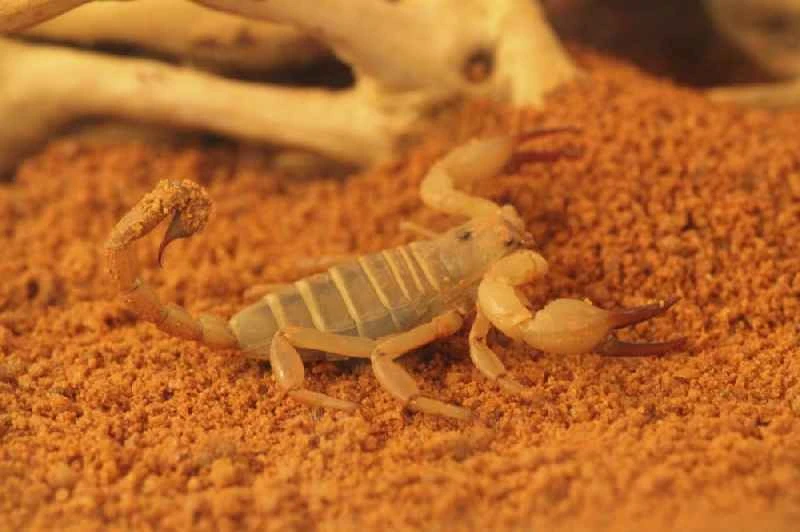
Its body color ranges from yellowish-brown to reddish-brown, similar to the color of soil; its chelicerae are relatively thick, its body is sturdy, its tail segment is moderately thick, and its venomous stinger is slender.
Detailed introduction
In the Australian context, the term " desert scorpion " usually refers to the yellow desert scorpion ( Urodacus yaschenkoi ), which belongs to the family Urodacidae . It is a typical medium-sized scorpion found in arid regions , adapted to desert and semi-desert environments. It digs deep burrows to escape the high temperatures and dryness and hunts at night.
Ecology and Biology
Daily routine: Typical nocturnal rhythm; hides in self-dug burrows or under rocks and dead trees during the day, and goes out at night.
Diet: It preys on small arthropods such as insects, spiders, and centipedes, using its strong pincers to control the prey and injecting venom with its tail stinger.
Reproduction: viviparous ; after hatchlings are born, they climb onto their mother's back and gradually leave to live independently after their first molt.
Behavior: Relying on deep caves for moisture retention and heat avoidance in extremely hot and dry environments, it is highly sensitive to changes in surface temperature and humidity.
Morphology and Recognition
Body length: Adults are about 60–80 mm (excluding chelipeds and tail curve), with considerable individual variation.
Body color: The body color varies from yellowish sand and yellowish brown to reddish brown , usually similar to the color of the soil in the habitat, which has a good camouflage effect.
Body shape: Chelicerae are relatively thick , body is sturdy, tail segment is moderately thick, and venomous needle is thin.
Distribution and Habitat
The yellow desert scorpion is mainly distributed in the arid and semi-arid regions of the Australian outback . It inhabits sandy or gravelly soils, low shrubs and grasslands . It likes to dig burrows in the sand , which can be tens of centimeters deep, to regulate temperature and humidity.
Humanity and Safety
Medical significance: Generally low to moderate risk for adults; stings can cause severe local pain , redness, swelling and transient tingling. Severe systemic poisoning is rarely reported, but extra caution should be taken for children, the elderly or those with allergies .
Protective measures: When camping in desert/arid areas, check your shoes, clothing and sleeping bag , and avoid walking barefoot; if stung, wash the wound with soap and water, apply a cold compress and keep still . If you experience difficulty breathing, a rash all over your body or persistent severe pain , seek medical attention as soon as possible.
IUCN: Urodacus yaschenkoi is currently not evaluated (NE) .
Frequently Asked Questions
Q1: Are desert scorpions "very deadly"? In most cases, they are not fatal to healthy adults, but stings are very painful , and a few people may experience more pronounced systemic reactions.
Q2: Where are they most likely to be encountered during the day? They are mostly hiding in self-dug burrows, under rocks or dead trees . It is not recommended to turn over rocks randomly to avoid disturbing and damaging their micro-habitat.
Q3: Can I keep them as pets? You must comply with local wildlife regulations; when keeping them as pets, you should provide a dry sandy substrate, hiding places and temperature gradients , and avoid touching them with bare hands.
Q4: What is the difference between it and the "Black Rock Scorpion"? Desert scorpions are mostly yellowish-brown/yellowish-brown in color and are found in arid regions; Black Rock Scorpions are mostly dark brown to jet black and are more commonly found on rocky slopes and forest edges.