Basic Information
Scientific classification
- Chinese name: Flower Spider
- Scientific name: Thomisidae (representative species: Misumena, Thomisus, etc., flower crab spiders)
- Classification: Arthropoda
- Family: Thomisidae Misumena Thomisus
Vital signs data
- Body length: mostly 4–10 mm (females are larger than males)
- Weight: Small spider; weight varies depending on species and individual.
- Lifespan: Approximately one year; some female spiders can survive beyond the season.
Significant features
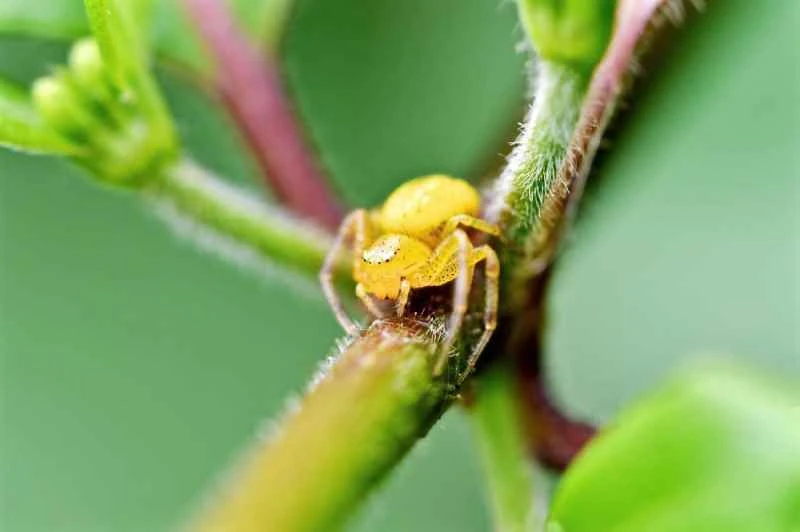
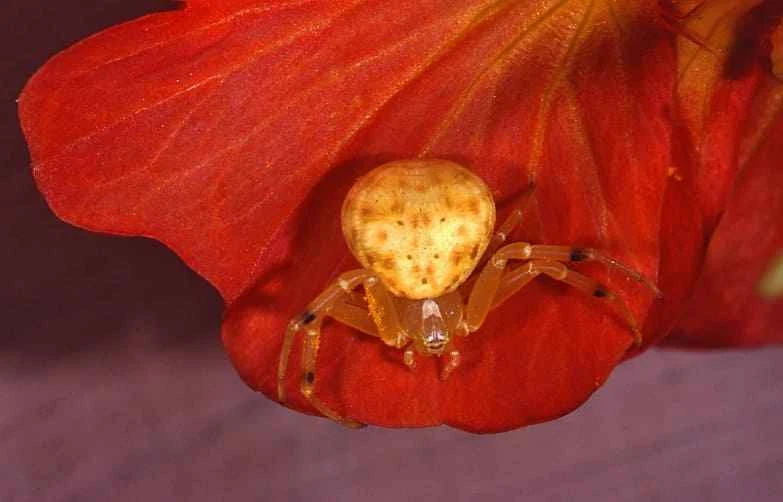
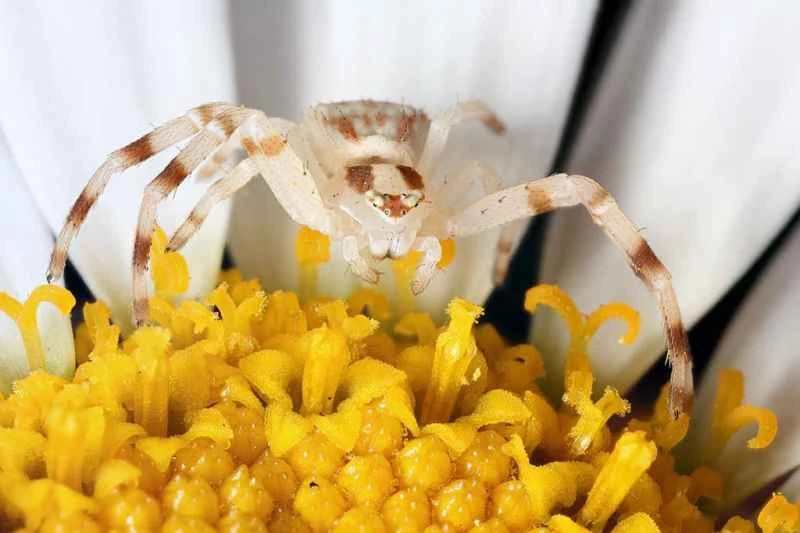
They ambush prey on flowers; they have a crab-like body and move laterally; some of their bodies can slowly change color to match the flower color.
Distribution and Habitat
Widely distributed in temperate and tropical regions worldwide; commonly found in meadows, fields, gardens, and forest edges with dense flowerbeds.
Appearance
The body is broad and flat, with thick and long forelegs; the flowers are mostly white, yellow, or light green, often similar to the base color of the petals.
Detailed introduction
Flower spiders , often referred to as "flower crab spiders" or "crab spiders on flowers," are members of the family Thomisidae that ambush prey on flowers . They do not weave typical large webs; instead, they rely on camouflage and ambush , lying in wait on petals or inflorescences for pollinating insects to approach, making them highly representative "stealth hunters" in flowerbeds.
Ecology and Biology
Feeding strategy: Mostly ambush predators , they often linger in the center of flowers or on the edge of petals, using camouflage to ambush pollinating insects such as bees, butterflies, and hoverflies.
Camouflage ability: Some species (such as Misumena vatia ) have the ability to slowly change their body color between white and yellow , so that their body color matches the flower they are perched on.
Locomotion: Named "crab spider", it has two relatively long pairs of legs and often moves sideways or diagonally , resembling a crab.
Reproduction: The female spider lays an egg sac on the back of a flower branch or leaf, wraps it with silk membrane and guards it for a short period of time; after hatching, the spiderlings gradually disperse to nearby vegetation.
Morphology and Recognition
Body length: Most flower spiders are relatively small , with females measuring about 4–10 mm and males even smaller.
Body shape: Typical crab-shaped outline : the first two pairs of legs are thick and long, suitable for grasping; the body is mostly wide and flat, which is conducive to lying flat on the surface of the petals.
Body color: Common flower colors include white, yellow, light green, and pink. Some have spots or stripes, which help them hide in flower beds.
Distribution and Habitat
Flower spiders are widely distributed in temperate and tropical regions worldwide , and are often found in grasslands, fields, forest edges, gardens, and thickets . They prefer areas with dense flowers and abundant flower-visiting insects , and are important predators in flower-covered ecosystems.
Humanity and Safety
Medical significance: Extremely low medical significance to humans; they are generally very shy and rarely bite people proactively; occasional bites are mostly mild local pain or redness and itching.
Ecological value: By preying on large numbers of pollinating insects and other small arthropods, it participates in regulating the balance of insect communities in flower beds.
Observation suggestion: Do not touch the flowers when viewing or photographing them; you can gently wiggle the flower branches to often find small flower spiders that are "disguised as flower centers".
IUCN: Most flower spider species have not been individually evaluated (NE) , this entry is a general overview of the group .
Frequently Asked Questions
Q1: Do flower spiders weave webs? They usually do not weave large webs for hunting . They only use a small amount of silk to fix their bodies or make egg sacs, and mainly hunt by ambush.
Q2: Will it bite? It rarely bites unprovoked . It may bite defensively only when being pinched, scratched, or severely harassed, and the symptoms are usually mild.
Q3: Why is it called "crab spider"? It is named so because its forelegs are thick and long and its lateral movement is similar to that of a crab; the flower spider belongs to a type of crab spider ecotype.
Q4: How to find them in the wild? In spring and summer, carefully observe the center of the flower and the edges of the petals on conspicuous inflorescences of Asteraceae, Apiaceae, etc. , and you can often see well-camouflaged spiders lying in wait.