Basic Information
Scientific classification
- Chinese name: Harpy Eagle (or Harpy Eagle)
- Scientific name: horned eagle
- Classification: Birds of prey
- Genus and species: Harpy Eagle, Harpy Falcon Eagle
Vital signs data
- Body length: 86-107 cm
- Weight: 6-10 kg
- Lifespan: 25-35 years
Significant features
Huge wings and powerful claws
Distribution and Habitat
They are found in tropical rainforests, distributed across a vast area of Central and South America, especially in the dense forests of countries such as Brazil, Colombia, and Panama.
Appearance
Huge size, gorgeous feathers
Detailed introduction
Harpy Eagle: A powerful and mysterious ruler of the tropical rainforest
The Harpia harpyja, also known as the Harpia Falcon or Harpy Eagle , is a large, ornately feathered bird of prey that inhabits tropical rainforests. With its formidable hunting abilities and astounding flight skills, the Harpia harpyja is considered one of the most powerful birds of prey in the world. This article will detail the Harpia harpyja's basic characteristics, habitat, food sources, breeding habits, and the threats it faces.
Table of contents
Basic introduction to Harpy Eagle
Physical characteristics of the Harpy Eagle
Harpy Eagle Habitat
Harpy Eagle's food sources
Harpy Eagle Breeding Habits
Harpy Eagle Lifespan and Dangers
The current state of conservation of Harpy eagles
Harpy Eagle's natural enemies
Frequently Asked Questions
Basic introduction to Harpy Eagle
The Harpy Eagle is a large bird of prey belonging to the family Accipitridae. This eagle is very powerful in size, with slight differences in appearance between males and females; females are typically larger than males. Harpy Eagles inhabit tropical rainforests and are distributed across a wide area of Central and South America , particularly in the dense forests of countries such as Brazil , Colombia , and Panama .
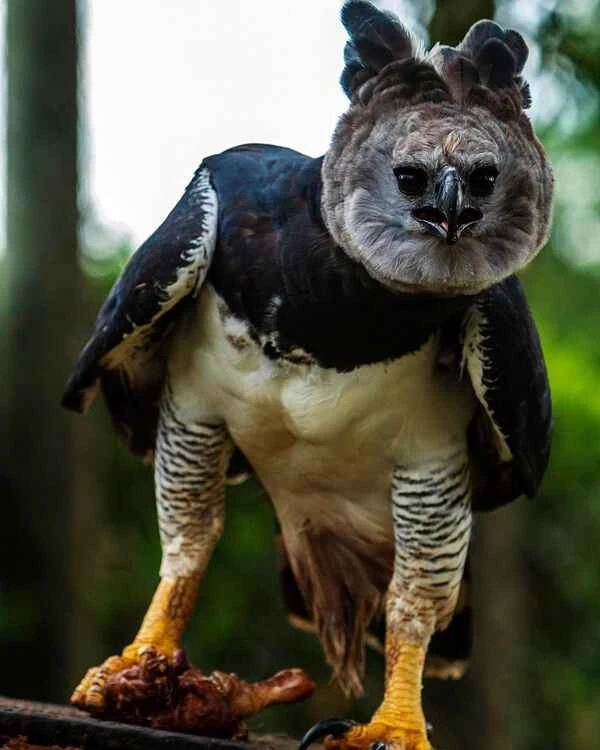
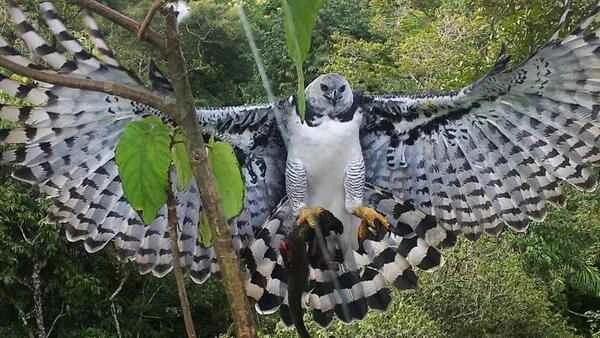
Harpy eagles are widely recognized for their enormous wings and powerful talons, as well as their distinctive black and white plumage pattern. With a wingspan of up to 2.3 meters, they are among the most powerful birds in flight.
Physical characteristics of the Harpy Eagle
The Harpy Eagle has a spectacular appearance and many unique features:
Body length : The body length of a Harpy Eagle is usually between 86 and 107 centimeters.
Wingspan : Its wingspan can reach 7.5 feet (about 2.3 meters), making it one of the most powerful birds of prey in the world.
Weight : Adult Harpy eagles weigh between 6 and 10 kilograms, with females generally weighing more than males.
Feathers : The Harpy Eagle's feathers are mainly black and white, and it has a very conspicuous crest on its head, like a unique "feathered hat".
Claws : Its claws are very powerful, extending up to about 13 centimeters, enough to grab and crush prey.
These characteristics of the Harpy Eagle make it a top predator in the jungle.
Harpy Eagle Habitat
Harpy eagles inhabit the tall trees of tropical rainforests, typically living in the Amazon rainforest of South and Central America , including the Brazilian Amazon . They require dense trees and abundant vegetation to build nests and find food. They particularly prefer to inhabit low-lying, dense forest areas , avoiding areas prone to storms and drought.
Human activities and deforestation pose a serious threat to the habitat of the Harpy Eagle. The reduction of forests directly impacts their habitat and survival, thus they are considered a near-threatened species .
Harpy Eagle's food sources
Harpy eagles are apex predators, primarily feeding on small mammals and other birds. Their diet includes:
Sloths : One of the Harpy Eagle's favorite prey, especially sloths, which are large and slow-moving, making them ideal for the Harpy Eagle to catch.
Monkeys : Harpy eagles also hunt monkeys, especially those that live in trees.
Large birds : such as toucans and other tropical birds.
Harpy eagles possess incredibly powerful talons, with a talon force capable of reaching hundreds of kilograms, sufficient to seize and kill their prey. They typically hunt by ambush, flying extremely fast and precisely targeting their prey.
Harpy Eagle Breeding Habits
Harpy eagles have a relatively long breeding cycle. They typically breed once a year, laying one to two eggs each time. Both males and females share the responsibility of caring for the eggs; the female is usually responsible for incubation, while the male is responsible for providing food.
The incubation period typically lasts 40 to 45 days . The eaglets are cared for by their parents for several months after hatching until they can hunt and fly independently. Harpy eagles have a low breeding success rate, which is one reason for their declining numbers.
Harpy Eagle Lifespan and Danger
Harpy eagles typically live 25 to 35 years in the wild , and may live even longer in captivity . Due to their strength and hunting skills, harpy eagles are considered very dangerous predators, but they generally do not attack humans unless provoked.
Danger : Although the Harpy Eagle itself poses little threat to humans, its powerful hunting abilities and large talons make it a very dangerous animal. If threatened, it may use its powerful talons for defense.
The current state of conservation of Harpy eagles
Harpy eagles are listed as near-threatened due to habitat destruction and illegal hunting. Their habitat is rapidly diminishing, posing a serious threat to their survival. Currently, several international organizations and government departments have begun implementing conservation measures, such as forest protection projects and wildlife reserves , to protect the harpy eagle's habitat.
Protecting the Harpy Eagle is not just about protecting a bird species, but also about protecting the ecosystem on which they depend for survival.
Harpy Eagle's natural enemies
The Harpy Eagle has relatively few natural predators because it is a top predator in the rainforest, possessing powerful hunting abilities, a large size, and excellent flying and climbing skills. However, despite its position at the top of the food chain, it still faces some predators or potential threats.
1. Humans
Habitat destruction : The Harpy Eagle's habitat is severely threatened due to deforestation and habitat loss. This is one of the greatest threats it faces.
Illegal hunting : Although Harpy eagles are not often hunted, they are sometimes killed by humans for their feathers and for the purpose of keeping them as pets.
2. Large snakes
In certain situations, especially when young Harpy eagles are not yet fully grown, some large snakes can pose a threat. For example, some pythons can attack and kill young eagles or Harpy eagles that are nesting.
3. Other birds of prey
Other birds of prey : Although the Harpy Eagle's size and strength place it at the top of the food chain, some more powerful birds of prey, such as the Golden Eagle or the Bald Eagle , may compete with the Harpy Eagle for habitat or food. Competition for habitat, especially when it is overcrowded, can lead to conflict.
4. Scavengers
Some scavengers, such as wild dogs or large cats (such as jaguars and lynxes), may threaten the young Harpy eagles. Although these animals do not usually attack adult Harpy eagles directly, they may pose a threat to the eaglets in the nest.
The Harpy Eagle has relatively few natural predators, primarily human activities, habitat loss, and potential threats during its breeding season (such as snakes and scavengers). Although it is a apex predator, any species in an ecosystem can face threats from nature or human activities.
This article provides a detailed overview of the Harpy Eagle, including its physical characteristics, habitat, food sources, breeding habits, lifespan, and conservation status. Through this information, you can gain a more comprehensive understanding of this mysterious bird of prey.
Frequently Asked Questions
Frequently Asked Questions
How big is a Harpy Eagle?
The Harpy Eagle measures between 86 and 107 centimeters in length, has a wingspan of up to 2.3 meters, and weighs approximately 6 to 10 kilograms.
Where do Harpy eagles live?
Harpy eagles inhabit the tropical rainforests of South and Central America, especially the Amazon and the Brazilian Amazon.
What do Harpy eagles eat?
Harpy eagles primarily feed on small mammals, sloths, monkeys, and large birds.
How long do Harpy eagles live?
Harpy eagles typically live for 25 to 35 years, and may live even longer in captivity.
Do Harpy eagles attack humans?
Harpy eagles are not aggressive towards humans, but they are very skilled hunters and should be avoided.


