Basic Information
Scientific classification
- Chinese name: Mammoth
- scientific name:
- Classification: Proboscidea
- Genus and species: Mammoth
Vital signs data
- Body length: 3-4m
- Weight: 6-8t
- Lifespan: 60-80 years
Significant features
Ivory can grow to 4 to 5 meters long.
Distribution and Habitat
In cold regions such as ice fields and tundra, especially near the Arctic Circle
Appearance
Thick fur and curved ivory
Detailed introduction
The mammoth was a giant elephant that lived during the Ice Age, known for its thick fur and curved tusks. Close relatives of elephants, they were once widespread across Eurasia and North America, and went extinct approximately 4,000 years ago. Today, we understand their history not only through fossils but also through advancements in genetics and archaeology, gradually uncovering more secrets of the mammoth. This article will provide a comprehensive and detailed introduction to mammoths, including their appearance, habits, lifespan, and causes of extinction.
Table of contents
Physical characteristics of mammoths
Mammoth Habitat
Mammoth Dietary Habits
Mammoth social structure and reproduction
Lifespan and growth of mammoths
Causes of mammoth extinction
The relationship between mammoths and modern elephants
1. Physical characteristics of mammoths
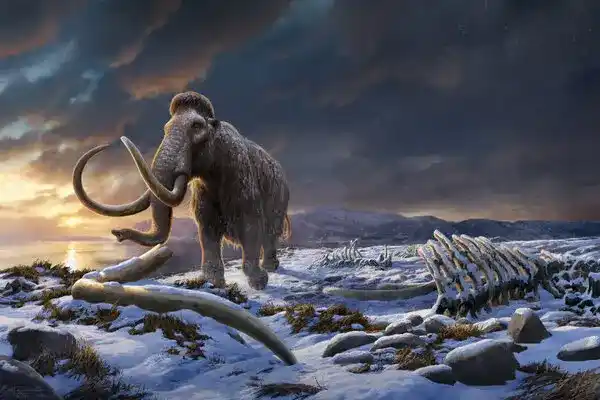
Mammoths had a very distinctive appearance, most notably their enormous, curved tusks . These tusks served not only for fighting and digging for food but also helped them survive in frigid environments. Mammoths could reach 3 to 4 meters in height and weigh approximately 6 to 8 tons . Their skin was covered with a thick layer of fur, which helped them survive the extreme cold of the Ice Age. Mammoth fur could be up to 1 meter long, and they also had a layer of waterproof fat on their bodies.
2. Mammoth Habitat
Mammoths primarily inhabited cold regions such as ice sheets and tundra, especially near the Arctic Circle . They adapted to extreme cold climates, enabling them to move freely in low winter temperatures and snow. Mammoths typically lived in grasslands , forest edges , and river valleys , relying on the vegetation in these areas for food.
3. Mammoth Dietary Habits
Mammoths were herbivores, feeding on grass , moss , shrubs , and bark . In cold environments, plant growth was limited, and mammoths had limited food sources. They used their powerful tusks and long trunks to dig for plants buried under the snow. A mammoth's daily food intake was enormous, potentially requiring around 100 kilograms of vegetation to sustain its growth.
4. Mammoth social structure and reproduction
Mammoths typically lived in herds , similar to modern elephants. Their social structure consisted primarily of adult females and their offspring, while adult males usually lived independently. The mammoth breeding season typically occurred in spring and autumn, with females usually reproducing every two to three years . The gestation period was long, approximately 22 months , and newborn calves typically weighed around 90 kilograms .
5. Lifespan and Growth of Mammoths
Mammoths had a lifespan of roughly 60 to 80 years , similar to modern elephants. The calf stage was the most vulnerable period of their lives, with approximately 40% of calves dying within a few years of birth. Once adults reached maturity, mammoths enjoyed longevity, especially under the protection of their herds. Like modern elephants, herd life was crucial for the survival of mammoths.
6. The causes of mammoth extinction
The exact cause of mammoth extinction is still debated in the scientific community. Common hypotheses include:
Climate change : After the Ice Age ended, temperatures rose, and the tundra and grasslands on which mammoths depended gradually disappeared, leading to food shortages for them.
Human hunting : As humans expanded, mammoths became prey for early humans, which may have accelerated their extinction.
Habitat loss : Climate warming and human activities have caused mammoths to gradually lose their habitats and become unable to adapt to new environmental changes.
7. The relationship between mammoths and modern elephants
Mammoths and modern elephants are closely related, both belonging to the elephant family . However, mammoths possessed some unique adaptations. The most significant difference was their fur; their thick skin and long hair helped them survive in cold climates. Modern elephants, on the other hand, lacked this fur and were adapted to tropical or temperate regions. Mammoth tusks were also longer and more curved than those of modern elephants.
Mammoths are not only representative animals of the Ice Age, but also important clues for understanding prehistoric life and environmental changes. Through scientific research and genetic technology, scientists have even begun to attempt to resurrect mammoths to further study their ecology and the reasons for their extinction.
Frequently Asked Questions
Frequently Asked Questions
1. Why did mammoths become extinct?
The cause of the mammoth's extinction is still inconclusive, but it may be a combination of factors such as climate change and human hunting.
2. How big are mammoth tusks?
Mammoth tusks can reach lengths of 4 to 5 meters , which is one of their most distinctive features.
3. Did mammoths have social groups like modern elephants?
Yes, mammoths, like modern elephants, typically lived in groups, especially females and calves.
4. How long do mammoths live?
Mammoths had a lifespan of about 60 to 80 years , similar to that of modern elephants.
5. What were the food sources of mammoths?
Mammoths primarily fed on plants such as grass , moss , and bark .