Basic Information
Scientific classification
- Chinese name: Narrow-nosed Flatheaded Weasel
- Scientific name: Planigale tenuirostris
- Classification: Rodentia
- Family and genus: Weaselidae, genus *Isodon*
Vital signs data
- Body length: The head and body length is about 5–7.5 cm, and the tail length is about 5–6 cm; the body is very small but moves quickly.
- Weight: Common weight is about 4–9 grams, which is considered a "less than 10-gram" micro-predatory marsupial.
- Lifespan: In the wild, most individuals are short-lived, with a very low percentage surviving to 2 years old; the longest recorded lifespan under captive conditions is about 3 years.
Significant features
One of the world's smallest marsupial predators, with a flattened skull that allows it to burrow into soil crevices to hunt and escape predators. It mainly preys on insects and arthropods such as spiders.
Distribution and Habitat
Distributed in the Australian outback (NSW, NT, QLD, SA), it prefers low shrublands and clumps of cracked clay/black soil, and can also be found in stony plains, Chenopodiaceae shrublands and sparse woodlands; it is mostly active in soil cracks and grass root cavities.
Appearance
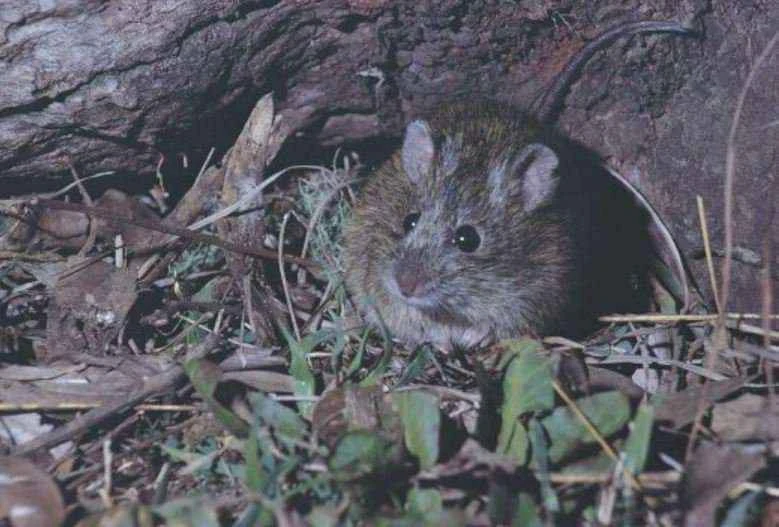
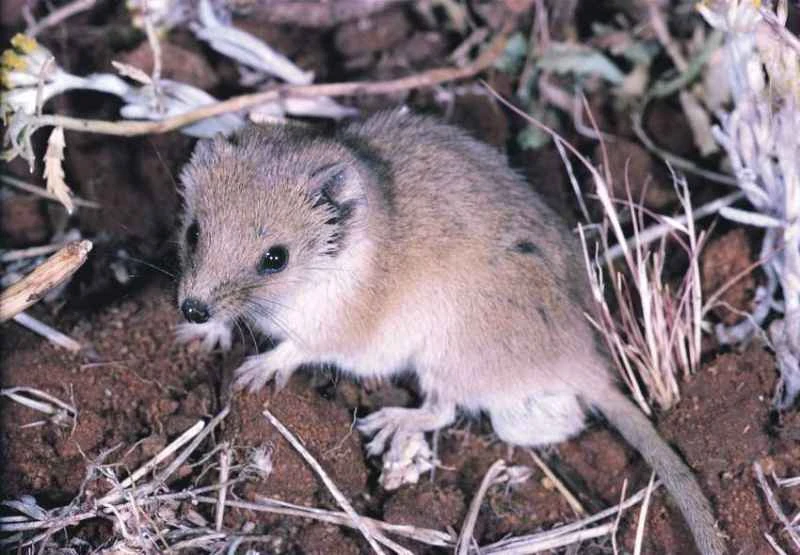
It is about the size of a mouse, with a brownish-reddish back and a lighter belly; a low, flat head, a long, thin snout, and large eyes; and short, flexible limbs, which are well-suited for searching for prey in crevices and layers of dead leaves.
Detailed introduction
The narrow-nosed planigale ( Planigale tenuirostris ) is the smallest of the planigale family, a "miniature predator" with adults typically weighing less than 10 grams. Resembling a mouse, it is a carnivorous marsupial: primarily feeding on arthropods such as insects, it is agile, aggressive, and will even attempt to hunt prey of similar or slightly larger size.
The most distinctive feature of the flat-headed quokka is its "flat skull". This low, flat head can wedge itself into soil cracks, grass roots, and layers of dead leaves, squeezing itself into micro-habitats that other small mammals cannot enter, thus finding prey, avoiding predators, and more effectively conserving energy and water in hot or dry conditions.
Classification and nomenclature
The narrow-nosed planiform quoll belongs to the order Dasyuromorphia, family Dasyuridae, and genus Planiform quoll. The specific epithet * tenuirostris* is often interpreted as "narrow snout," reflecting its relatively long and slender snout. This species was described by Troughton in 1928 and distinguished from previously confused closely related species.
Appearance features
They are very small, with a head and body length of 5–7.5 cm and a tail length of about 5–6 cm; their weight is commonly 4–9 grams. The back is mostly brownish-red or reddish-brown, while the belly is lighter. The head is low and flat, with a relatively long and slender muzzle; the eyes are relatively large and reflect light noticeably when active at night. The limbs are short and agile, with sharp claws adapted for searching for prey in crevices and layers of dead leaves. During the breeding season, males may experience localized color changes in their fur.
Distribution range and habitat
It is mainly distributed in the arid and semi-arid regions of the Australian outback, with records found in New South Wales, the Northern Territory, Queensland, and South Australia. Typical habitats are often associated with cracked clay/black soil: low shrublands, tussock grasslands, or relatively open areas away from water bodies, where the soil develops cracks during the dry season, providing concealed passageways and foraging spaces. In drier areas, it can also be found in stony plains, hills, and landscapes dominated by chenopod shrubs and sparse woodlands.
Lifestyle Habits and Behaviors
The narrow-nosed quoll is primarily nocturnal, active mainly at night in both summer and winter. It often hides deep in soil crevices, in grass root cavities, or beneath layers of dead leaves, occasionally venturing briefly to the surface to forage. Because it spends a significant amount of time "hidden in underground crevices," it possesses a natural spatial advantage in avoiding many larger predators. In the wild, individuals are generally solitary, with local population density fluctuating depending on rainfall and prey availability.
feeding habits
A broad-spectrum predator primarily feeding on arthropods, it commonly preys on insects such as beetles and spiders, as well as non-insect arthropods; it will also prey on small lizards when conditions permit. Its diet depends largely on the types of prey available locally and the season.
Reproduction and life cycle
The breeding season typically coincides with the increased food availability in spring and summer, with records showing it lasts roughly from July to mid-January of the following year. Females have a brood pouch and 12 teats, with an average litter size of about 6 offspring; the gestation period is approximately 19 days. Offspring detach from the teats at about 36 days, open their eyes at about 51 days, and are weaned at about 95 days. Lifespan in the wild is generally short: estimates indicate a very low percentage of wild individuals live to 2 years old; the longest recorded lifespan in captivity is about 3 years.
Relationship with humans
This animal is extremely small and elusive, making it difficult for humans to observe directly. Its value in the ecosystem lies primarily in controlling the populations of insects and small invertebrates, and in participating in energy transfer as a "micro-predator" in desert and semi-arid food webs.
Protecting the status quo and threats
The narrow-nosed quoll is classified as Least Concern (LC) on the IUCN Red List and is not generally considered to be facing widespread and rapid global decline. However, at the local scale, habitat conversion, soil structure, and vegetation cover changes caused by land reclamation and agricultural use may lead to population decline in some areas. Maintaining the integrity of cracked clay habitats, minimizing excessive disturbance, and preserving grassland and shrub cover are more beneficial for its long-term survival.
Frequently Asked Questions
Q1: Why is the head of the narrow-nosed flat-headed marsupial so flat?
Its flattened skull allows it to wedge itself into soil fissures, grass root crevices, and deep layers of dead leaves, thus enabling it to find food, evade predators, and reduce energy consumption in hot environments.
Q2: Where do they mainly live?
They mostly live in cracks and cavities formed by cracked clay, and will also briefly venture to the surface or leaf litter at night to forage. They prefer open areas that are far from water.
Q3: What do they eat? Do they eat lizards?
Their diet consists mainly of arthropods such as insects and spiders, and they may also prey on larger animals such as small lizards, but overall they mainly feed on invertebrates.
Q4: Is it an endangered animal?
Globally, it is assessed as Least Concern (LC). However, local degradation may still occur due to agricultural development and habitat alteration, so it is important to maintain typical cracked clay habitats and vegetation structure.