Basic Information
Scientific classification
- Chinese name: Eastern Chestnut Mouse
- Scientific name: Pseudomys gracilicaudatus
- Classification: Rodentia
- Family and genus: Muridae, genus *Pseudococcus*
Vital signs data
- Body length: The head and body length is usually about 7–10 cm, and the tail length is about 8–12 cm, often slightly longer than the body length.
- Weight: Weight is mostly in the range of about 15–35 grams, and varies with the season, gender and regional food conditions.
- Lifespan: In the wild, lifespan is usually about 1-2 years, with a short lifespan and rapid generational turnover.
Significant features
A small member of the genus *Pseudomomys* native to eastern Australia, it typically has chestnut-brown fur on its back and a relatively long tail; it is nocturnal, feeds on seeds and insects, and relies on grass and leaf litter for cover.
Distribution and Habitat
It is mainly found in grasslands, open woodlands, shrublands and riparian vegetation zones in eastern and southeastern Australia, and prefers environments with abundant ground cover (thick grass, leaf litter, fallen trees, and piles of stones).
Appearance
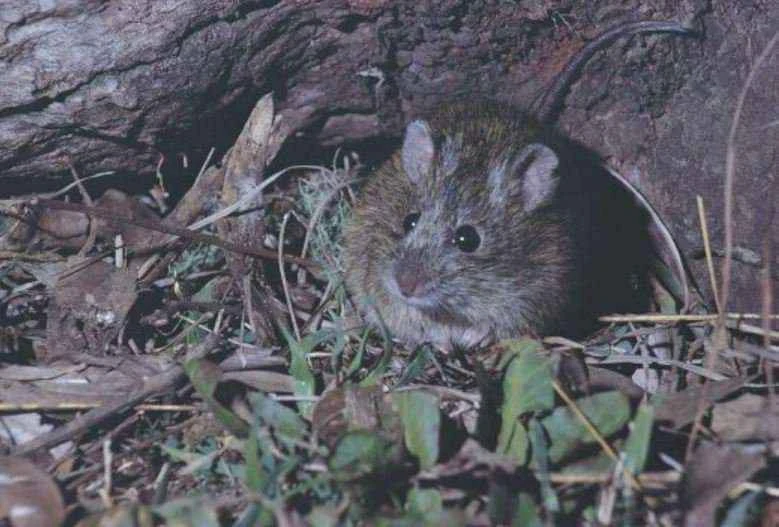
Small in size, with large ears and round eyes, chestnut to brownish-red back and light-colored belly; the tail is thin and long, slightly longer than the body length, which is suitable for quick movement and balance in grass.
Detailed introduction
The Eastern Chestnut Mouse ( Pseudomys gracilicaudatus ) is a common native small rodent in eastern Australia. It is typically warm chestnut or brownish-red in color and has a relatively long, slender tail. Mostly nocturnal, they are adept at navigating through grasses, shrubs, and leaf litter, feeding on seeds, buds, and insects. They are important energy carriers and seed dispersers in grassland and woodland edge ecosystems.
Unlike many introduced rodent species, the Eastern Chestnut Mouse belongs to the native Australian genus * Pseudomys * and typically relies more on natural vegetation structure and ground cover. They are quite sensitive to environmental changes: local populations may experience significant fluctuations when the understory is over-cleared, frequently and intensely burned, heavily grazing occurs, or stress from invasive predators (such as feral cats and foxes) increases.
Classification and nomenclature
The Eastern Chestnut Mouse belongs to the class Mammalia, order Rodentia, family Muridae, and genus Pseudomys . The "chestnut" in its English name refers to its common chestnut-brown back fur; "eastern" emphasizes its primary distribution in eastern Australia. The Chinese name can be translated as "Eastern Chestnut Mouse/Eastern Chestnut Rat," but this page will consistently use "Eastern Chestnut Mouse."
Appearance features
The Eastern Chestnut Mouse is small in size, with a head and body length typically around 7–10 cm and a tail length mostly around 8–12 cm, often slightly longer than its body length; its weight is mostly in the range of 15–35 grams (with significant variations depending on the region and season). The fur on its back is mostly chestnut brown, brownish-gray, or grayish-brown, while the underside is lighter, ranging from creamy white to light gray; its ears are relatively prominent, its eyes are large, and its snout is slender.
Its tail is long and thin with short fur, often used for balance and quick turns; its limbs and claws are adapted for running on the ground and digging in shallow soil. As a rodent, it has well-developed incisors, suitable for chewing seeds and tough plant tissues.
Distribution range and habitat
The Eastern Chestnut Mouse is mainly distributed in diverse environments in eastern and southeastern Australia. In suitable habitats, it is relatively easy to detect through trap surveys or nighttime infrared cameras. Typical habitats include grasslands and open woodlands, savannas, shrublands, heaths, riparian vegetation zones, and patches of native vegetation preserved along the edges of farmland.
It has a high need for surface cover: thick grass, leaf litter, fallen logs, piles of stones, and the base of bushes can provide passageways to avoid predators and nesting materials. Habitat fragmentation increases its risk of crossing bare ground and reduces connectivity and gene exchange.
Lifestyle Habits and Behaviors
Eastern chestnut mice are mostly nocturnal, foraging and roaming after dusk, and usually hiding in grass, burrows, or nests under fallen trees during the day. They are agile and will quickly burrow into vegetation or burrows when threatened; they also use fixed "tracks" to quickly move through the grass.
Individuals may have established territories or core activity areas, often communicating through scent marking. Breeding seasons are related to food conditions, with increased activity during periods of abundant resources.
feeding habits
Eastern maroon mice are omnivorous with a predominantly herbivorous diet, primarily feeding on grass seeds, grains, nuts, berries, and shoots. They also consume insects, spiders, and other invertebrates, especially during breeding or growth stages when they increase their intake of animal protein. They often carry seeds back to the vicinity of their nests to forage, and some seeds may be forgotten or scattered, thus indirectly participating in seed dispersal.
Reproduction and life cycle
Reproduction is typically more active during the warmer months (the exact amount varies depending on local climate and rainfall). Females have short gestation periods and can give birth to multiple pups per litter. The pups grow in the nest and begin to leave after several weeks to learn to forage and evade predators. Lifespan in the wild is usually short, typically around 1–2 years, but can vary in areas with different resource and stress conditions.
Relationship with humans
The eastern maroon mouse generally has no direct impact on humans and is not often portrayed as a "household pest"; it is more commonly found in natural vegetation and grassy areas along farmland edges. Ecosystem-wise, it is both prey for many predators (owls, snakes, foxes, etc.) and a user of seed and insect resources. Preserving native shrubs and ground cover along garden and farmland edges, and reducing nocturnal roaming of domestic cats, helps ensure the continued presence of native small mammals on the urban fringe.
Protecting the status quo and threats
The Eastern maroon mouse is generally assessed as Least Concern (LC) in many sources, but local populations may still be affected by habitat clearing and fragmentation, frequent or high-intensity fires, predation by invasive predators (feral cats, foxes), and food depletion due to extreme drought. Maintaining continuous ground cover, proper fire management, and controlling invasive predators around key habitats are important measures to reduce risk.
Frequently Asked Questions
Q1: Is the Eastern Chestnut Mouse an introduced black/brown mouse?
No. It belongs to the native Australian genus * Pseudomys *, and its ecological habits are more dependent on natural vegetation structures; introduced black and brown rats are more associated with human-built structures and port environments.
Q2: What do they mainly eat?
Their diet consists mainly of plant-based foods such as seeds, grass seeds, and tender shoots, but they also eat invertebrates such as insects and spiders. They increase the proportion of animal-based foods, especially during the breeding and growth stages.
Q3: Why do they need thick grass and leaf litter?
Ground cover provides nesting material and concealed passageways, reducing the risk of predation by owls, snakes, foxes, and wildcats, while also being an area with a high concentration of seed and insect resources.
Q4: What threats do they face?
These factors mainly include habitat clearing and fragmentation, reduced surface cover due to frequent or high-intensity fires, increased pressure from invasive predators, and food fluctuations caused by drought and extreme weather.