
Basic Information
Scientific classification
- Chinese name: Spotted Duck
- Scientific name: Meller's Duck, Anas melleri
- Classification: Waterfowl
- Family: Anseriformes, Anatidae, Anatidae
Vital signs data
- Body length: 55-68 cm
- Weight: No verification information available.
- Lifespan: 10-15 years
Significant features
It has dark green wing mirrors, white-edged feather tips, and white feathers visible on the underside of the wings during flight.
Distribution and Habitat
The Muscovy duck is found on Madagascar and was once widespread throughout the central and eastern parts of the island. However, due to severe deforestation in the central highlands of Madagascar, the species has become increasingly confined to the eastern part of the island. Around 1850, the species was introduced to Mauritius, but it almost became extinct on the island where it was introduced.
The Spotted Duck inhabits freshwater lakes, rivers, streams, and marshes, and is frequently found in forest areas at an altitude of 2,000 meters and in Lake Alaotra, the largest lake in Madagascar.
Appearance
The Spotted Duck, measuring 55–68 cm in length, is a large duck with dark brown plumage covered in light brown spots. Its most distinctive feature is its dark green speculum, with white-edged wingtips. During flight, white feathers are visible on the underside of the wings, creating a striking contrast with its dark brown body. It has a bluish-grey bill, dark brown eyes, and orange-brown webbed feet. Males are slightly larger than females, whose feathers have pale yellow tips.
Detailed introduction
The Meller's Duck (scientific name: Anas melleri) is a duck species found on the island of Madagascar. There are two species of ducks in the genus Anas bernieri and Anas melleri, both commonly known as the Madagascar Meller's Duck.
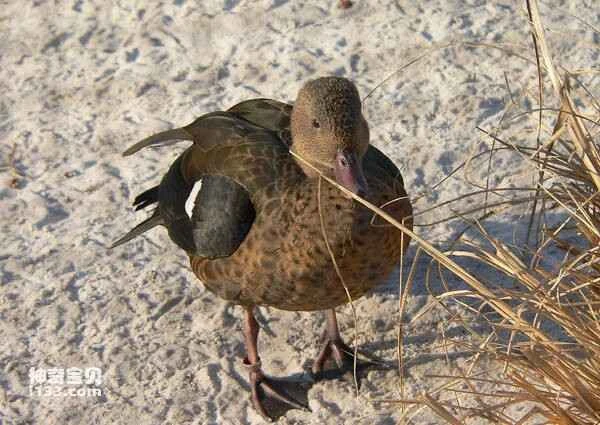
Spotted ducks typically live in pairs or small groups of 11 to 56, but can form larger flocks of up to 400 when feeding. They primarily feed on food from their freshwater habitat, including aquatic vegetation, seeds, and invertebrates, especially mollusks.
The breeding season for the Muscovy Duck is from April to September each year. The female builds a nest alone, laying 5 to 11 white eggs at a time. The incubation period is 26 to 28 days. Although the male does not participate in nest building or incubation, it remains near the nest during this period to act as a protector against other Muscovy ducks. Newly hatched ducklings begin to live independently after 11 weeks. Captive-bred Muscovy Ducks have a lifespan of 10 to 15 years.
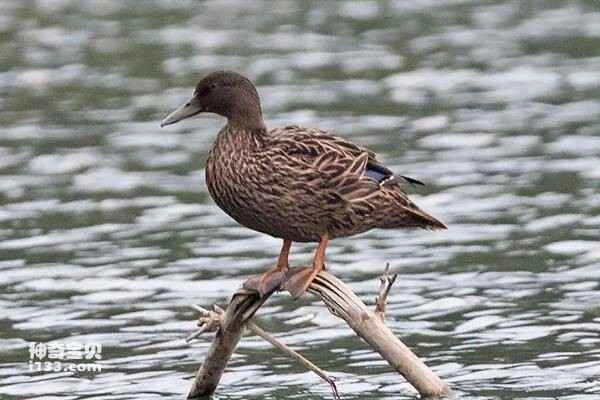
The Common Moorhen has at least seven protected areas in Madagascar, and local laws have been implemented to control hunting of this species. However, these laws are often not enforced, and poaching of this endangered bird continues. On Jersey, 150 ducklings have been successfully raised in captivity. Extensive research is needed to ensure the species does not become extinct in the wild, and valuable data must be obtained. Wild population conservation plans need to be developed, hunting regulations need to be revised and improved, and enforcement efforts need to be strengthened. Nesting should be incorporated into the development of protected areas to ensure the Common Moorhen's survival in the wild.
Listed as Endangered (EN) in the International Union for Conservation of Nature (IUCN) Red List of Birds, 2009 ver 3.1.
Protect wild animals and ban the consumption of wild game.
Maintaining ecological balance is everyone's responsibility!


