Basic Information
Scientific classification
- Chinese name: Maned-tailed quokka
- Scientific name: Dasycercus spp. (maned-tailed succulent; e.g., D. blythi, D. cristicauda)
- Classification: Rodentia
- Family and genus: Weaselidae, genus *Weaselus*
Vital signs data
- Body length: Head and body length is about 12.5–20 cm, and tail length is about 6–10 cm; the total length from snout to tail tip can be nearly 30 cm in males.
- Weight: Weight is mostly in the range of about 50–190 grams (males are usually larger), with some sources giving an average weight of about 115 grams.
- Lifespan: Lifespan varies greatly depending on species and environment: Brushtailed quolls are usually ≤3 years in the wild and can live up to about 5 years in captivity; there are also records showing that quolls can live up to about 6 years in the wild.
Significant features
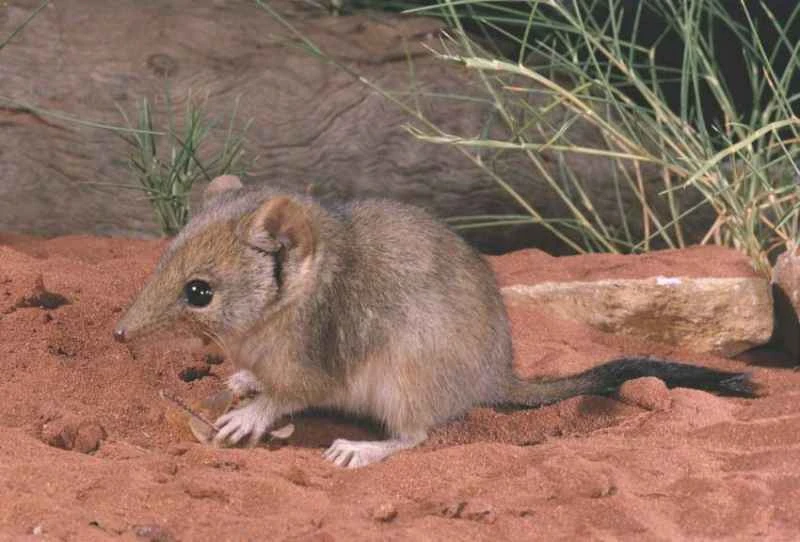
Desert cave-dwelling small carnivorous marsupials are identified by the tuft of hairs at the end of their tails; they hardly drink water, obtaining moisture from their food and excreting highly concentrated urine.
Distribution and Habitat
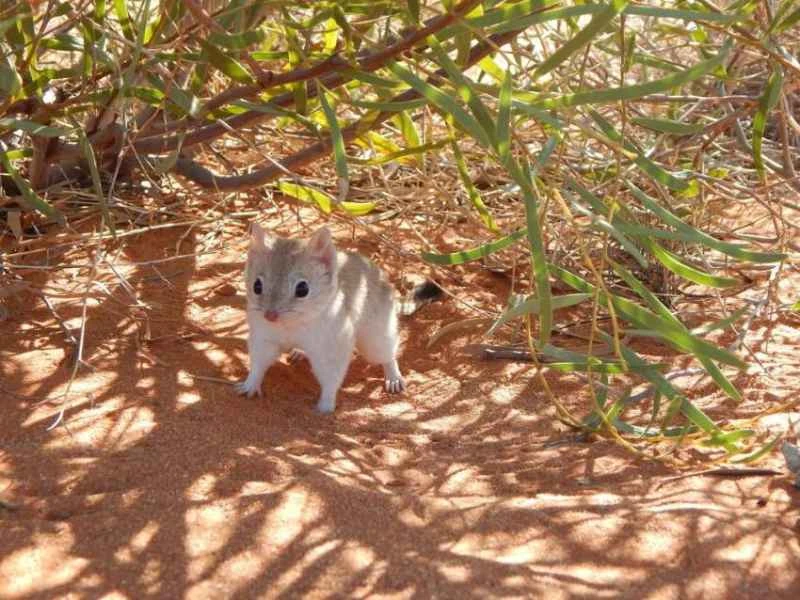
Australia’s arid outback (sand dunes and whirlwind grasslands) often features caves dug near the roots of perennial plants, forming a network of caves where people can escape the heat and enemies.
Appearance
The back is sandy yellow to ginger brown, and the belly is lighter; the crown-tailed species has black "crowned hairs" at the end of the tail, while the brush-tailed species has black brush-like hairs at the end of the tail; when food is plentiful, the base of the tail will store fat and become thicker.
Detailed introduction
The Mulgara is a small, carnivorous marsupial native to the Australian outback deserts, belonging to the genus * Dasycercus *. In modern taxonomy, the term "Mulgara" usually refers to two main species within this genus: the brush-tailed Mulgara (* Dasycercus blythi* ) and the crest-tailed Mulgara ( *Dasycercus cristicauda *). They are similar in appearance, but differ in key characteristics such as the morphology of the tail tufts and the number of nipples.
The maned quoll is a small mammal that is a "desert predator," adept at digging intricate burrow networks near sand dunes, spinifex, and other perennial vegetation roots. They are mostly nocturnal, hiding deep underground during the day to escape the heat; and they adapt to arid environments by obtaining moisture from their food, typically not needing to drink directly.
Classification and nomenclature
The maned quoll belongs to the family Dasyuridae and the genus Dasycercus . Historically, specimens and field records often confused the two species, but modern genetic and morphological studies have gradually clarified their distinguishing features and distribution range.
Appearance features
The body size is between that of a "mouse" and a "small weasel," with a back that is mostly sandy yellow to ginger brown, and a lighter belly. The head is relatively broad, with a pointed snout, large eyes, and excellent night vision and sense of smell. The tail is the most important distinguishing feature: the crested-tailed maned-tailed weasel has a distinct tuft of long black "crowned hair" on the upper side of its tail tip; the brush-tailed maned-tailed weasel has fluffy black "brush-like hair" at the tip of its tail, which is more evenly distributed along the rear of the tail and gradually tapers, without forming a distinct crest. During seasons when food is plentiful, the base of the tail can store fat and become thicker.
Distribution range and habitat
Primarily distributed in the arid outback of Australia, they are commonly found in dune belts and whirlwind grasslands. They dig burrows on dune slopes or near the roots of perennial plants, with interconnected tunnels forming a network; the deeper environments within these burrows offer greater stability, helping them escape high temperatures and predators. Overall, the brush-tailed maned quoll is believed to have a wider distribution, while the known range of the crested maned quoll is relatively more limited, and there have been instances in certain areas where records have been missing for extended periods before being rediscovered.
Lifestyle Habits and Behaviors
Most are solitary and territorial, with population density exhibiting a cyclical pattern of "surges in good years and drops sharply in dry years" depending on rainfall and food availability. They venture out at night to patrol, hunt, and remain near burrow entrances; when threatened, they quickly burrow into their burrows to escape. In cold or food-scarce conditions, especially during pregnancy, females may conserve energy through brief periods of low activity (torpor).
feeding habits
Primarily feeding on animal matter, they are important small predators in the desert. They commonly prey on insects and large invertebrates (such as centipedes and spiders), and also hunt small lizards and small mammals; when the opportunity arises, they will also consume fruits and seeds. They obtain the necessary water from their prey and food, and reduce water loss by excreting concentrated urine and relatively dry feces.
Reproduction and life cycle
Breeding primarily occurs in winter, with one litter per year. Females form a simplified skin fold-like nursing structure on their flanks, with the young attaching to their nipples for development. The maximum number of offspring varies slightly among different species: brush-tailed maned quolls commonly have a maximum of about 6, while crested maned quolls can reach about 8. Young are weaned around 4 months of age and gradually become independent. Regarding lifespan, brush-tailed maned quolls typically live no more than 3 years in the wild, but captive individuals can live up to about 5 years; some records also indicate that maned quolls can live up to about 6 years in the wild (this varies considerably depending on the region and year).
Relationship with humans
The maned quoll lives in remote inland areas and is not easily observed by humans, but it plays a crucial role in desert ecosystems: it influences food web structure by preying on invertebrates and small vertebrates. Since its burrows are often located around the roots of vegetation such as cyclone grass, habitat structure (vegetation cover, dune stability) is particularly important for its survival.
Protecting the status quo and threats
Globally, the threat levels of the two maned quoll species are inconsistent: the brush-tailed maned quoll is generally considered Least Concern (LC) on the IUCN, while the crested maned quoll is usually classified as Near Threatened (NT); in some regional or institutional lists in Australia, the crested maned quoll may also be listed as Vulnerable. Common stressors include: invasive predators such as feral cats and red foxes; dune and vegetation degradation caused by grazing and invasive herbivores; habitat structure changes due to variations in fire frequency/intensity; and climate change leading to reduced rainfall and exacerbated food "flour-short cycles." Conservation priorities typically include: controlling invasive predators, maintaining healthy cyclone grass cover and dune structure, adopting more natural fire management practices, and continuously monitoring population changes in different areas.
Frequently Asked Questions
Q1: How to distinguish between the crested tail manetail quokka and the brush tail manetail quokka?
The most obvious difference is the tail: the crown-tailed variety has a distinct black "crowned" on the upper side of the tail tip, resembling a small Mohawk; the brush-tailed variety has black, fluffy brush-like hairs at the tail tip, which are more evenly distributed along the rear of the tail and gradually taper without forming a "crowned". In addition, the crown-tailed variety usually has 8 nipples, while the brush-tailed variety has 6.
Q2: Does the maned quokka need to drink water in the desert?
They generally do not need to drink water directly. They obtain moisture from their prey and food, and reduce water loss by excreting concentrated urine and dried feces.
Q3: What do they mainly eat?
Their diet consists mainly of animal matter, including insects, centipedes, spiders, and other large invertebrates. They also eat small lizards and small mammals; when the opportunity arises, they will also consume fruits and seeds.
Q4: What is the biggest threat facing the Manetail Kingfisher?
Invasive predators (feral cats, foxes) are one of the important factors; at the same time, habitat degradation caused by grazing and invasive herbivores, changes in fire management, and fluctuations in rainfall and food caused by climate change also exacerbate population risks.


