Basic Information
Scientific classification
- Chinese name: Big-eared fox bat
- Scientific name: Pteropus macrotis
- Order: Chiroptera
- Family and genus: Pteropodidae, Pteropoda
Vital signs data
- Body length: head and body length approximately 18–24 cm; forearm length approximately 14.3–15.7 cm; ear length approximately 3–3.7 cm (slight variations depending on the individual).
- Weight: Adult weight is typically around 315–425 grams.
- Lifespan: Systematic data on lifespan is lacking, but it is speculated to be similar to that of fruit bats in the same family, reaching more than ten years (affected by environment and stress).
Significant features
Fruit bats, with their long, prominent ears, are nocturnal and play an important role in pollination and seed dispersal.
Distribution and Habitat
It is distributed in Indonesia and Papua New Guinea (including surrounding islands), and found on a few islands near the Cape York Peninsula in Australia; it is mostly found in low-altitude forests, monsoon forests and coastal mangrove environments.
Appearance
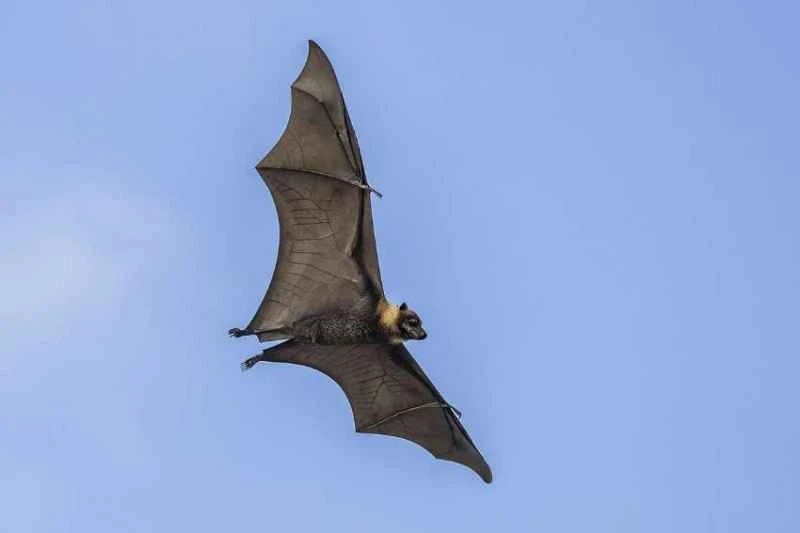
The overall coat color is mostly dark brown, with yellowish tinges on the shoulders and neck; pointed muzzle, large eyes; long and pointed ears are one of the main distinguishing features.
Detailed introduction
The long-eared flying fox (scientific name: Pteropus macrotis ) is a large Old World fruit bat, named for its long, thin ears. They mainly live in low-altitude forests and coastal areas of tropical islands and New Guinea, roosting in trees during the day and foraging for fruits and flowers at night.
Unlike many insect-eating bats that rely on echolocation, flying foxes typically use sight and smell to find food and play an important role in pollination and seed dispersal in the ecosystem.
Classification and nomenclature
The big-eared flying fox belongs to the genus * Pteropus * of the family Pteropodidae in the order Chiroptera. Its species name, "macrotis," comes from a Greek root meaning "long-eared/large-eared." Common English names include big-eared flying fox and large-eared flying-fox.
Appearance features
Among the flying foxes, they are medium to small in size, with mostly dark brown plumage, and yellow or light-colored tinges on the shoulders and neck (cape/mane area). Their relatively long and slender ears with pointed tips are one of their distinguishing features; their snouts are slightly pointed, and their eyes are relatively large. Their wing membranes are formed by the extension of the skin of their forelimbs, giving them a large wingspan in flight while maintaining an overall light and agile appearance.
Distribution range and habitat
It is known to be mainly distributed in Indonesia and Papua New Guinea (New Guinea Island and surrounding islands), and also found on a few islands near the Cape York Peninsula of Australia. It usually occurs in low-altitude areas and is often associated with coastal mangroves, lowland tropical forests, monsoon forests and woodlands.
Lifestyle Habits and Behaviors
They are mostly nocturnal, and during the day they often inhabit the canopy or mangroves, potentially forming small to medium-sized colonies. At night, they can travel between multiple feeding sites, using their excellent eyesight and sense of smell to find ripe fruits, flowers, and nectar.
feeding habits
Their diet consists mainly of plant-based foods, including fruits, flowers, and nectar. In some regions, they also consume the flowers and inflorescences of plants such as coconuts. This feeding helps with plant pollination, and they disperse seeds through excrement and regurgitation of fruit residue.
Reproduction and life cycle
Detailed information regarding their breeding season and reproduction rate may vary in different regions. They typically give birth to one offspring per litter, which is then nursed by the mother and remains attached to her for an extended period. Their lifespan in the wild lacks systematic research, but it is speculated to be similar to that of fruit bats in the same family, potentially exceeding ten years, though this is significantly affected by factors such as food, disease, and human disturbance.
Relationship with humans
Fruit bats are key plant dispersers in their natural ecosystems; however, in orchards and agroforestry areas, they may also conflict with humans over foraging. Proper orchard protection and habitat conservation can help reduce conflict and maintain their ecological functions.
Protecting the status quo and threats
The IUCN classifies the Great Eared Flying Fox as Least Concern (LC). Nevertheless, local populations can still be affected by habitat loss and fragmentation, hunting, and extreme weather; the protection of their habitats (such as mangroves and woodlands) is generally crucial for maintaining stable numbers.
Frequently Asked Questions
Q1: Do big-eared flying foxes use echolocation?
Flying foxes typically do not rely on echolocation to hunt insects, but instead use their sight and sense of smell to find fruits and flowers.
Q2: What do they mainly eat?
They mainly feed on fruits, flowers, and nectar, and in some areas they also consume the inflorescences of plants such as coconuts.
Q3: Where are the large-eared flying foxes mainly distributed?
It is mainly recorded in Indonesia and Papua New Guinea, and found on a few islands near the Cape York Peninsula of Australia. It prefers low-altitude forest and coastal environments.
Q4: Are they endangered animals?
Currently assessed as Least Concern (LC) by the IUCN. However, local habitat change and hunting may still put pressure on their numbers in some areas.