Basic Information
Scientific classification
- Chinese name: False killer whale
- Scientific name: Pseudorca crassidens
- Order: Cetacea
- Family and genus: Dolphinidae, False Killer Whale
Vital signs data
- Body length: Adults typically measure about 4.3–5.6 meters in length, with a maximum of nearly 6 meters; males are generally larger than females.
- Weight: Common weight is around 1–2 tons (significant differences in different sea areas), larger individuals may be heavier.
- Lifespan: They can live for decades, with females typically living longer; some individuals can live over 60 years.
Significant features
Large dolphin whales, dark in color and without a prominent beak, live in highly social groups. They inhabit remote offshore waters, preying on medium to large fish and cephalopods, and easily interact with fisheries.
Distribution and Habitat
They are widely distributed in tropical to warm temperate seas around the world, mostly in deep waters of the open ocean, and often active in prey-rich waters around islands, seamounts and the outer edge of continental shelves.
Appearance
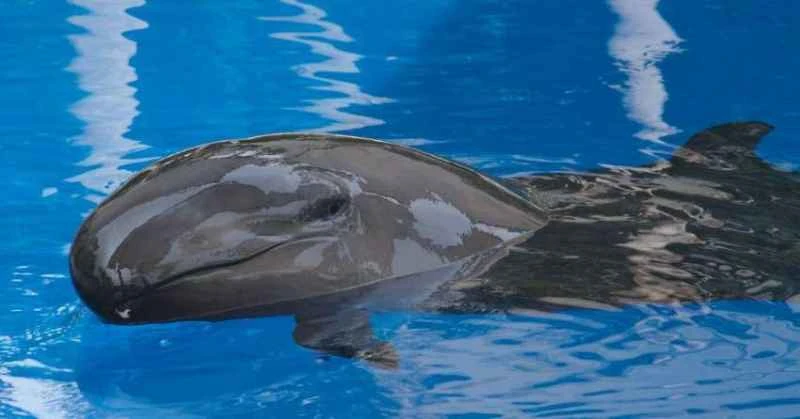
Dark gray to black, slender and strong body, rounded head without obvious beak; high dorsal fin swept back, long pectoral fin with the leading edge often raised in an "elbow-like" shape; wide and powerful tail fin.
Detailed introduction
The false killer whale ( Pseudorca crassidens ) is a large dolphin whale, with an overall dark gray to black coloration. It has a rounded head without a prominent beak, and its dorsal fin is high and slightly sickle-shaped when swimming at high speeds on the surface. It is called a "false killer whale" because its skull shape is similar to that of the killer whale (Orca), but taxonomically it belongs to the dolphin family and is one of the largest members of the dolphin family.
False killer whales are widely distributed in warm waters around the world, mostly inhabiting deep, open ocean areas, but they also forage in areas with abundant upwelling, such as around islands, seamounts, and the outer edges of continental shelves. They are highly social, often moving in groups with close relationships, and sometimes even co-opting other dolphins. Primarily feeding on medium to large fish and cephalopods, false killer whales are also important apex predators in the marine food web.
Classification and nomenclature
The false killer whale belongs to the class Mammalia, order Cetacea, suborder Odontoceti, family Delphinidae, and genus Pseudorca . Currently, the genus Pseudorca contains only this one extant species; therefore, it is both the representative of the genus Pseudorca and its only living member.
Appearance features
False killer whales are slender and robust, with adults typically measuring 4.3–5.6 meters in length, though some can approach 6 meters. Males are generally larger and heavier than females. Their weight is commonly in the range of 1–2 tons (with significant individual variation depending on the sea area). Their body color is mostly black or dark gray, with a slightly lighter underside but less contrasting, often giving them a "dark-colored" appearance from a distance.
The head is blunt and conical in shape, without a distinct beak; the pectoral fins are relatively long and slightly curved, with a raised "elbow"-like ridge often visible at the leading edge; the dorsal fin is high and swept back, and the caudal fin is broad and powerful. The teeth inside the mouth are stout and conical, suitable for grasping slippery fish and squid. When approached, scratches and tooth marks can sometimes be seen on the body surface, often from interactions with companions, the hunting process, or contact with fishing gear.
Distribution range and habitat
False killer whales are widely distributed globally, primarily found in tropical to warm temperate waters. They prefer deep open ocean areas, but also frequently appear in prey-rich areas such as around islands, seamounts, straits, and the outer edges of continental shelves. In different regions, they may exist as relatively "permanent" nearshore or island groups, or they may primarily engage in open-ocean activities.
Because their habitats are mostly in the open sea, overall monitoring is quite difficult, and the number, group structure and migration patterns in many sea areas are still unclear.
Lifestyle Habits and Behaviors
False killer whales are highly social, typically living in groups of 10–50 individuals, but may also form larger groups. Within these groups, relationships are close-knit; members cooperate, share information, and maintain long-term social connections. They are fast swimmers and are often seen swimming close to boats, breaching the water, or gliding on waves.
When hunting, they may cooperate to surround schools of fish or dive deep to forage in waters rich in cephalopods. False killer whales possess echolocation abilities, allowing them to locate prey in low-light or deep-water environments.
feeding habits
They primarily feed on medium to large-sized fish, but also prey on cephalopods such as squid, and occasionally other small marine animals. Their diet varies depending on the fishing grounds and the season. Because they prefer larger prey, in some areas they may interact with catches or bait left by longline fishing and other fishing methods, increasing the risk of entanglement or accidental hooking.
Reproduction and life cycle
False killer whales are viviparous, with a long gestation period (compared to over a year for toothed whales), typically giving birth to one calf per litter. After birth, the calf requires a long nursing and learning period; kinship and social support within the group are crucial for its survival. Sexual maturity generally occurs from adolescence to early adulthood (though this varies considerably depending on the marine environment).
They can live for decades, with females typically living longer than males, and some individuals exceeding 60 years. Due to their slow reproductive rate and long juvenile dependence period, population recovery is relatively slow once adult individuals experience high mortality rates due to fisheries interactions or pollution.
Relationship with humans
False killer whales are generally not aggressive towards humans, but they sometimes approach fishing boats or feed on fish in fishing gear, leading to accidental hooking, entanglement, or injury from being chased away. Mass strandings have occurred in some areas, possibly related to a combination of factors including their strong social nature, herd behavior, topographical acoustics, and health status.
In certain marine areas, specific regional populations face higher risks. For example, some populations around Hawaii are subject to close monitoring and management due to their small numbers, fisheries interactions, and habitat pressure.
Protecting the status quo and threats
The false killer whale is generally assessed as Near Threatened (NT) on a global scale, primarily due to the difficulty in obtaining reliable global population trends, although some areas are known to be affected by fisheries bycatch, changes in food resources, and pollution pressures. Major threats include: accidental hooking/entanglement with fisheries, marine noise interference (affecting echolocation and group communication), accumulation of marine pollutants (such as heavy metals and organic pollutants), and ship collisions.
Effective conservation strategies typically include: reducing fisheries interaction risks (improving fishing gear and methods, developing fishing reduction plans), strengthening monitoring of key marine areas, reducing marine pollution inputs, and controlling noise and ship interference in critical habitats.
Frequently Asked Questions
Q1: Is the false killer whale a "whale" or a "dolphin"?
It belongs to the family Delphinidae, which is a member of the dolphin family from a taxonomic point of view, but it is very large and is often referred to as "whale" in Chinese.
Q2: Why is the false killer whale called a "false killer whale"?
It is mainly because its skull and some external features are similar to those of killer whales, but it is not a killer whale (Orcinus), but the only extant species in the genus Pseudorca.
Q3: What do false killer whales eat?
They primarily prey on medium to large-sized fish, but also consume cephalopods such as squid. Their diet varies depending on the availability of prey in different sea areas.
Q4: What are the main threats they face?
Common threats include accidental hooking/entanglement with fisheries, marine noise pollution, pollutant accumulation, and ship collisions; some regional small groups are at higher risk.