Basic Information
Scientific classification
- Chinese name: Eastern dwarf possum
- Scientific name: Cercartetus nanus
- Classification: Mammals
- Family and genus: Pygmy possum, family Pygmy possum
Vital signs data
- Body length: The head and body length is usually about 7–10 cm, and the tail length is about 7–11 cm. The tail is usually the same as or slightly longer than the body length.
- Weight: Weight is mostly in the range of about 15–45 grams, varying with the season and food conditions.
- Lifespan: In the wild, lifespan is usually several years, commonly around 3–4 years; it can be longer under favorable conditions.
Significant features
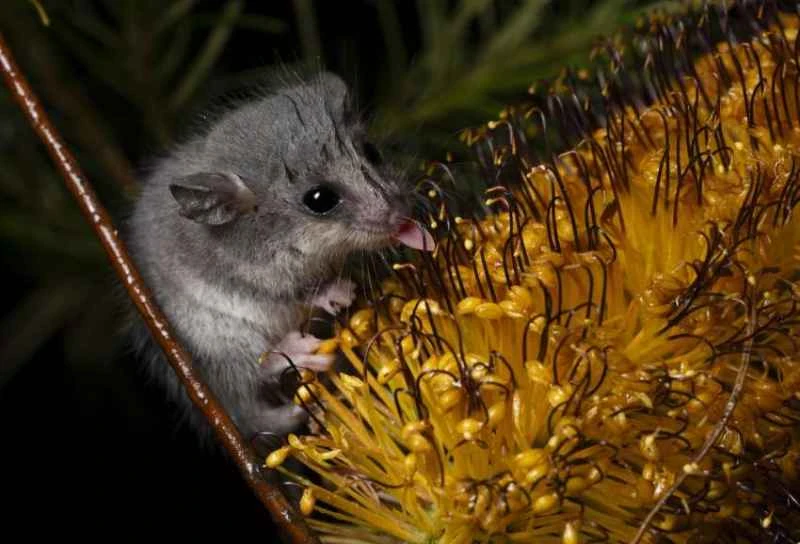
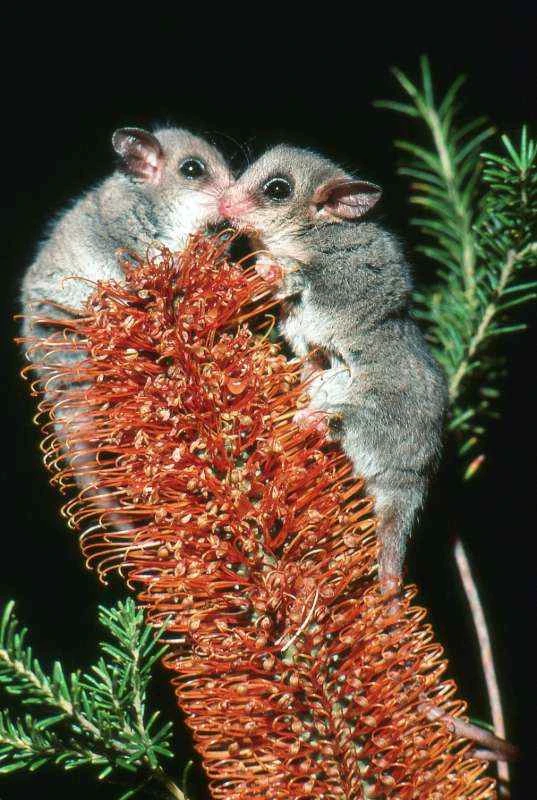
These palm-sized nocturnal marsupials are adept at climbing among flowers to feed on nectar and pollen, making them important nocturnal pollinators in forest undergrowth ecosystems.
Distribution and Habitat
It is mainly distributed in heather thickets, open woodland thickets and forest edge areas rich in flowering resources in southeastern Australia (including Tasmania), relying on dense understory and continuous flowering plant resources.
Appearance
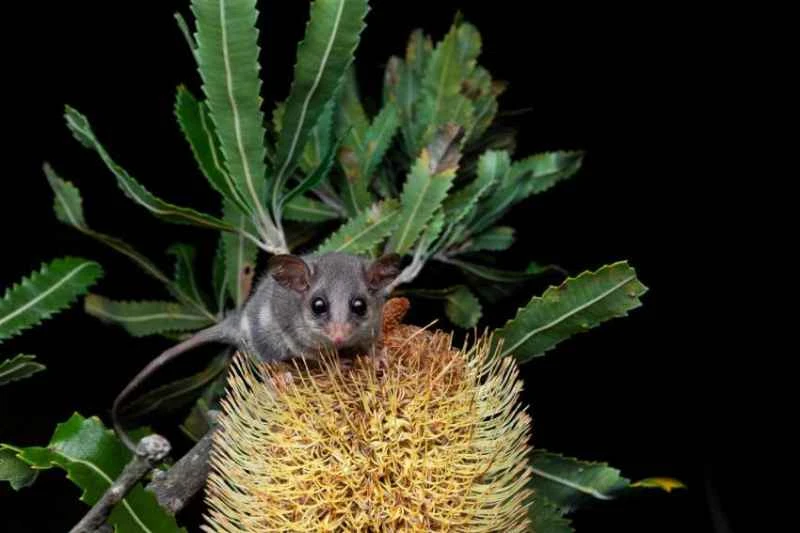
It is extremely small in size, with large eyes and round ears. Its back fur is grayish-brown to brownish-gray, and its belly is light-colored. Its long and slender snout is convenient for feeding on nectar. Its long and slender tail can be used for balance and climbing.
Detailed introduction
The Eastern Pygmy Possum ( Cercartetus nanus ) is a very cute and inconspicuous small marsupial mammal found in southeastern Australia. Only about the size of a hand, it roams nocturnally in bushes and undergrowth, feeding on nectar, pollen, soft fruits, and small insects. Skilled at climbing and foraging among flowers, it is not only a nocturnal predator but also an important pollinator for many native plants.
Compared to the larger opossum, the pygmy possum relies more heavily on dense understory and flowering plant resources, especially in heath and open woodland shrublands. They can enter a short-term "sluggish/dormant" state to conserve energy (especially in cold or food-scarce conditions), making them more sensitive to fire frequency, habitat fragmentation, and flowering plant continuity.
Classification and nomenclature
The eastern pygmy possum belongs to the class Mammalia, superorder Marsupia, family Burramyidae, and genus Cercartetus . Its English name, "pygmy possum," refers to its extremely small size and somewhat miniature possum-like appearance; "eastern" emphasizes its primary distribution in southeastern Australia.
In Chinese, "pygmy possum" is often translated as "dwarf possum" or "dwarf opossum". This page will consistently use "eastern dwarf possum" to highlight its genus and family classification and common Chinese translation conventions.
Appearance features
The Eastern Pygmy Possum is small in size, with a head and body length typically around 7–10 cm and a tail length around 7–11 cm, often equal to or slightly longer than its body. Its weight ranges from approximately 15–45 grams. The fur on its back is generally grayish-brown to brownish-gray, while the underside is lighter, appearing creamy-white or light gray. It has large black eyes and rounded ears, and a long, slender snout, well-suited for reaching into flowers to feed on nectar and pollen.
The tail is an important characteristic: it is long and slender, used for balance while climbing, and can also be curled up when resting. The toes have strong gripping power, suitable for moving among twigs and inflorescences; some individuals may store a small amount of fat in their tails for energy reserves.
Distribution range and habitat
The Eastern Pygmy Possum is mainly distributed in suitable habitats in southeastern Australia, including New South Wales, Victoria, and Tasmania. They prefer environments with abundant flowering plants and concealed structures, such as heather thickets, open woodlands with dense thickets, coastal scrublands, foothill forest edges, and native vegetation zones in some gardens and protected areas.
They often use tree cavities, bird nests, piles of dead leaves, crevices in fallen logs, or artificial nest boxes as daytime resting places. Because they rely on the "hidden corridors" connecting the understory, over-clearing or fragmentation of their habitat forces them to cross bare ground, increasing their risk of being preyed upon by cats, foxes, and owls.
Lifestyle Habits and Behaviors
The eastern pygmy possum is primarily nocturnal, becoming active after dusk, foraging among bushes and flowerbeds. They are agile and quickly retreat into vegetation or nests when disturbed. Individual ranges are relatively small, but they will move between different foraging sites depending on the timing and location of flowering resources.
In cold or food-scarce conditions, they can enter a short-term "torpor" state, lowering their body temperature and metabolism to conserve energy. This ability helps them survive in environments with significant seasonal fluctuations, but it also means they require stable habitats and a sustainable source of flowers.
feeding habits
The eastern pygmy possum primarily feeds on nectar and pollen, but also consumes soft fruits, sap, and small insects and spiders. Its food intake varies seasonally: during peak flowering season, it favors flowers, while increasing its animal-based diet when insects are plentiful or flowers are scarce. As they move among flowers, they carry pollen to other blossoms, thus playing a crucial role in the ecosystem's pollination process.
Reproduction and life cycle
Reproduction is largely dependent on food conditions and season, with more active breeding occurring when resources are plentiful. Females can give birth to multiple offspring per litter, which continue to develop within the brood pouch before gradually leaving to learn foraging and climbing around the nest. The mother may maintain a high energy requirement during the rearing period; therefore, a continuous supply of nectar and insects is crucial for reproductive success.
Lifespan in the wild is typically several years (usually around 3–4 years), influenced by predation pressure, habitat quality, and climate fluctuations; individuals may also live longer under favorable conditions.
Relationship with humans
Eastern pygmy possums are generally harmless to humans and are more often seen as "rare" native creatures. For nature enthusiasts, they are valuable targets for nighttime observation and wildlife photography; for ecosystems, they are pollinators of native plants and part of the food web.
In urban fringe areas, preserving native shrubs, planting native flowering plants, setting up nest boxes, and restricting domestic cats from going out at night can improve their survival chances in gardens and reserves.
Protecting the status quo and threats
The eastern pygmy possum is generally assessed as Least Concern (LC), but local populations may still be subject to a variety of pressures: habitat clearing and fragmentation leading to a reduction in flower sources and camouflage structures; frequent or high-intensity fires causing short-term loss of understory vegetation; increased mortality risk from invasive predators (feral cats, foxes); and abnormal climate affecting flowering rhythms and food supply.
Practical directions for conservation and management include: maintaining and restoring the continuity of shrubland and flower sources, rational fire management to leave "refuge patches", controlling invasive predators in key habitats, and improving habitat quality and connectivity through nest boxes and native plant landscapes.
Frequently Asked Questions
Q1: Is the Eastern Pygmy Possum a "possum" or a "possum"?
In everyday Chinese, "possums" are often collectively referred to as "负鼠" (fùshǔ), but the eastern pygmy possum belongs to the Burramyidae family, is smaller in size, and has a diet more focused on nectar and pollen. The different translations do not affect its status as a native small marsupial.
Q2: What do they mainly eat?
Their main food sources are nectar and pollen, but they also eat soft fruits, tree sap, and invertebrates such as insects and spiders. The proportions of their diet vary depending on the season.
Q3: Why are they sensitive to fire and habitat change?
They rely on understory shrubs to provide concealed passageways and flower sources. Frequent or high-intensity fires can cause the shrubs and flower sources to disappear temporarily, increasing the risk of predation and reducing reproductive success.
Q4: How can we coexist more amicably in the garden?
Planting native flowering plants, preserving the leaf litter and shrubs, setting up nest boxes, and keeping cats indoors at night can all reduce the risk and increase their chances of being seen.