Basic Information
Scientific classification
- Chinese name: Estuarine Crocodile
- Scientific name: Crocodylus porosus
- Classification: Crocodilians
- Family: Crocodilianidae; Genus: Crocodilia
Vital signs data
- Body length: Adult males are usually 4–5 meters long, with a few individuals exceeding 6 meters; females are significantly smaller, mostly around 2.5–3 meters.
- Weight: Weight varies from individual to individual. Large male crocodiles can weigh hundreds of kilograms, and extreme individuals can even exceed 1 ton, making them one of the largest crocodiles in existence.
- Lifespan: Estuarine crocodiles are long-lived species, capable of living for decades in the wild, and their lifespan has been recorded to exceed 60–70 years under good captive conditions.
Significant features
One of the world's largest and most widely distributed crocodiles, males can reach several meters in length. They can live in freshwater rivers and swamps, as well as in coastal and near-shore waters, making them a highly representative apex predator in the Indo-Pacific region.
Distribution and Habitat
It is widely distributed along the Indian Ocean-West Pacific coast, including estuaries, mangrove swamps, intertidal channels, lagoons and slow-flowing sections of rivers in Southeast Asia and northern Australia. It can also enter inland freshwater lakes and farmland irrigation canals, and swim long distances in shallow coastal waters.
Appearance
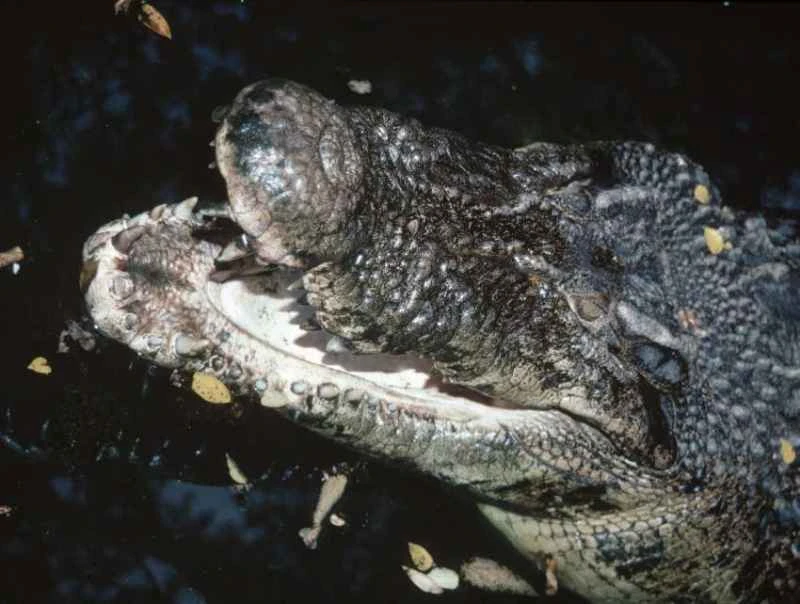
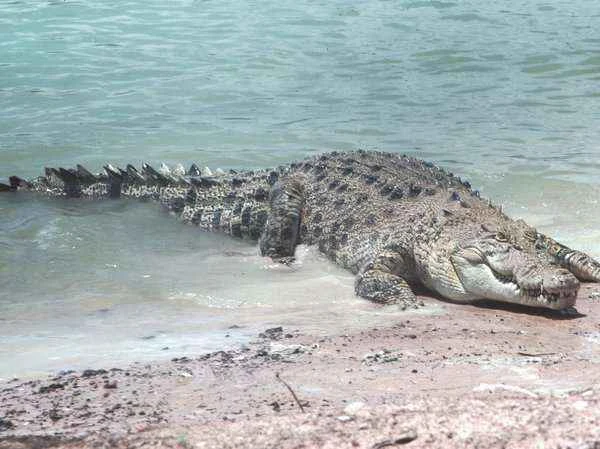
The body is elongated, with a strong, slightly flattened tail. The back and tail are covered with hard bony plates, mostly dark olive green, grayish-brown, or dark brown with markings, while the belly is light yellow or cream. The head is broad with a wide snout, and the mouth is filled with sharp, conical teeth. The eyes and nostrils are located at the front of the top of the head, allowing for continued observation and breathing when most of the body is submerged.
Detailed introduction
The estuarine crocodile (also known as the saltwater crocodile or saltwater crocodile, scientific name Crocodylus porosus ) is one of the largest living reptiles, belonging to the genus Crocodylus in the family Crocodilianidae. It is distributed throughout the vast tropical and subtropical coastal areas of the Indian and western Pacific Oceans and is one of the top predators in northern Australia and many Southeast Asian countries. The estuarine crocodile can live not only in freshwater rivers, estuaries, and mangrove swamps, but also for extended periods in seawater, making it one of the very few large crocodiles adapted to marine environments.
Classification and nomenclature
The estuarine crocodile belongs to the class Reptilia, order Crocodylia, family Crocodylidae, and genus Crocodylus . The scientific name *Crocodylus porosus* means "porous" or "full of holes," referring to the numerous small pores on its skull and bony plates. The English name *Estuarine Crocodile* emphasizes its typical habitat—estuaries—while *Saltwater Crocodile* highlights its adaptation to saltwater environments. In Australia and Southeast Asia, this species is often simply referred to as "Saltie" or "saltwater crocodile," and is an iconic animal that is both revered and familiar to the locals.
Appearance features
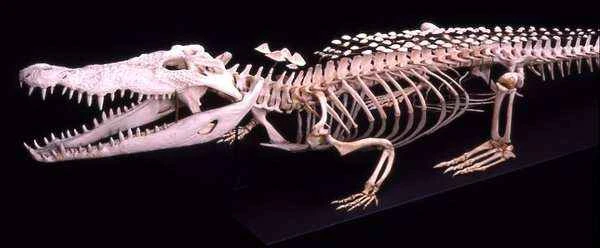
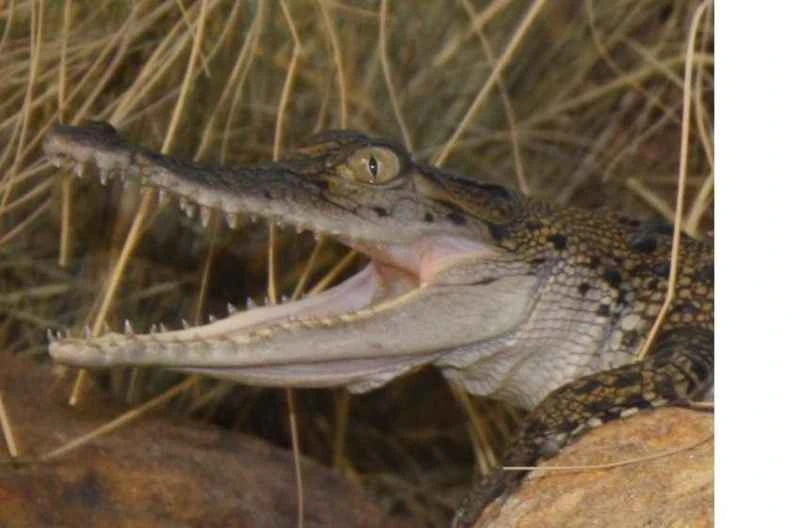
The estuarine crocodile is an extremely large animal, with males being significantly larger than females. Adult males can reach 4–5 meters in length or even longer, and weigh hundreds of kilograms or more than 1 ton, making them the largest living crocodiles. Their bodies are elongated, with a strong, slightly laterally compressed tail used for powerful swimming. The head is broad and slightly triangular, with a wide snout filled with sharp, conical teeth, and an extremely powerful bite. The back and tail are covered with hard bony plates, forming a rough "armor," typically dark olive green, grayish-brown, or dark brown with alternating light and dark stripes and horizontal bands; juveniles usually have more vibrant yellow and black markings. The underside is lighter, mostly light yellow or cream-colored. The eyes and nostrils are located on the front of the top of the head, allowing them to see and breathe even when most of their body is submerged.
Distribution range and habitat
Estuarine crocodiles have an extremely wide distribution, ranging from the east coast of India, the Bay of Bengal, and Southeast Asian countries (including Bangladesh, Myanmar, Thailand, Malaysia, Indonesia, and Papua New Guinea), all the way to the northern coast of Australia and some islands in the Pacific Ocean. Typical habitats include river deltas, mangrove swamps, intertidal channels, coastal lagoons, and wide, slow-flowing sections of lower rivers. They can also inhabit inland freshwater lakes, swamps, and even agricultural irrigation ditches. In marine environments, they can travel long distances through nearshore waters and migrate between islands. Estuarine crocodiles are sensitive to water temperature and habitat quality, preferring warm, productive waters with abundant prey.
Lifestyle Habits and Behaviors
Estuarine crocodiles are typical ambush predators, spending most of their time lurking in or near the water's edge, silently observing only their eyes and nostrils. Once prey approaches the water's edge or moves on the surface, they burst forth with incredible speed and attack. Estuarine crocodiles are typically more active at dawn, dusk, and night, and are often seen basking on the shore during the day to regulate their body temperature. Adult males are highly territorial, asserting their territory and intimidating rivals during the breeding season through roars, tail slapping, and body displays. They are excellent swimmers, moving silently through rivers and mangroves, and navigating long distances in coastal waters.
feeding habits
Estuarine crocodiles are apex carnivorous predators. Juveniles primarily feed on insects, crustaceans, small fish, and amphibians. As they grow, their prey expands to include fish, waterfowl, turtles, other reptiles, and medium to large mammals, including wild boar, deer, cattle, and buffalo. They often use camouflage to ambush prey in shallow water or along the shore, launching a sudden attack. They seize their prey with a powerful bite and use behaviors such as a "death roll" to tear or drag them into deeper water, causing them to drown. Estuarine crocodiles also scavenge carrion, not overlooking floating corpses in the environment, making them important "scavengers."
Reproduction and life cycle
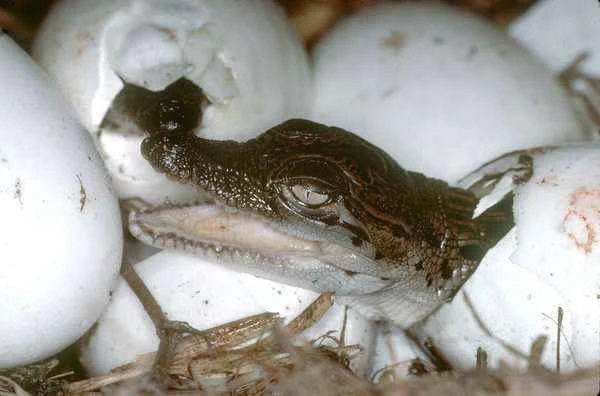
Estuarine crocodiles are oviparous, and their breeding season varies geographically, generally related to the rainy season and water level changes. Female crocodiles build nests by piling up plant debris and mud on riverbanks, mangrove highlands, or the edges of freshwater swamps, forming a raised nest mound. Each clutch can contain dozens of eggs. After laying eggs, the female crocodile will guard the nest closely, protecting the eggs by attacking potential predators. Incubation time is greatly affected by temperature. At the end of incubation, the cries of the young crocodiles will stimulate the female to dig open the nest mound and gently carry the young crocodiles into the water with her mouth. Early mortality is high for young crocodiles, who are mostly preyed upon by birds of prey, large fish, and adult crocodiles; only a few individuals survive to adulthood. Estuarine crocodiles grow slowly but have extremely long lifespans, living for decades in the wild, with individuals recorded to be over 60–70 years old in captivity.
Relationship with humans
Due to their enormous size and formidable attack power, estuarine crocodiles are considered one of the most potentially threatening crocodiles to humans, with attacks and even fatal incidents recorded in several countries. Their habitats largely overlap with those of fishermen, farmers, and local residents in estuaries, mangroves, and coastal waters. At the same time, estuarine crocodiles maintain a healthy balance in aquatic ecosystems by preying on sick and weak animals and scavenging carrion. In the past, the estuarine crocodile leather trade led to severe hunting and population decline in some areas. Today, in countries like Australia, estuarine crocodiles are listed as a protected species, allowing limited "population management" and captive breeding for leather and meat products, while reducing direct conflict with humans.
Protecting the status quo and threats
The estuarine crocodile is generally listed as "Least Concern" on the IUCN Red List, and in some areas, its population has recovered from historical overhunting and is stabilizing or even increasing. However, in some habitats, the estuarine crocodile still faces threats such as wetland and mangrove reclamation or modification, water pollution, illegal hunting, and human killings driven by fear or retaliation. Extreme weather and sea-level changes caused by climate change may also affect its nesting sites and hatching success rates. Effective conservation measures include: strictly enforcing hunting and trade controls, protecting and restoring mangroves and estuarine wetlands, strengthening human-crocodile conflict management and safety education, and enabling local residents to benefit from sustainable uses such as ecotourism and crocodile farming through community participation projects, thereby increasing their willingness to protect the estuarine crocodile and its habitat.
Frequently Asked Questions
Q1: How dangerous are estuarine crocodiles to humans?
The estuarine crocodile is one of the largest and most aggressive crocodiles, and has been involved in numerous attacks on humans in some areas. Anyone fishing, swimming, or engaging in any water activities in estuarine crocodile habitats should strictly adhere to local safety guidelines, including avoiding lingering near the water during the crocodile's most active times, such as early morning and evening, not swimming in areas with warning signs, and maintaining a safe distance from the water's edge.
Q2: What are the differences between the estuarine crocodile, the Nile crocodile, and the saltwater crocodile?
The estuarine crocodile ( Crocodylus porosus ) is mainly distributed along the Indian Ocean-western Pacific coast and is adapted to saltwater environments; the Nile crocodile ( C. niloticus ) mainly lives in freshwater rivers and lakes in Africa; while the saltwater crocodile ( C. acutus ) of the Americas is distributed in the estuaries and coastal waters of tropical and subtropical Americas. They differ in body color, skull morphology, and geographical distribution, but all are large apex predators in terms of their ecological role.
Q3: How to reduce risks when venturing into areas where estuarine crocodiles are found?
Recommended measures include: heeding and obeying all warning signs about crocodiles and safety advice from local authorities; avoiding swimming or bathing in estuaries, mangrove forests, and coastal waters where crocodiles are known to be present; not cleaning up fish catches or feeding animal scraps near the water; not camping or sleeping near the water; and if on a boat, avoiding dangling limbs above the water. If you encounter a suspected crocodile, keep your distance and report it to the local authority.
Q4: Are estuarine crocodiles protected by law?
In countries like Australia, estuarine crocodiles are protected native wildlife, and hunting or capturing them is prohibited. Management and commercial breeding are only permitted under strict licenses. Many Southeast Asian countries have also enacted corresponding regulations and international conventions to regulate trade. Conservation measures aim to balance human safety and species survival, achieving long-term coexistence through habitat protection, scientific monitoring, and sustainable utilization.


