Basic Information
Scientific classification
- Chinese name: Central Asian Nighthawk
- Scientific name: Caprimulgus centralasicus, Vaurie's Nightjar
- Classification: Climbing birds
- Family and genus: Order Noctuidae, Family Noctuidae, Genus Noctuidae
Vital signs data
- Body length: Approximately 19 centimeters
- Weight: No verification information available.
- Lifespan: No verification data available.
Significant features
Distribution and Habitat
It is a species endemic to China, and also a rare and poorly known species endemic to the southern deserts of Xinjiang. It mainly inhabits desert edges and sand dunes and barren mountains covered with low shrubs.
Appearance
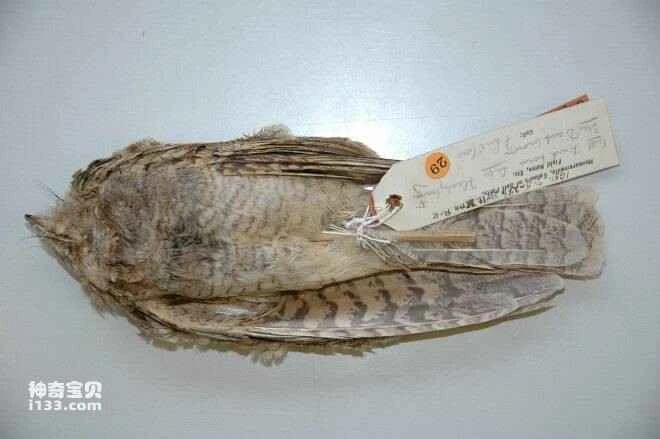
The Central Asian Nightjar measures 19 cm in length. Its upperparts are pale sandy-yellow with dark brown wavy markings and spots; the crown and shoulders are black with narrow dark brown stripes; the central tail feathers are buff-grey with fine spots and six inconspicuous horizontal bars; the outer tail feathers have more and more prominent dark brown horizontal bars; each side of the throat has a small buff-white spot. The underparts are creamy-yellow, with fine dark brown horizontal bars on the breast, which become wider and sparser on the lower breast and flanks; the belly is plain without spots. The outer webs of the primary flight feathers have brown and brown spots, while the inner webs have horizontal bars; the tips of the wing coverts are sandy-yellow, forming inconspicuous wing patches, and the primary coverts have coarse dark brown and pale chestnut spots. The iris is dark brown, the beak is blackish-horny, and the legs are flesh-colored.
Detailed introduction
The scientific name of the Central Asian Nightjar is Caprimulgus centralasicus, and its foreign name is Vaurie's Nightjar. There are no subspecies.
The habits of the Central Asian Nightjar are inferred from other species in the same genus, such as the Common Nightjar, which is solitary or in pairs. Nocturnal, it spends the day crouching on grassy areas in forests or lying on shady tree trunks, making it difficult to spot due to its similar body color. It is active only at dusk and night, especially at dusk, constantly circling and gliding in the air to hunt. Its flight is fast and silent, often accompanied by a gliding motion after flapping its wings. During the breeding season, it frequently calls at night and dusk. It primarily hunts in flight, with more frequent hunting activity at dusk. Its diet consists of insects such as longhorn beetles, gnats, beetles, noctuid moths, mosquitoes, and midges.
The Central Asian Nightjar is a species of nightjar endemic to China. It is rare and little is known about it. It is likely a resident bird along the sandy foothills of the Taklamakan Desert at the foot of the Kunlun Mountains, but the only recorded sighting to date is from Pishan County, Xinjiang, China, in 1929. No further discoveries have been made since. The only specimen of this species, collected in 1929, was likely found in the sandy foothills of the Taklamakan Desert at the foot of the Kunlun Mountains in southwestern Xinjiang, specifically in Guma Town, Pishan County, Xinjiang.
Listed in the IUCN Red List of Threatened Species 2016 ver 3.1 – Data Deficient (DD).
Protect wild animals and ban the consumption of wild game.
Maintaining ecological balance is everyone's responsibility!