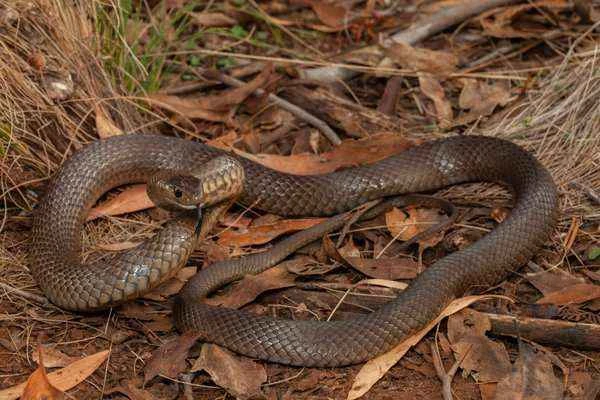
Basic Information
Scientific classification
- Chinese name: Eastern Brown Snake
- Scientific name: Pseudonaja textilis
- Classification: Squamata
- Family and genus: Elapidae, genus *Pseudorascar*
Vital signs data
- Body length: Adults are typically about 1.1–1.8 meters in total length, with most individuals in the range of 1.2–1.5 meters, and very large individuals can approach or slightly exceed 2 meters.
- Weight: Weight varies considerably depending on individual size and nutritional status, with most adults weighing between several hundred grams and 1 kilogram.
- Lifespan: Wild individuals are expected to live for several years to more than ten years, with lifespan affected by factors such as food resources, habitat quality, and the degree of human disturbance; lifespan may be even longer under good captive conditions.
Significant features
The brown snake, a typical highly venomous species in eastern Australia, has a slender body and is mostly brown or chocolate-colored. Its venom has a strong effect on blood clotting and the nervous system. It is also an important rodent predator and is very common in farmland and suburban environments.
Distribution and Habitat
Widely distributed in eastern and parts of southern Australia, from eastern Queensland, New South Wales, the Australian Capital Territory to parts of Victoria and South Australia. It inhabits open grasslands, scrubland, farmland, pastures, barn perimeters, and open spaces and greenbelts in suburban residential areas, often using grass roots, rocks and piles of wood, caves, and building crevices as hiding places.
Appearance
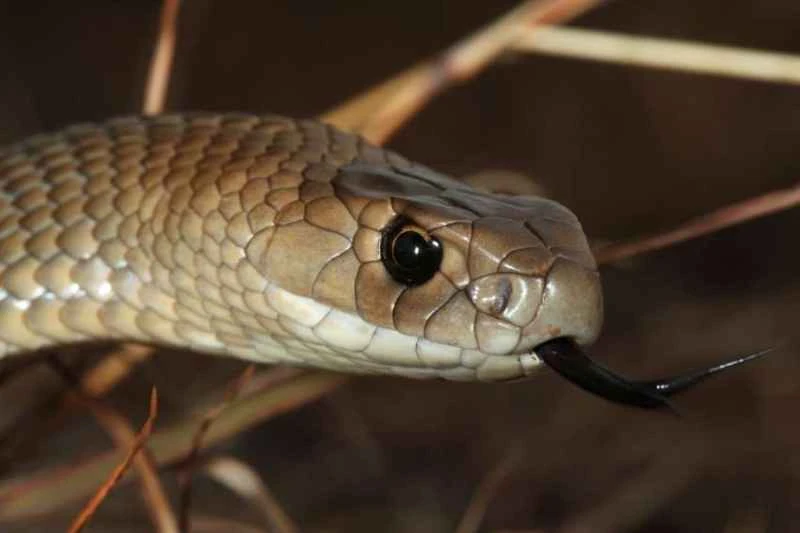
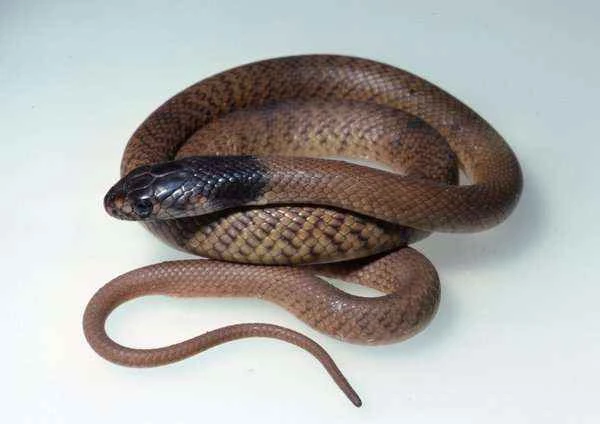
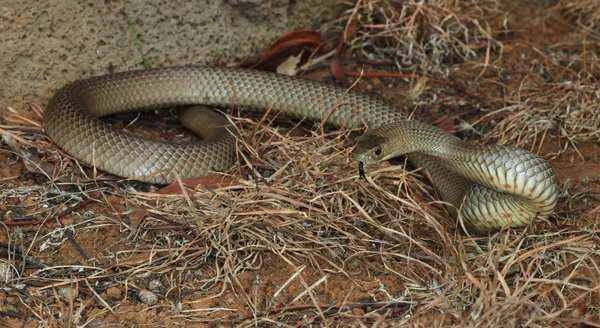
The body is slender and relatively delicate, with a slightly coffin-shaped head. The back color varies from light yellowish-brown and olive brown to dark chocolate brown and even near black. Some individuals have fine, dark, and light-colored interwoven scales. The ventral surface is lighter in color, mostly cream, pale yellowish-gray, or light brown. The scales are smooth, and the overall appearance is simple and uniform in color, which is conducive to camouflage in grassland and farmland environments.
Detailed introduction
The Eastern Brown Snake ( Pseudonaja textilis ) is one of Australia's most notorious and venomous terrestrial snakes, belonging to the genus Pseudonaja in the family Elapidae. It is widely distributed in eastern and parts of southern Australia, including large areas of farmland, pastures, and suburbs, and is a significant cause of snakebite deaths. Despite its fearsome reputation, the Eastern Brown Snake plays a crucial role as a rodent predator in the ecosystem, helping to control rodent populations and maintain agricultural and natural ecological balance.
Classification and nomenclature
The Eastern Brown Snake belongs to the class Reptilia, order Squamata, suborder Serpentes, family Elapidae, and genus Pseudonaja . The genus Pseudonaja includes several species of "brown snakes," such as the Eastern Brown Snake ( P. textilis ) and the Dugart Brown Snake ( P. affinis ), generally known for their potent venom and medium to long body size. The specific epithet "textilis" comes from Latin, meaning "weaving" or "weaving," referring to the dense, woven-like scales on its back. Its common English name, Eastern Brown Snake, succinctly reflects its distribution area and typical brown body color.
Appearance features
The Eastern Brown Snake is medium to long in size, with a slender and relatively delicate body. Its head is slightly coffin-shaped, wider than its neck, though the boundary isn't particularly distinct. The back color varies considerably, ranging from light yellowish-brown, sandy brown, and olive brown to dark chocolate brown and even near black; some individuals exhibit alternating light and dark scales with fine markings, while others are almost entirely monochromatic. Juveniles often retain more pronounced patterns on their backs and heads, such as dark bands or spots. The underside is lighter in color, mostly cream, pale yellowish-gray, or light brown, often with small dark spots scattered along the sides. The smooth scales and flowing body lines make it excellent camouflage in grasslands, farmlands, and leaf litter.
Distribution range and habitat
The Eastern Brown Snake is widely distributed in eastern and parts of south-central Australia, from eastern Queensland, New South Wales, and the Australian Capital Territory, through Victoria to parts of South Australia, and has also been recorded in parts of Papua New Guinea. It is highly adaptable to various habitats, including open grasslands, scrubland, woody savanna, farmland, pastures, barn perimeters, and vacant lots in suburban residential areas. Typical micro-habitats include grass roots, piles of stones, under fences and woodpile, abandoned burrows and rabbit holes, and crevices around agricultural buildings. Due to its high degree of overlap with farmland and human living environments, it is one of the most frequently encountered venomous snake species by Australians.
Lifestyle Habits and Behaviors
The Eastern Brown Snake is primarily diurnal, especially active during the warm, sunny days of spring and summer. On cooler mornings, they bask in the sun to warm up before quickly scurrying around grasslands, farmland, and buildings to forage. This snake is extremely alert; it will often retreat quickly to cover itself at the slightest vibration or footsteps. However, if cornered, accidentally stepped on, or deliberately provoked, it may raise its forebody, flatten its neck, hiss, and bite rapidly and multiple times. The Eastern Brown Snake attacks with incredible speed, injecting a significant amount of venom in a single bite; therefore, if encountered in the wild, one must remain highly vigilant and keep a safe distance, avoiding any attempt to capture or drive it away.
feeding habits
The eastern brown snake is a typical carnivorous predator, primarily feeding on small mammals, especially introduced rodents such as house mice and black rats, and also preying on some native small marsupials. They also prey on lizards, other snakes (including small venomous and non-venomous snakes), birds and their nestlings, and occasionally frogs and other small vertebrates. Abundant rodent resources around farmland, grain storage facilities, and poultry farms often attract eastern brown snakes, making them, in effect, "natural rodent predators." They locate prey through sight and smell, quickly bite and inject venom, swallowing the prey whole after it is weakened or dead by the venom.
Reproduction and life cycle
The Eastern Brown Snake is an oviparous snake. The breeding season typically lasts from spring to early summer, during which males significantly increase their range to find females in estrus. After mating, the female lays her eggs in secluded, warm, and relatively humid locations, such as under decaying wood, in crevices of rocks, inside caves, or in abandoned buildings. The number of eggs per clutch depends on the size of the female, commonly ranging from 10 to 30. The eggs incubate in the environment, and the incubation period varies depending on temperature and humidity. Hatchlings become independent immediately, resembling adults in appearance but smaller in size, and quickly develop hunting and self-defense abilities. In the wild, many individuals can survive for several years to over a decade, and may live even longer in less disturbed areas.
Relationship with humans
In eastern Australia, the eastern brown snake is a significant source of snakebite fatalities and is considered one of the "most dangerous" venomous snakes. They are frequently found near farmland, pastures, barns, and suburban homes, overlapping closely with human habitats. Most bites occur from accidentally stepping on a snake, attempting to drive it away or catch it, or moving wood or rocks without proper inspection. An eastern brown snake bite can cause coagulation disorders, internal bleeding, nausea, dizziness, and even organ damage due to the neurotoxins and procoagulant toxins in the venom. It must be treated as a medical emergency; immediate pressure bandaging and prompt transport to a hospital are essential for professional evaluation and treatment. In most parts of Australia, native snakes are legally protected, and unauthorized hunting or possession is prohibited.
Protecting the status quo and threats
Despite the public's perception of the eastern brown snake as highly dangerous, it is generally classified as "Least Concern" on the IUCN Red List from a conservation perspective, with its overall population considered relatively stable. It adapts well to human-altered agricultural landscapes and skillfully utilizes rodent resources, even being quite common in some areas. However, local populations also face threats such as further habitat fragmentation, road traffic fatalities, indirect impacts from pesticides and rodenticides, and deliberate killings by humans due to fear and misunderstanding. Long-term conservation of the eastern brown snake depends on maintaining its diverse native and semi-natural habitats, as well as public education to help people identify venomous snakes, understand appropriate preventative measures, and learn safe coexistence methods, thus reducing the risk of snakebites while preserving its vital role in the ecosystem.
Frequently Asked Questions
Q1: How potent is the venom of the Eastern Brown Snake?
The eastern brown snake is considered one of the most venomous land snakes in the world, with its venom containing various neurotoxins and components that affect blood clotting. Severe bites that are not treated promptly can be fatal; therefore, any suspected eastern brown snake bite should be treated as a medical emergency, requiring immediate pressure bandaging and prompt medical attention.
Q2: Will the Eastern Brown Snake attack humans on its own initiative?
In most cases, the eastern brown snake is more likely to flee than attack. Bites are often caused by accidentally stepping on it, attempting to catch or hit it, or disturbing it while turning over rocks or piles of wood. As long as you keep your distance and don't provoke or try to handle the snake, you will usually avoid being bitten.
Q3: Why do eastern brown snakes often appear near farmland and residential areas?
Farmland, barns, poultry farms, and the outskirts of urban areas often harbor abundant rodents and other small animals, providing a rich food source for the eastern brown snake. Meanwhile, weed beds, woodpile, and building crevices offer suitable hiding places. This environment is therefore highly attractive to them, resulting in their frequent presence in agricultural and suburban areas.
Q4: How can people living in areas where the brown snake is found in the east reduce their risk of being bitten by a snake?
Recommended measures include: keeping the yard clean and reducing tall grass and piles of debris; properly storing food and feed to reduce rodent populations; wearing closed-toe shoes and long pants when walking in the wild or farmland, and using a flashlight when going out at dusk or night; tapping rocks, wood piles, and sheet metal cover with a tool before turning them over; and keeping a distance from snakes and contacting professional snake catchers instead of trying to handle or kill them yourself.


