
Basic Information
Scientific classification
- Chinese name: New Caledonian naked-nosed owl
- Scientific name: New Caledonian Owlet Nightjar, also known as the Mysterious Owlet Nightjar.
- Classification: Climbing birds
- Family and genus: Order Nautiloidea, Family Nautilidae, Genus Nautiloidea
Vital signs data
- Body length: Approximately 28 centimeters
- Weight: No verification information available.
- Lifespan: No verification data available.
Significant features
Known as the most elusive bird in the world
Distribution and Habitat
The New Caledonian naked-nosed owl is endemic to New Caledonia, and its habitat is located in savannahs and humid forests at altitudes of up to 800 meters.
Appearance
It measures 28 centimeters in length. It has greyish-brown and black feathers, short, oval wings, a slightly rounded tail, and long, stout legs. Its call is unclear, but is believed to be a whistling and trilling sound. It is much larger than the Australian owlet-nightjar.
Detailed introduction
The New Caledonian Owlet Nightjar (scientific name Aegotheles savesi) is a large, critically endangered or possibly extinct owl endemic to New Caledonia (a bird species related to swifts and nightjars).
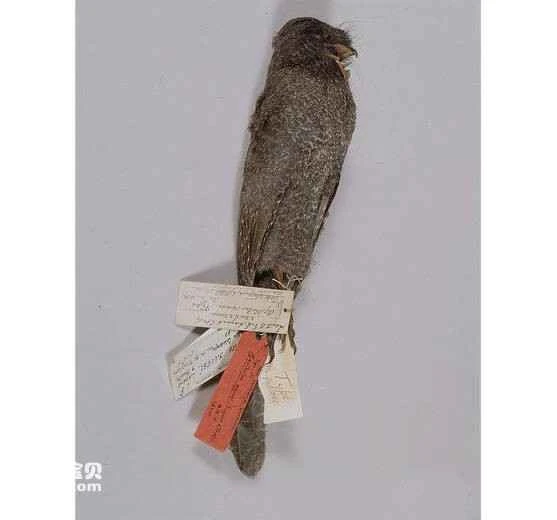
The New Caledonian owl lives in the highlands and builds its nest in tree cavities. It forages in trees and sometimes attacks small animals. Whether these habits apply to the New Caledonian owl is still unclear, as its legs are longer than those of other owls, making it more likely to be terrestrial.
Currently, only two specimens collected in the 1990s and three observation reports exist regarding the New Caledonian owl, indicating very little knowledge of them. The two known specimens were collected in 1880 and 1915, respectively. The type specimen was collected after an New Caledonian owl flew into a bedroom in the village of Tonghoué. The second specimen was found in an Italian museum. The most recent report is from 1998, when a New Caledonian owl was spotted foraging in a river valley. Similar calls to the New Caledonian owl were heard between 1996 and 1998. Many scholars still believe that a portion of the species still exists. Researchers conducted several field surveys in New Caledonia in 2002 and 2007, but failed to spot the bird. It is estimated that only 1 to 49 adults of the New Caledonian owl remain in the wild.
Little is known about the New Caledonian naked owl, but they are certainly threatened and their numbers are declining. The specific threats are unclear, but they may be threatened by invasions from domestic cats and rodents. Habitat destruction caused by fires, logging, and mining may also be contributing factors to their decline. They are currently listed as critically endangered by the International Union for Conservation of Nature (IUCN).
Protect wild animals and ban the consumption of wild game.
Maintaining ecological balance is everyone's responsibility!


