Basic Information
Scientific classification
- Chinese name: Long-tailed Woodcock
- Scientific name: Nyctibius aethereus, Long-tailed Potoo
- Classification: Climbing birds
- Family: Nighthawks, Wood Owls, Corinthus
Vital signs data
- Body length: 45-54 cm
- Weight: No verification information available.
- Lifespan: No verification data available.
Significant features
Distribution and Habitat
Distributed in South America (including Colombia, Venezuela, Guyana, Suriname, Ecuador, Peru, Bolivia, Paraguay, Brazil, Chile, Argentina, Uruguay, and the Falkland Islands).
Appearance
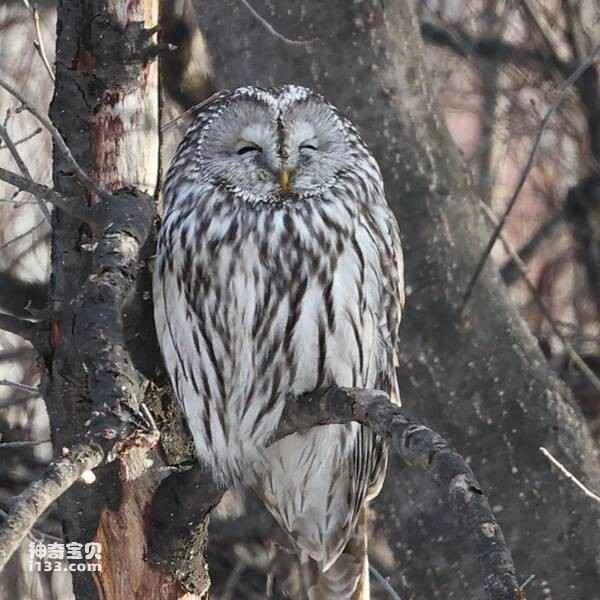
The Long-tailed Wood Owl is a large owl, measuring approximately 45-54 cm in length, with males and females resembling each other. Adults are generally light grey, with a round head and a prominent greyish-white facial disc. The Long-tailed Wood Owl has black eyes, a yellow bill, and no ear tufts. Its upperparts are grey with brown markings, its underparts are white with dark brown longitudinal stripes, and its tail feathers are greyish.
Detailed introduction
The Long-tailed Potoo, scientifically known as *Nyctibius aethereus*, is a large owl that inhabits coniferous and mixed coniferous-broadleaf forests in northern mountainous regions. Except during the breeding season, it is usually solitary. During the day, the Long-tailed Potoo mostly roosts deep in dense forests, standing upright on thick, horizontal branches close to the trunk. Its coat color is lighter than that of the Common Owl, making it difficult to spot in birch forests. The Long-tailed Potoo primarily forages at dawn, dusk, and night, mainly feeding on rodents, but also occasionally catching insects, frogs, and medium-sized birds. In winter, when temperatures are low, the Long-tailed Potoo occasionally flies to the forest edge to bask in the sun at midday. Outside of the breeding season, the Long-tailed Potoo is generally timid, immediately flying into the dense forest if anyone approaches. However, during the breeding season, it is different; it may even actively attack people who approach its nest and chicks.
The International Union for Conservation of Nature (IUCN) classifies it as Least Concern (LC); the China Red List of Vertebrates classifies it as Near Threatened (NT).
Protect wild animals and ban the consumption of wild game.
Maintaining ecological balance is everyone's responsibility!