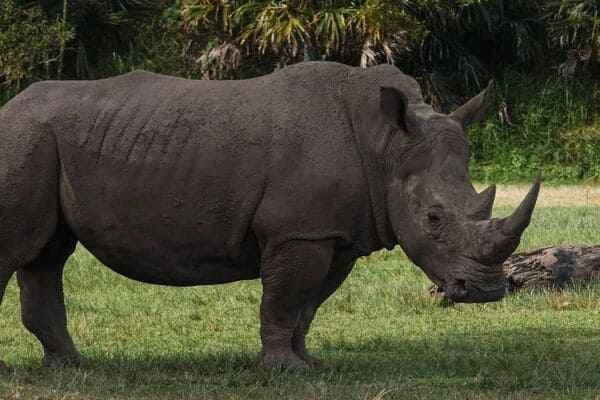
Basic Information
Scientific classification
- Chinese name: Javan rhinoceros
- Scientific name: Rhinoceros sondaicus
- Classification: Hoof Order
- Family and Genus: Rhinoceros (Rhinoceros family)
Vital signs data
- Body length: Head and body length approximately 3.0–3.2 meters; shoulder height 1.4–1.7 meters.
- Weight: 900–2,300 kg (significant variation between sexes and individuals)
- Lifespan: 30–45 years (field estimate)
Significant features
One of the rarest large mammals in existence; a single wild population; highly elusive, requiring mud baths; feeds in lowland shrublands.
Distribution and Habitat
It is mainly limited to the lowland evergreen-monsoon forest and valley shrubland of Ujung Kulong National Park on Java Island, Indonesia.
Appearance
It has only one short horn (females have even shorter horns or are nearly hornless); its grayish-brown skin has shallow folds; and it is smaller than the Indian rhinoceros.
Detailed introduction
The Javan rhinoceros ( Rhinoceros sondaicus ) is one of the rarest large mammals in the world. Historically, it was distributed across Java, Sumatra, the Malay Peninsula, and even along the coast of Indochina and the Bay of Bengal. Today , only a single wild population is confirmed in Ujung Kulong National Park on Java Island, Indonesia , and it is classified as Critically Endangered (CR) . This species is highly dependent on the shrubland of lowland evergreen-monsoon forests, is elusive, and extremely rare. Any disease, volcanic eruption, or tsunami event could have a devastating impact.
Ecology and Habits
They feed on tender leaves, vines, buds, and fruits, preferring densely vegetated areas along river valleys, forest edges, and coastal plains. They often use mud pits for "mud baths" to regulate their body temperature and expel parasites. Adult individuals are mostly solitary or live in small areas with limited territorial overlap; they are extremely sensitive to human disturbance.
Reproduction
Female rhinoceroses reach sexual maturity at approximately 4–7 years of age, with a gestation period of about 15–16 months. They typically give birth to a single child; however, the interval between births may exceed 3 years. Reproduction rates decrease further under conditions of resource scarcity or high levels of disturbance.
Major Threats and Protection
Extremely small populations : All individuals are concentrated in a single protected area and face systemic risks from disease, volcanoes/tsunamis, and inbreeding.
Habitat pressure : Invasive alien plants (such as Erigeron davidii) crowd out foraging space; marginalization caused by human activities.
Poaching risk : Despite strict controls, the black market value of rhinoceros horn necessitates a sustained high level of law enforcement.
Key measures include: continuous patrols and intelligence enforcement, control of invasive plants, maintenance of an undisturbed core area, and feasibility assessment and preparation for establishing a second wild population (with equal emphasis on genetic management and disease monitoring).
Frequently Asked Questions
Q1: What are the differences between the Javan rhinoceros and the Sumatran rhinoceros/Indian rhinoceros?
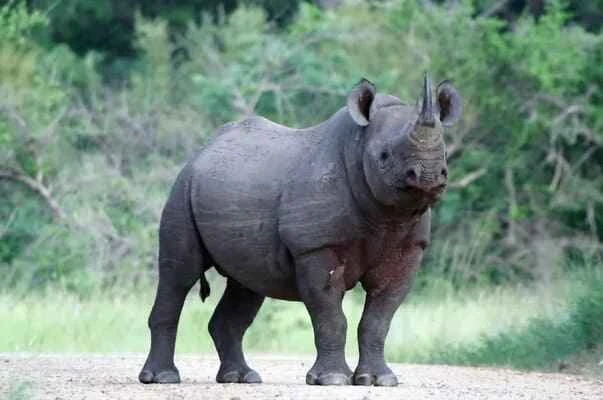
Javan rhinoceros typically has only one horn and it is relatively short. Its skin wrinkles are not as pronounced as those of the Indian rhinoceros. It is smaller than the Indian rhinoceros but about the same size as the black rhinoceros.
Q2: Why are there so few pictures and videos of this critically endangered species?
The population is extremely small and elusive, and the park strictly limits visitor and media access to its core habitat to minimize disturbance; it now relies heavily on camera traps and infrared monitoring.
Q3: What is the biggest risk?
The concentration of all individuals in one place makes it possible for "single-point events" such as epidemics, typhoons/tsunamis, or volcanoes to cause irreversible effects, thus prompting the conservation community to promote the establishment of a second population.
Q4: What can the public do?
Support credible conservation organizations, pay attention to invasive plant control projects, avoid purchasing any rhinoceros horn products, and disseminate scientific information.