Basic Information
Scientific classification
- Chinese name: Golden Garden Spider
- Scientific name: Araneidae (typical genus Trichophyla spp., etc.)
- Classification: Arthropoda
- Family: Araneidae; Genus: *Araneus*
Vital signs data
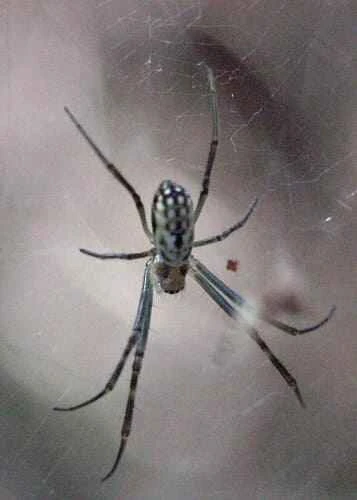
- Body length: Female spiders are approximately 25–40 mm or larger in length, while males are significantly smaller.
- Weight: Varies considerably between species and individuals, mostly in the hundreds of milligrams.
- Lifespan: Generally around 1 year, but can reach 1-2 years in some warmer regions.
Significant features
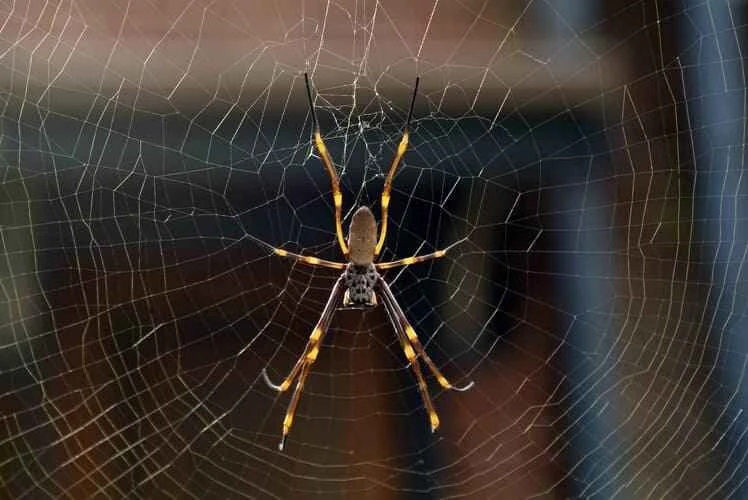
It weaves large, golden-yellow, ring-shaped webs; it preys on a variety of flying insects; and there is a clear difference in size between males and females.
Distribution and Habitat
It is widely distributed in open vegetation zones such as forest edges, valleys, farmland, and courtyards in tropical to subtropical and some temperate regions.
Appearance
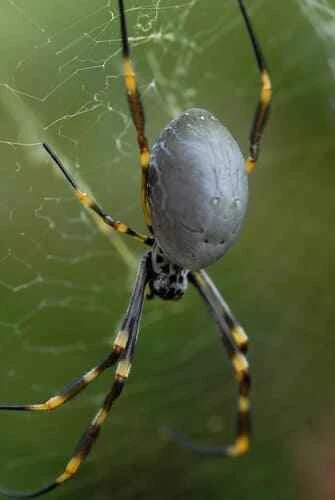
Female spiders have slender bodies or full abdomens, often with yellow and black stripes; their legs are long and some joints have yellow or orange rings.
Detailed introduction
Golden orb weaving spiders are a group of orb spiders that weave webs with a golden sheen. They mainly belong to the genus *Trichonephila* (now often divided into genera such as *Trichonephila* and *Nephila* ) within the family Araneidae. They often spin huge concentric webs in forest edges, gardens, and thickets, with the silk threads displaying a golden or yellowish-brown luster in sunlight, making them one of the most conspicuous web-weaving spiders in tropical and subtropical regions.
Basic Information
Scientific name (general term): Araneidae – golden orb-weaving spiders (typical genus such as Trichophila spp.)
Size: Female spiders can reach 25–40 mm or even larger in length, while male spiders are significantly smaller (sex dimorphism is prominent).
Lifespan: Mostly around 1 year, but some individuals in warmer regions can live up to 1–2 years.
Ecology and Habits
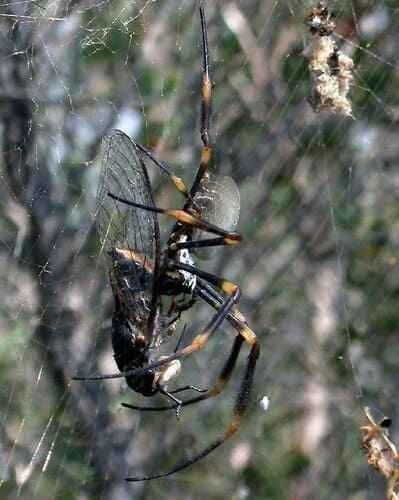
Golden garden spiders typically weave their webs in open spaces such as forest crevices, valleys, roadsides, and courtyards. These webs are enormous, reaching tens of centimeters or even over a meter in width. They primarily prey on flying insects, including moths, grasshoppers, bees, and dragonflies, and sometimes even manage to trap larger insects or small flying vertebrates. They are mostly diurnal or active at dawn and dusk, usually resting in the center or to one side of their web, patiently waiting for prey to crash into it.
Golden Spider Silk
Some of its silk threads are golden or amber in color, making them particularly striking in sunlight. Research suggests that this color may help attract or camouflage prey, and is also related to the silk's unique protein structure and optical properties. Historically, there have been attempts to make fabrics using large quantities of golden orb-weaver spider silk, but these were extremely costly.
Toxicity and Effects on Humans
Golden garden spiders possess venom glands to paralyze their insect prey, but for healthy humans, bites usually only cause mild local pain, itching, and redness , and are not considered medically dangerous. They are generally docile and will not attack humans unless grabbed or strongly disturbed.
Ecological role
As highly efficient predators of flying insects, golden garden spiders play a vital role in natural pest control within forest, farmland edges, and garden ecosystems. Preserving multi-layered vegetation and reducing pesticide use helps maintain their populations and overall biodiversity.
Frequently Asked Questions
Q1: Are golden garden spiders dangerous to humans?
Generally, there is no fatal danger; bites usually cause temporary local discomfort. If severe symptoms occur, people with allergies should seek medical attention promptly.
Q2: Why is spider silk golden yellow?
Related to the protein composition and optical structure of silk, it may help to camouflage or attract insects, and also makes spider webs particularly conspicuous in sunlight.
Q3: Do I need to get rid of the golden garden spiders in my yard?
They can usually be kept as long as they do not affect entrances and exits and daily activities, as they can help reduce the number of flying pests.
Q4: Will they grow on my head or body?
Spider webs are often built between two trees or at a high place. If a person walks by without paying attention, they may "bump into" the web, but the spider will usually escape quickly.