Basic Information
Scientific classification
- Chinese name: Garden Tarantula
- Scientific name: Lycosidae (typical genus Lycosa spp., etc.)
- Classification: Arthropoda
- Family: Tarantulae; Genus: Tarantula
Vital signs data
- Body length: Most spiders are about 10–25 mm in length, with females being slightly larger than males.
- Weight: Weight varies greatly depending on the species and individual, and is generally in the hundreds of milligrams.
- Lifespan: Typically 1–2 years
Significant features
Actively hunts; has good eyesight; females carry egg sacs and larvae on their backs; an important ground predator in gardens.
Distribution and Habitat
It is widely distributed in lawns, courtyards, farmland edges, shrublands and forest edges in various climate zones.
Appearance
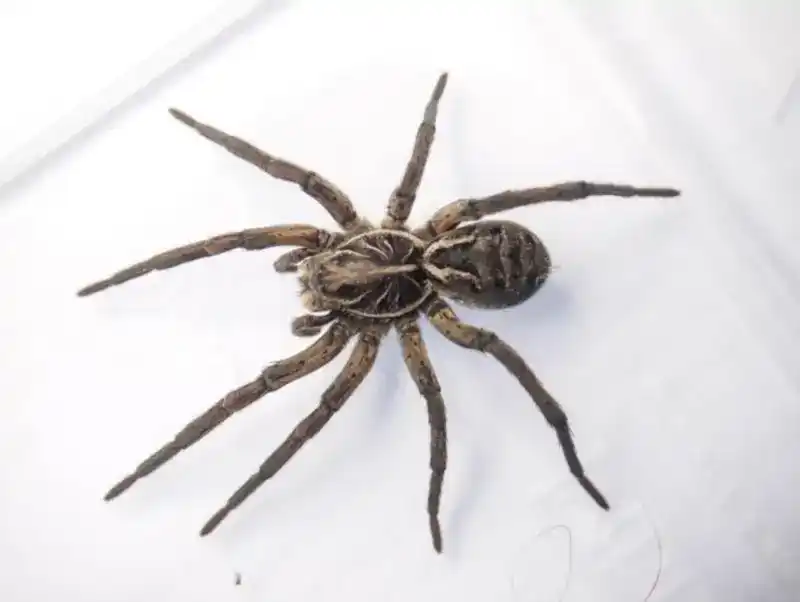
Their body color is mostly brownish-grayish-brown, with stripes or spots for camouflage; their eight eyes are arranged in several rows, and their feet are strong and they are good at running.
Detailed introduction
Garden wolf spiders generally refer to a group of spiders belonging to the family Lycosidae , found in gardens, lawns, and bushes. The specific species may vary slightly from region to region, but can include genera such as Lycosa , Tasmanicosa , and Pardosa . Unlike garden spiders that weave large webs, they actively hunt small insects on the ground using agile running and ambush tactics, making them important "walking hunters" in gardens.
Basic Information
Scientific name (general term): Lycosidae – garden wolf spiders (typical genus such as Lycosa spp.)
Size: Most spiders are about 10–25 mm in length, with females being slightly larger than males.
Lifespan: Usually 1–2 years.
Ecology and Habits
Garden tarantulas are mostly found on the ground, in leaf litter, or among low vegetation. During the day, they hide among rocks, dead branches, or shallow holes, and are more active at dusk and night. They do not rely on webs, but rather on their excellent eyesight and explosive sprints to catch crickets, small beetles, ants, and other small arthropods.
Reproductive characteristics
The female spider will attach the egg sac to the end of her abdomen with silk and carry it with her. After hatching, the spiderlings will climb onto the mother's back and stay for a period of time. This is one of the typical characteristics of the wolf spider family and is often photographed as "carrying a group of spiderlings on her back".
Toxicity and Effects on Humans
Garden tarantulas also possess venom to paralyze their prey, but for healthy humans, bites are usually limited to localized pain and slight redness , far less severe than in medically important species (such as some tarantulas and widow spiders). In most cases, they are shy and avoid humans.
Its role in the garden
They effectively suppress the populations of various terrestrial pests, playing a crucial role in maintaining the small-scale ecological balance of gardens and farmlands. Appropriately preserving fallen leaves, stones, and natural microenvironments, along with reducing pesticide use, helps garden tarantulas and other natural predators work together effectively.
Frequently Asked Questions
Q1: Do garden tarantulas attack people on their own?
Generally, they won't; they'll choose to run away when surrounded by a crowd. They might only bite defensively when cornered or squeezed.
Q2: Is a bite dangerous?
For most healthy adults, the bite is similar to a bee sting, causing short-term pain and local redness and swelling; if there is an allergic constitution or symptoms persist, medical attention should be sought for observation.
Q3: Do I need to completely eliminate it in my home?
In outdoor gardens, they are beneficial predators and do not need to be deliberately eliminated; indoors, if you do not want to come into contact with them, you can gently catch them with a cup or paper and move them outdoors.
Q4: Why is it called a "wolf spider"?
The name comes from their wolf-like hunting habits, not from their large size or extreme ferocity.