Basic Information
Scientific classification
- Chinese name: Garden Spider
- Scientific name: Araneidae (typical genus Eriophora spp., etc.)
- Classification: Arthropoda
- Family: Araneidae; Genus: Aranea
Vital signs data
- Body length: mostly 10–25 mm (females), males are smaller.
- Weight: Due to significant differences between species and individuals, it is usually in the hundreds of milligrams range.
- Lifespan: Mostly around 1 year, some 1-2 years
Significant features
It weaves a ring-shaped web at night; feeds on flying insects; is usually mildly toxic to humans; and is an important natural enemy insect.
Distribution and Habitat
It is widely distributed in gardens, thickets, forest edges, and around farmland in warm to temperate regions around the world.
Appearance
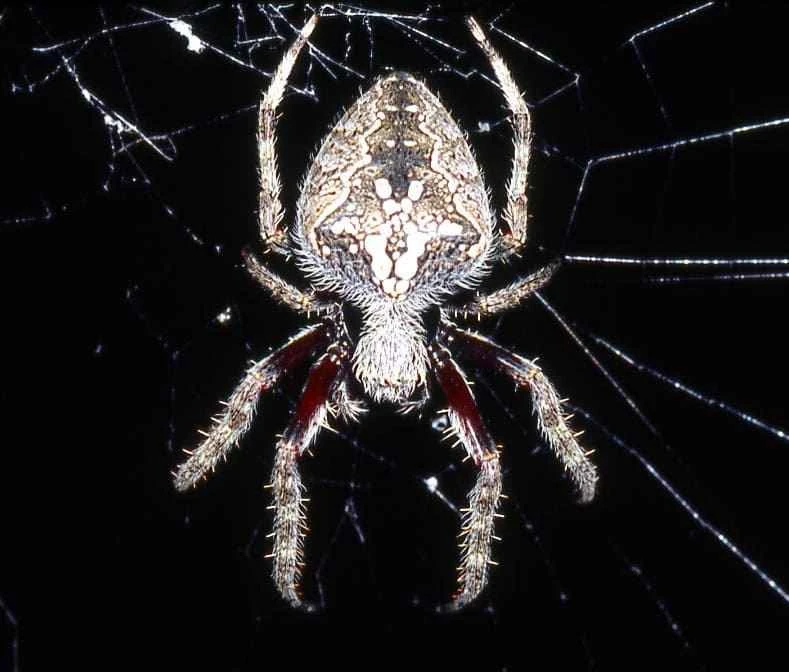
Their bodies are mostly round and bulging in shape, often with spots or banded patterns; their feet are long, and their color varies depending on the species.
Detailed introduction
Garden orb weaving spiders are not a single species, but rather a large group of spiders in the family Araneidae , commonly found in gardens, bushes, and forest edges, including common genera such as Eriophora and Neoscona . They are known for weaving typical concentric or circular webs , which they use at night to prey on flying insects, making them important natural enemies in garden ecosystems.
Basic Information
Scientific name (general term): Araneidae – garden orb-weaving spiders (typical genus such as Eriophora spp.)
Size: There is a large difference in body length among different species. Most female spiders are 10–25 mm long, while male spiders are smaller.
Lifespan: Usually around 1 year, some species can live for 1–2 years.
Ecology and Habits
Most garden spiders begin weaving their webs after dusk, hanging them at night on signal threads in the center or on one side. They usually retrieve their webs around dawn or hide in secluded places to rest during the day. They feed on flying insects such as moths, mosquitoes, and small beetles, playing a positive role in controlling garden pests.
Toxicity and its effects on humans
Like most members of the arachnid class, garden spiders possess venom glands to paralyze their prey, but their venom is usually mild on humans. They are generally docile and do not attack humans unless provoked; if accidentally pressed or stimulated, they may cause localized redness and mild pain similar to a bee sting, but rarely trigger a serious systemic reaction.
Its role in the garden
Garden spiders significantly reduce the number of nocturnal flying insects, making them a highly effective "natural insecticide." Maintaining adequate shrubbery and avoiding excessive pesticide use helps sustain their population and enhances the biodiversity of the yard.
Frequently Asked Questions
Q1: Are garden spiders dangerous to humans?
It generally poses no obvious danger to humans; bites usually result in mild local pain and swelling. Simply avoid scratching or squeezing it with your bare hands.
Q2: Will it attack people proactively?
They usually don't; they are more focused on catching insects. They may only bite defensively when squeezed or severely disturbed.
Q3: Does it need to be removed if it appears in the house or garden?
In most outdoor gardens, spider webs are beneficial and can be left in place; if a web obstructs activity at an entrance, the web can be gently removed or the spider can be guided to move to another location.
Q4: Why are some colors so different?
Different genera and species naturally exhibit significant differences in body coloration. Combined with individual camouflage and environmental factors, garden spiders display a rich variety of patterns and colors.