Basic Information
Scientific classification
- Chinese name: Indian rhinoceros
- Scientific name: Rhinoceros unicornis
- Classification: Hoof Order
- Family and Genus: Rhinoceros (Rhinoceros family)
Vital signs data
- Body length: head and body length 3.0–3.8 meters; shoulder height 1.7–1.9 meters
- Weight: 1,800–3,000 kg (males are larger)
- Lifespan: 35–45 years (field estimate)
Significant features
Herbivores in flooded grasslands; mud baths; armor-like skin folds; overall numbers recovering.
Distribution and Habitat
The mosaic of floodplains and woodlands in India and Nepal is typical of national parks such as Kaziranga and Chitwan.
Appearance
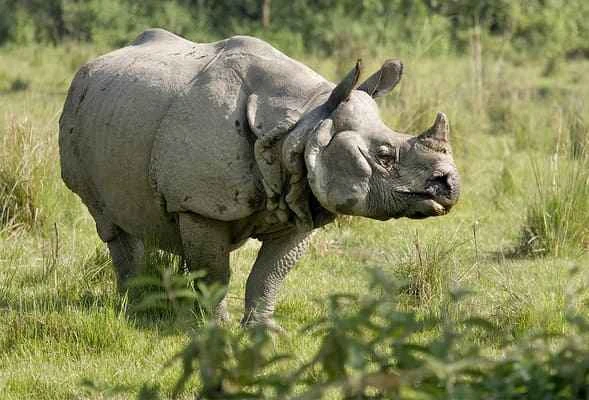
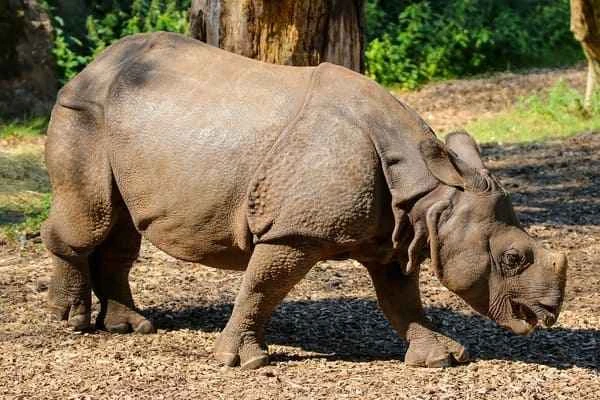
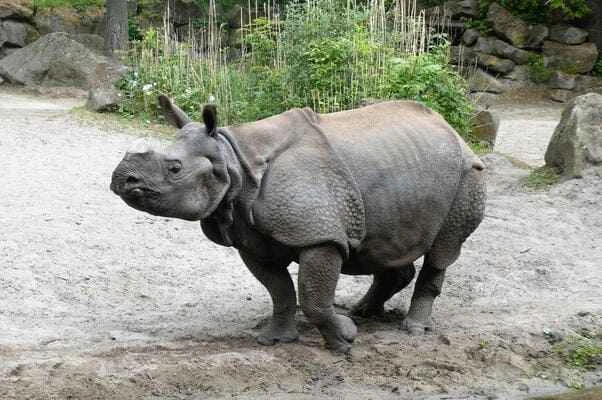
Thick, grayish-brown skin with prominent wrinkles and warts; one long horn; robust build.
Detailed introduction
The Indian rhinoceros (also known as the "great one-horned rhinoceros," * Rhinoceros unicornis* ) is mainly distributed in the grasslands and swamp forests of the Ganges-Brahmaputra plain in northeastern India and Nepal. Its population plummeted in the early 20th century due to poaching and habitat loss, but has generally recovered under strict protection and habitat restoration efforts. However, it remains listed as Vulnerable (VU) .
Ecology and Behavior
They primarily feed on tall grasses, but also consume tender shoots, fruits, and aquatic plants. They enjoy "mud baths" in ponds and mud pits, which help cool them down and expel parasites. Adults are mostly solitary, and their territories are marked by scent and scratches.
Body size and reproduction
Males can weigh over 2,500–3,000 kg and stand 1.7–1.9 meters tall at the shoulder; females are slightly smaller. Female rhinoceroses reach sexual maturity at about 6–8 years of age, with a gestation period of about 15–16 months. They usually give birth to a single child, with an interval of 3–4 years between births.
Threats and Protection
Poaching risks : Rhinoceros horn smuggling still requires strong law enforcement and intelligence-based crackdowns.
Habitat pressure : Floodplain vegetation succession, invasive plants and human-land conflict squeeze grasslands.
Small population isolation : Local populations are more vulnerable to floods and diseases.
Representative protected areas include Kaziranga, Popitola, Aurang, and Manas national parks in India, and Chitwan and Bhadya national parks in Nepal.
Frequently Asked Questions
Q1: What are the differences between the Indian rhinoceros and the Javan/Sumatra rhinoceros?
Indian rhinoceroses are larger with wrinkled skin like "armor" and have only one long horn; Javan rhinoceroses have shorter horns and shallower wrinkles; Sumatran rhinoceroses have two horns and are covered in long hair.
Q2: Why is it classified as "Vulnerable (VU)"?
The overall population is recovering, but due to poaching and habitat fragmentation, there are still medium- to long-term risks, therefore it is assessed as VU.
Q3: Where can I see Indian rhinoceroses?
National parks such as Kaziranga in India and Chitwan in Nepal are typical examples, and visits require permission and a guide.