Basic Information
Scientific classification
- Chinese name: Zebra Finch
- Scientific name: Taeniopygia guttata
- Classification: Songbirds
- Family and genus: Parsnipae (family Estrildaceae), genus Zebra finches
Vital signs data
- Body length: 10–12 cm
- Weight: 10–15 grams (approximately 12 grams on average)
- Lifespan: 3–5 years in the wild; up to 5–9 years in captivity.
Significant features
A species that learns through song; highly gregarious and reproduces in pairs; highly adaptable to arid environments.
Distribution and Habitat
They are found in the Australian outback and semi-arid grasslands, open scrublands and farmland edges, and are often active near water sources; introduced populations exist in some areas.
Appearance
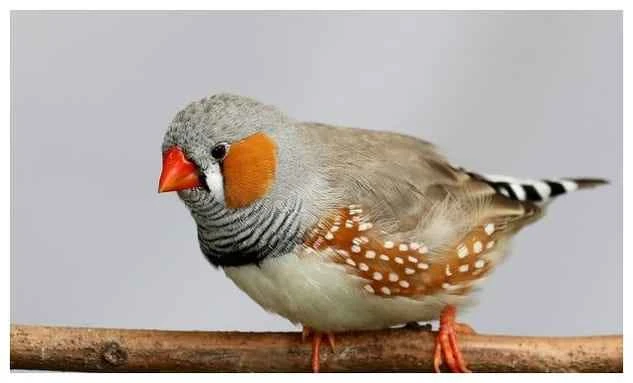
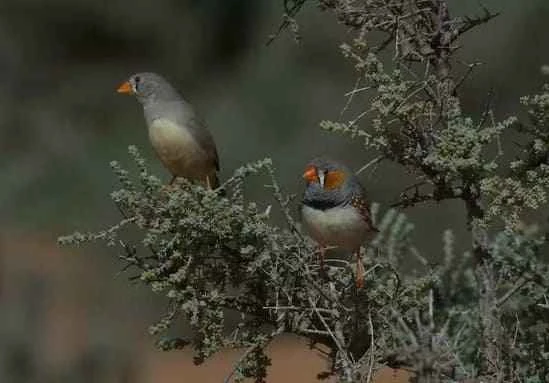
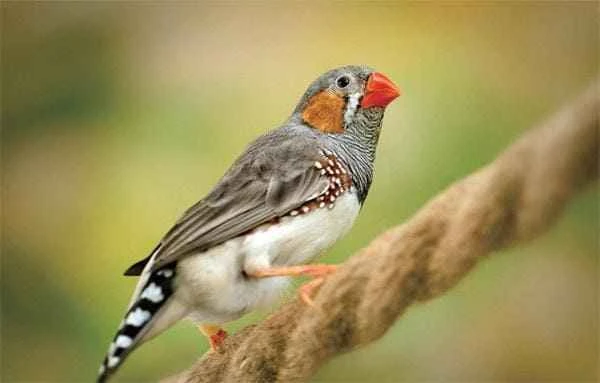
A small, greyish-brown bird; the male has orange cheek patches, black and white horizontal bars on the chest, and a reddish-orange beak; the female is more plain in color and lacks cheek patches.
Detailed introduction
The zebra finch ( Taeniopygia guttata ), also known asthe zebra finch , is one of the most common small passerine birds in the arid and semi-arid regions of Australia. It gets its name from the black and white stripes on the male's breast. It primarily feeds on grass seeds and is adapted to inhabiting open scrublands, grasslands, and areas near water sources along the edges of farmland. As an important model species for research on avian song learning and neurobiology , the zebra finch is also commonly found in captivity.
Ecology and Behavior
They are highly gregarious and practice lifelong pairing, maintaining their relationship through calls and courtship songs. Reproduction is often related to rainfall, and they can breed multiple times a year. Nests are mostly built in bushes or artificial structures, and the chicks are fed by both parents after hatching.
Diet and Role
It mainly feeds on various grass seeds, and also consumes tender leaves and small invertebrates; it plays a certain role in grassland seed dispersal and insect control.
Frequently Asked Questions
Q1: How to distinguish between male and female?
The male has orange cheek patches, black and white horizontal stripes on its chest, and a brighter reddish-orange beak; the female lacks cheek patches and obvious horizontal stripes, and its body color is more muted.
Q2: Where is it made?
Originally from the arid/semi-arid regions of the Australian outback and near the coast, it has also been introduced to places such as the Lesser Sunda Islands in Indonesia.
Q3: What is the status of IUCN?
It is assessed as Least Concern (LC) , with a wide distribution and large population, but is still affected by drought and habitat change in some areas.


