Basic Information
Scientific classification
- Chinese name: Blobfish
- Scientific name: Psychrolutes marcidus
- Classification: Medium-sized fish
- Family and Genus: Toadscrophulariaceae
Vital signs data
- Body length: Approximately 30–38 cm
- Weight: Approximately 1–2 kg (estimated)
- Lifespan: Limited data; possibly over 10 years
Significant features
Deep-sea colloidal body; low energy requirement; no typical swim bladder; collapses during decompression and ascent.
Distribution and Habitat
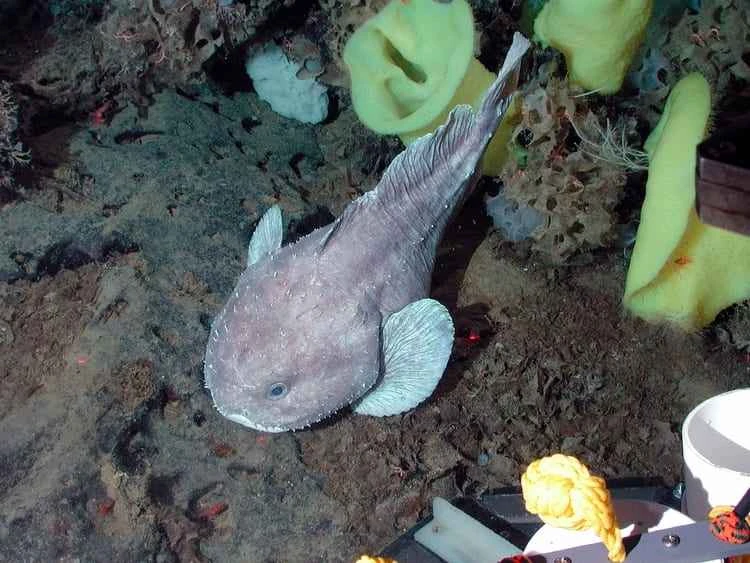
They live on the continental slope and seamount areas at depths of 600–1200 meters off the coast of Australia and Tasmania, and are benthic or near-bottom active.
Appearance
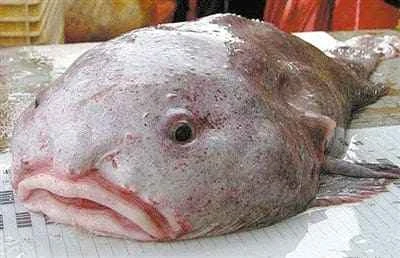
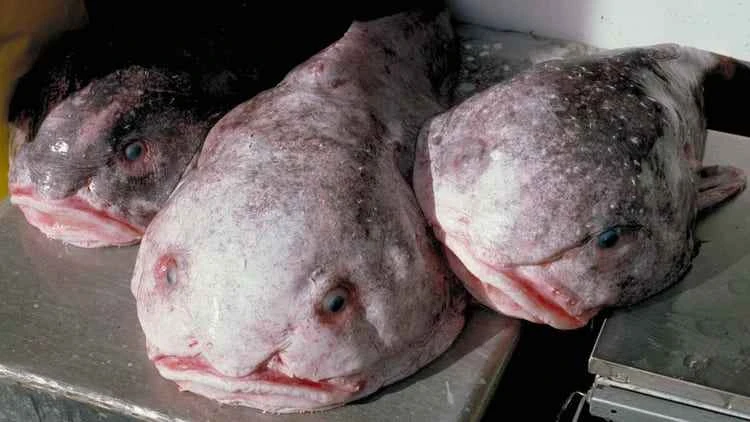
In the deep sea environment, their bodies are smooth with a large head and short body; after surfacing, they take on a "teardrop face" due to decompression.
Detailed introduction
The blobfish ( Psychrolutes marcidus ) is a deep-sea benthic fish that lives on the continental slope off the coast of Australia and Tasmania, belonging to the family Psychroluteidae . Its appearance on the seabed is not actually "collapsed"—that's due to tissue collapse caused by decompression after being caught by humans: the high pressure of the deep sea supports its gelatinous body, and once it rises to the surface, the external pressure drops sharply, giving it a "blobfish face".
Basic Information
Scientific name: Psychrolutes marcidus
Size: Body length approximately 30–38 cm; weight approximately 1–2 kg (estimated).
Distribution: Continental slopes and seamounts at altitudes of 600–1200 meters off the southeast coast of Australia and Tasmania.
Ecology and Habits
They mostly feed by "waiting" near the seabed, consuming small crustaceans, mollusks, and sedimentary organic matter. They have low energy requirements and require little movement. Their bodies are mainly composed of gelatinous tissue , with relatively weak bones and muscles, and they lack a typical swim bladder, all adaptations to the high pressure of the deep sea.
Reproduction and lifespan
Limited information; there are records of females laying large clusters of pink eggs and guarding them; lifespan is unknown, but it is estimated to be over 10 years.
Threats and Protection
Risk of bycatch: Deep-sea trawlers may bring it onto the deck as a bycatch.
Insufficient data: Lack of systematic population surveys and trend assessments.
Deep-sea fish are often rated as “data lacking (DD)” or “unassessed” in the IUCN; please check the latest version of the list before publication.
Frequently Asked Questions
Q1: Why do you look so "ugly" in the photo?
This is the decompression effect : the appearance is more "normal" under the high pressure of the deep sea, and the tissue collapses after surfacing.
Q2: Does it have a swim bladder?
They lack a typical swim bladder and rely on gelatinous tissue to achieve near-neutral buoyancy under high pressure.
Q3: Is it facing extinction?
Due to insufficient data, the main focus is on deep-sea bycatch and habitat disturbance.


