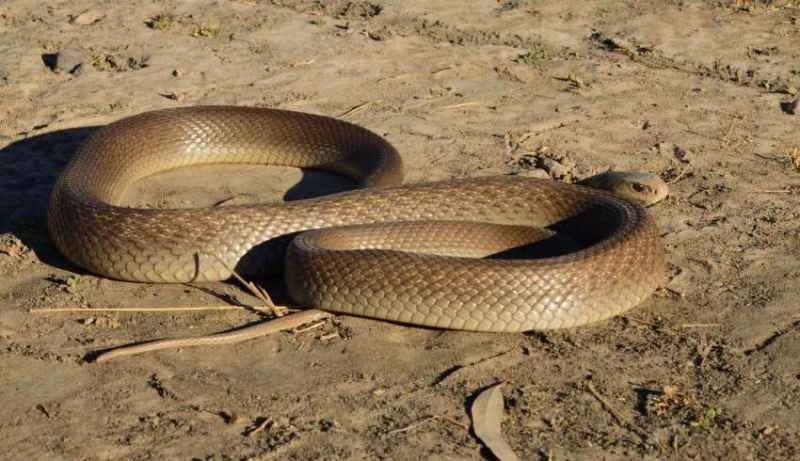
Basic Information
Scientific classification
- Chinese name: Coastal Taipan
- Scientific name: Oxyuranus scutellatus
- Classification: Squamata
- Family and genus: Elapidae, Taipan
Vital signs data
- Body length: Adults are typically 1.5–2.0 meters in total length, with very large individuals reported to exceed 2.5 meters or even approach 3 meters.
- Weight: Weight is generally between 1 and 3 kilograms, depending on individual size, sex and nutritional status.
- Lifespan: Wild individuals are estimated to live for more than 10 years, and may live even longer in captivity with good conditions.
Significant features
With its slender body, extremely fast movements, and potent venom that can inject a large amount of venom in a single bite, it is one of the most medically significant venomous snakes in the coastal areas of Australia.
Distribution and Habitat
It is mainly distributed in the northeastern and northern coastal and near-shore plains of Australia, as well as Papua New Guinea and surrounding islands. It inhabits rodent-rich environments such as coastal jungles, sugarcane plantations, grasslands and shrublands, floodplains, farmlands, and areas around buildings, and uses grass, fallen trees, piles of stones, and building crevices as hiding places.
Appearance
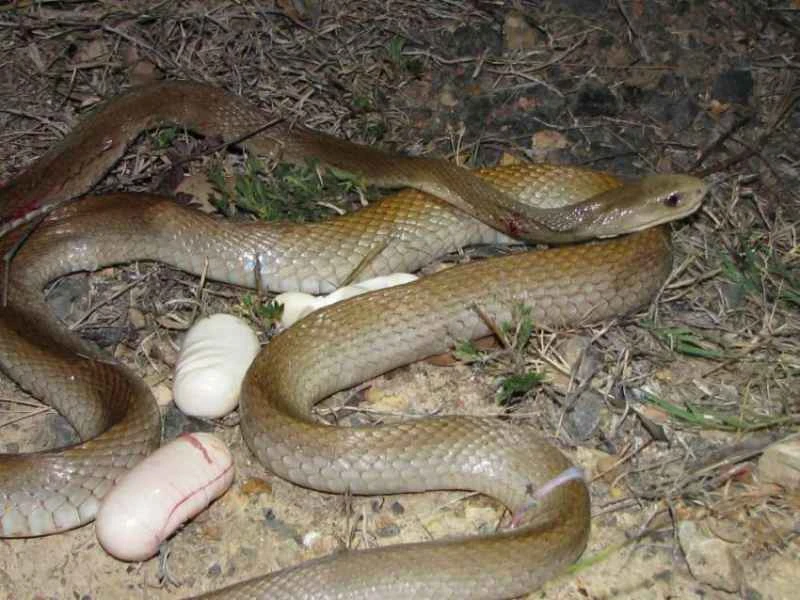
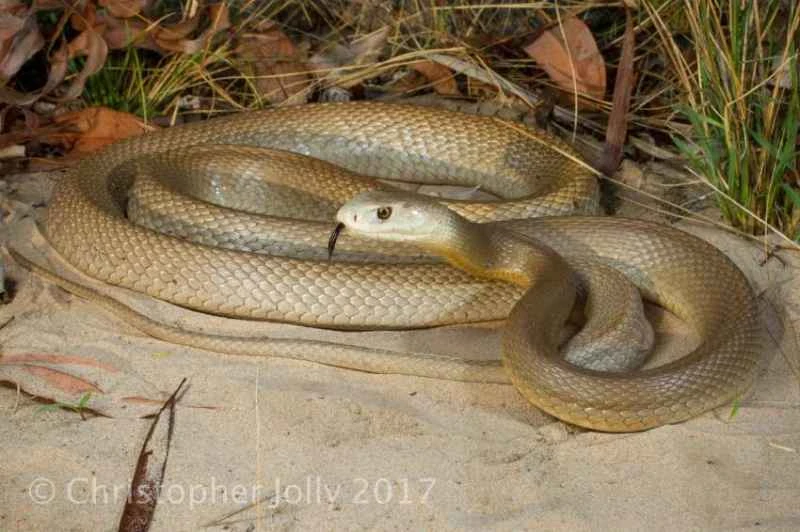
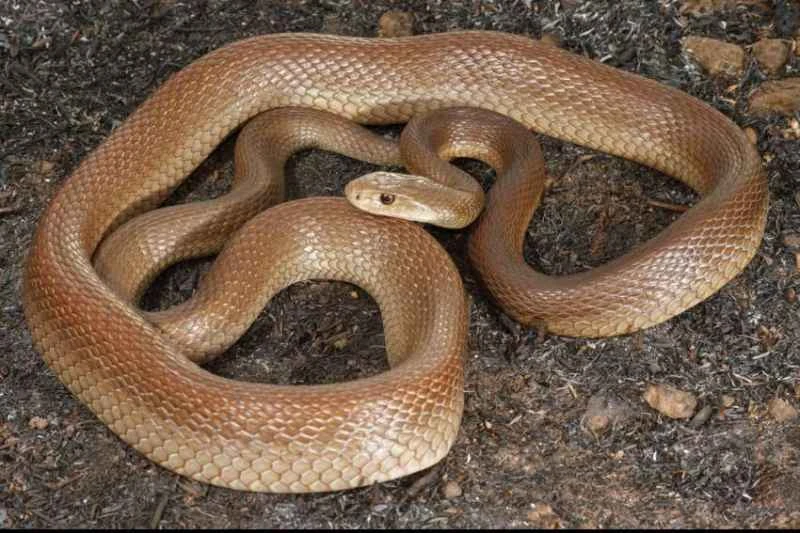
The body is slender and robust, with a large, elongated triangular head that is significantly wider than the neck. The back varies in color from light brown and yellowish-brown to dark chocolate brown, while the belly is lighter, mostly cream or pale yellow with orange or pinkish-brown tinges. The eyes are large with round pupils, giving an overall impression of agility and alertness.
Detailed introduction
The Coastal Taipan (scientific name *Oxyuranus scutellatus *) is a large, fast-moving, and highly venomous snake with front grooved fangs, belonging to the genus *Oxyuranus* in the family Elapidae. It is one of the most representative and most venomous snakes in the coastal regions of Australia and Papua New Guinea, historically notorious for its extremely high bite fatality rate. While the mortality rate has significantly decreased with advancements in antivenom and medical care, the Coastal Taipan remains considered a venomous snake of great medical significance and requires serious attention.
Classification and nomenclature
The coastal taipan belongs to the class Reptilia, order Squamata, family Elapidae, and genus Oxyuranus . The genus Oxyuranus currently has very few confirmed species, including the inland taipan, the coastal taipan, and the recently described intermediate taipan, all known for their potent venom. The scientific name of the coastal taipan is * Oxyuranus scutellatus *, where the genus name means "sharp/pointed tail," and the specific epithet "scutellatus" relates to its scale characteristics. The English name "Coastal Taipan" reflects its typical distribution area—the coastal and near-shore plains of Australia and nearby islands.
Appearance features
The coastal taipan is long and robust, with a cylindrical body and a large head that is significantly wider than its neck, forming a slightly angular, elongated triangle. Its eyes are large with round pupils, giving it an alert and sharp appearance. The back coloration varies considerably, commonly ranging from light brown, yellowish-brown, and olive brown to dark chocolate brown, with some individuals exhibiting a slightly darker ridge or indistinct transverse bands; the top of the head is often slightly darker than the body. The underside is relatively lighter, mostly cream, pale yellow, or light pinkish-brown, sometimes with orange or reddish-brown tinges on the sides. Juveniles are usually lighter or more yellowish, gradually darkening with age. Adults give an overall impression of being long, agile, and powerful.
Distribution range and habitat
The coastal taipan is primarily distributed along the coastal and near-shore plains of northeastern and northern Australia, including most of the wet and dry tropical coast of Queensland, parts of the northern Northern Territory, and northern Western Australia. Outside of Australia, it is also found in Papua New Guinea and some neighboring islands. It prefers warm, humid, or seasonally humid environments, such as coastal bushland, sugarcane plantations, grasslands and shrublands, seasonally flooded plains, and the edges of farmland near human activity areas, as well as places with piles of debris and severe rodent infestations. The coastal taipan is mostly terrestrial, often using grass, fallen logs, piles of rocks, and crevices in buildings as hiding places.
Lifestyle Habits and Behaviors
Coastal taipans are primarily diurnal, active during the day in cooler or milder weather, with peak activity at dawn and dusk. During hotter seasons, they may be more active in the early morning and late afternoon. This species is known for its extremely fast reaction time and agility; when disturbed, it will usually flee the scene quickly if given the opportunity. However, when cornered or subjected to persistent provocation, it will raise its forebody, flatten its neck, and coil in an "S" shape before launching a rapid and precise series of bites. Due to its extremely fast attack speed and the large amount of venom injected in a single bite, coastal taipan bites are considered extremely dangerous. Nevertheless, in most cases, they do not actively pursue humans; bites are mostly related to accidental stepping, snake catching, or attempts to drive them away.
feeding habits
The coastal taipan is a typical carnivorous predator, primarily feeding on small to medium-sized mammals, especially mice, house mice, and other rodents. It plays a vital ecological role in controlling rodent populations in farmland and storage areas. In some cases, they also prey on small birds and their chicks, eggs, and occasionally small reptiles. The coastal taipan employs a combination of active searching and ambush hunting: it roams near grassy areas, sugarcane fields, or buildings, and once it spots prey, it bites with incredible speed, injecting venom multiple times before releasing it. This leaves the prey temporarily incapacitated due to nerve and blood clotting damage, allowing the taipan to then track and devour it.
Reproduction and life cycle
The coastal taipan is an oviparous snake, with its breeding season typically in spring and summer, though the exact timing varies slightly depending on geographical location and climate. Males are more active during the breeding season, searching for females, and brief male-female fights may occur. After mating, the female lays eggs several weeks later, usually 10–20 eggs per clutch, though records show over 20 under favorable conditions. The female generally chooses relatively secluded locations with stable temperature and humidity, such as piles of decaying wood, caves, or debris in building crevices, where she gathers the eggs into a ball and allows them to incubate naturally at the ambient temperature. The incubation period is usually around two months. Hatchlings already possess distinct taipan characteristics and a complete fang system, enabling them to live and hunt independently from birth. Wild individuals are expected to live over 10 years, and may live even longer in captivity.
Relationship with humans
Historically, the coastal taipan was considered one of Australia's most dangerous snakes. Before the widespread use of antivenom, its bites had an extremely high mortality rate, earning it a fearsome reputation among locals. Today, with increased knowledge of snake identification, improved medical care, and the timely use of antivenom, most bite victims are successfully treated and saved. The coastal taipan's frequent presence in human sight is related to its preference for rodent-rich environments—sugarcane fields, barns, piles of debris around farmhouses, and garbage dumps provide both habitat and food sources for rats and taipans. For local residents and farm workers, understanding how to identify taipans, maintaining a clean environment, reducing rodent infestations, wearing appropriate footwear in snake-infested areas, keeping a distance when encountering a snake, and contacting professional snake catchers are crucial to reducing the risk of conflict.
Protecting the status quo and threats
Currently, the coastal taipan is generally classified as "Least Concern" on the IUCN Red List, primarily due to its wide distribution and relative commonality in some suitable habitats. However, local populations can still be impacted by habitat loss, land reclamation, road traffic fatalities, intentional hunting, and invasive predators. Given its crucial role in rodent control within agricultural landscapes, protecting its natural habitat, reducing unnecessary hunting and panic, strengthening public education, and promoting scientific and safe snake prevention knowledge all contribute to achieving a balance between human safety and venomous snake conservation.
References
Barnett, B. (1986) "Tapan in Captivity", Tasmanian Tigers 11(1): 9-19
Cogger, H. (2000) "Australian Reptiles and Amphibians", Reed New Holland Press
Greer, AE (2006) "Encyclopedia of Reptiles in Australia: Elapidae", Australian Museum
Ehmann, H. (1992) "The Australian Animal Encyclopedia: Reptiles", Australian Museum, Angus & Robertson Publishing.
Masci, P. and Kendall, P. (1995) "Taipan—The World's Most Dangerous Snake," Kangaroo Publishing
Mirtshin, P. and Davis, R. (1991), “Dangerous Snakes of Australia,” Revised Edition, Ure Smith Press.
Shine, R. and Covacevich, J. (1983), "Ecology of highly venomous snakes: the genus *Spiritopoda* (Elapidae) of Australia," *Journal of Herpetology*, 17: 60-69.
Wilson, S. and Swan, G. (2008), *The Complete Guide to Reptiles in Australia*, Reed New Holland Publishing.
Frequently Asked Questions
Q1: How potent is the venom of the coastal taipan? What happens if you are bitten?
The venom of the coastal taipan is extremely potent, typically containing neurotoxins and procoagulants. Severe bites that are not treated promptly can lead to respiratory failure, circulatory disorders, and multiple organ damage. However, with modern medical care, the survival rate is significantly improved if medical attention is sought as soon as possible and appropriate antivenom and supportive treatment are administered. Therefore, any suspected taipan bite should be considered a medical emergency, requiring immediate medical attention.
Q2: Will the coastal taipan actively attack or chase people?
In most cases, coastal taipans prefer to flee quickly rather than attack humans. Bites typically occur when the snake is accidentally stepped on, surrounded, attempted to be driven away, or captured. Because of its extremely fast attack speed, it will not hesitate to bite defensively if cornered or provoked. Therefore, the safest course of action when encountering a suspected taipan in its native habitat is to maintain distance and allow the snake to leave on its own.
Q3: Why do coastal taipans often appear near farmland and sugarcane fields?
Farmland, sugarcane fields, barns, and garbage dumps are often plagued by rodents, providing abundant food sources for coastal taipans. These areas also offer numerous piles of debris and hiding places, making them suitable habitats for the snakes. Therefore, human alterations to land use have, to some extent, created new "artificial habitats" for taipans.
Q4: How can we reduce the risk of conflict with venomous snakes in coastal taipan habitats?
Common practices include: clearing bricks, debris, and tall grass around housing and farms to reduce rodents and hiding places; wearing sturdy long pants and boots when working in areas known to have snakes; avoiding walking barefoot or in flip-flops on grass at night; and contacting local professional snake catchers or wildlife rescue organizations instead of trying to catch or kill a snake yourself. Learning about snake identification and basic safety knowledge can also reduce unnecessary panic and accidental killings.