Basic Information
Scientific classification
- Chinese name: Central Bearded Iguana
- Scientific name: Pogona vitticeps
- Classification: Squamata
- Family and genus: Aerialis (family Aerialis)
Vital signs data
- Body length: The total length of adults (including tail) is usually about 40–60 cm, and a few large individuals can exceed 60 cm.
- Weight: The weight is generally between 300 and 600 grams, and some large or well-bred individuals can exceed 700 to 800 grams.
- Lifespan: The estimated lifespan of individuals in the wild is about 7–10 years, while they can live for 10–15 years or even longer under good captive conditions and proper husbandry and management.
Significant features
With spiky scales on its throat that can bulge out like "whiskers," it is relatively docile and adaptable, making it one of the most common pet iguanas.
Distribution and Habitat
Native to the arid and semi-arid regions of central and eastern Australia, they inhabit open scrubland, savanna, dry woodland, red plains and desert edges. They are often found in areas with rocks, deadwood, fences and shrubs, where they bask in the sun and observe their surroundings.
Appearance
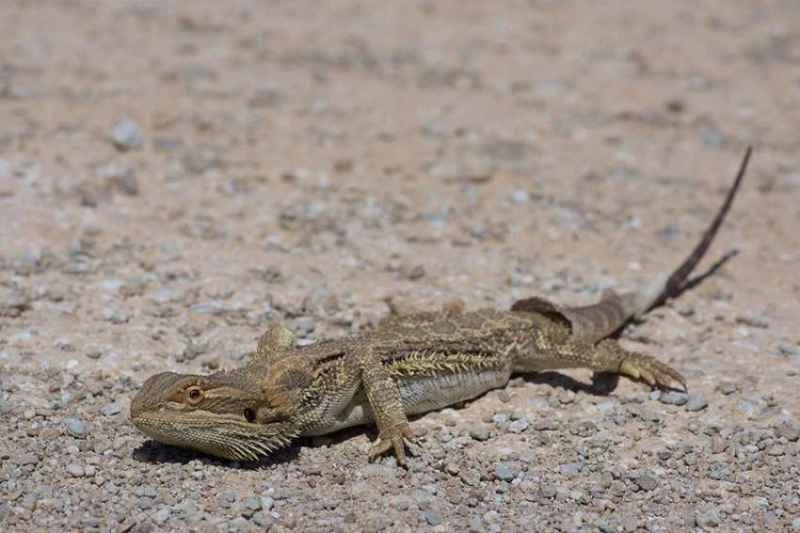
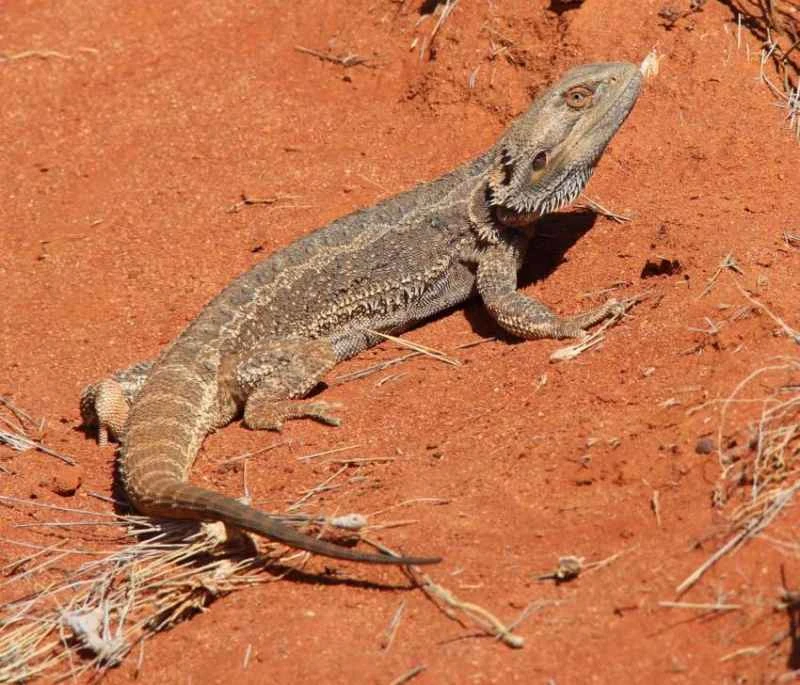
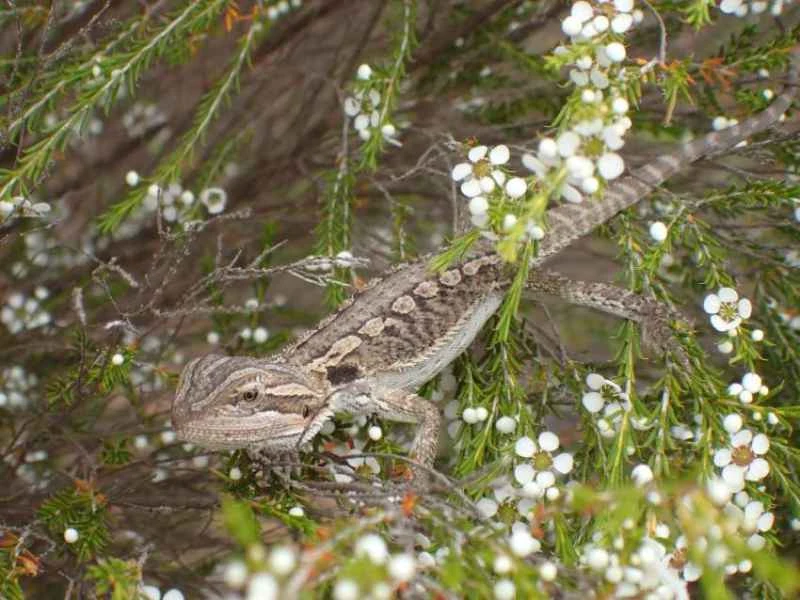
The body is flat and slightly rhomboid, with a broad head and short snout. The lower jaw and throat are covered with sharp, spiky scales that swell and darken when startled, forming a "black beard." The back and sides are covered with rough, spiky scales. The body color is mostly sandy brown, grayish brown, or yellowish brown with stripes and spots. The tail is long and thin with ring-shaped transverse bands. Artificial strains can exhibit various color variations, including orange, red, yellow, and white.
Detailed introduction
The Central Bearded Dragon ( Pogona vitticeps ) is a medium-sized lizard native to the arid regions of central Australia, belonging to the genus Pogona in the family Aerialidae. It is named for the spiky scales covering its throat and lower jaw, which bulge out to form a black, whisker-like mane when threatened or displayed. Relatively docile and adaptable, it is one of the most popular and well-known pet lizards among amphibian and reptile enthusiasts.
Classification and nomenclature
The Central Bearded Iguana belongs to the class Reptilia, order Squamata, suborder Squamata, family Agamidae, and genus Pogona . The genus Pogona currently includes several species, collectively known as "Bearded Iguanas" or "Bearded Dragons," mainly distributed in different regions of Australia. Pogona vitticeps is the most widely distributed and commonly found in captivity. Its specific epithet "vitticeps" means "striped head," referring to the longitudinal or diagonal stripes on its head and body.
Appearance features
The Central Bearded Iguana is a medium-sized iguana with a flattened, slightly rhomboid body. It has a broad head, a short snout, and a ring of sharp, triangular, spiny scales around its lower jaw and throat. When startled or displayed, these scales swell and darken, resembling a ring of black whiskers. Its back is covered in rough, spiny scales, while rows of protruding, "spiky" scales line its sides. Its tail is long and has ring-like bands. Wild individuals are typically yellowish-brown, sandy brown, grayish-brown, or olive, often with varying shades of markings for camouflage against sand and rocks. Captive breeds, through selective breeding, exhibit a variety of color variations, including orange, red, lemon yellow, and albino. Its pupils are round, and it has prominent brow ridges, giving it a somewhat serious expression.
Distribution range and habitat
The Central Bearded Iguana is native to the central and eastern inland regions of Australia, primarily distributed in western New South Wales, inland Queensland, and parts of arid and semi-arid regions of South Australia and the Northern Territory. It inhabits open arid woodlands, savannas, scrublands, red plains, and desert edges, often appearing in areas with scattered shrubs, deadwood, rocks, and fence posts. They enjoy basking in the sun during the day on tree trunks, fences, or rocks, observing their surroundings. If danger is detected, they quickly retreat to the ground and burrow into bushes or caves.
Lifestyle Habits and Behaviors
The central bearded iguana is a typical diurnal reptile, with peak activity at dawn and dusk, and basking in the sun at midday to regulate its body temperature. When temperatures are too high or too low, they reduce activity, choosing to hide in caves or the shade of bushes. Bearded iguanas are adept at climbing tree trunks and rocks, and also often walk slowly on the ground. In terms of social behavior, they communicate and display themselves through nodding, waving, bristling their whiskers, and changing their body color: males frequently nod, bristle their whiskers, and darken them during courtship or territorial disputes; smaller individuals make slow "waving" gestures to indicate submission or non-threatening behavior. When threatened, bearded iguanas flatten their bodies, puff out their throat scales, open their mouths, and use their dark whiskers and hissing sounds to intimidate their opponent.
feeding habits
The Central Bearded Iguana is an omnivorous lizard, feeding on both animal and plant matter. Juveniles and subadults are more carnivorous, primarily preying on various insects such as crickets, locusts, beetles, grubs, and other small invertebrates. Adults, in addition to insects, consume a large amount of plant matter, including tender leaves, flowers, wild fruits, and succulents. In the wild, they actively search for prey by roaming the ground and among low vegetation. When they spot edible insects, they swiftly pounce and use their tongues to catch and swallow them. Their broad and flexible diet allows them to survive in arid environments with varying resources.
Reproduction and life cycle
The central bearded iguana is an oviparous species, typically reaching its peak breeding season in spring and summer. In the wild and in captivity, males display themselves to females by nodding, raising their whiskers, and chasing each other. After successful mating, the female will seek out loose sand or soil mounds several weeks later to dig a burrow and lay her eggs. Each clutch typically contains 10–20 eggs, depending on the female's size and health. The eggs incubate naturally at ambient temperature, usually for 50–80 days, after which the young iguanas are independent. Bearded iguanas grow rapidly in their early stages, with the first year or two being the period of fastest weight and length increase, after which growth slows. The lifespan of wild individuals is estimated at 7–10 years, but under excellent captive conditions with proper diet and lighting, records show they can live 10–15 years or even longer.
Relationship with humans
The Central Bearded Iguana is a common native lizard in its native habitat, helping to control some insect populations and playing a positive role in the ecosystem. Due to its unique appearance, relatively docile temperament, and strong environmental tolerance, it is very popular in the global reptile pet market, resulting in a large captive breeding population. Reasonable and legal captive breeding can reduce pressure on wild collection, but irresponsible release, smuggling, and overbreeding can lead to disease transmission and ecological risks. Therefore, when choosing to keep exotic species, one should abide by local laws and regulations, obtain individuals from reliable sources, and avoid indiscriminate release.
Protecting the status quo and threats
Currently, the Central Bearded Iguana is listed as "Least Concern" on the IUCN Red List, and its overall wild population is considered relatively stable. However, in some areas, they may still be affected by habitat degradation, agricultural expansion, road traffic, and invasive predators such as feral cats and dogs. Wild individuals may also be driven away or harmed by humans due to misunderstanding or fear. In the long term, maintaining the integrity of their natural habitats, controlling invasive predators, regulating the pet trade and transportation, and strengthening public education (informing people about the ecological value of the Bearded Iguana and proper husbandry) will all help ensure the continued survival and prosperity of this iconic Australian lizard in desert and woodland landscapes.
References
Aland, K. 2008. Agamidae (Family of flying lizards). Cited in Swan, M. (ed.) 2008. Australian Lizards: Breeding and Reproduction. Mike Swan Herp Books. Lilydale.
Ehmann, H. 1992. *The Australian Animal Encyclopedia: Reptiles*. Angus & Robertson Publishing. Pymble.
Fry, BG, Vidal, N., Norman, JA, Vonk, FJ, Scheib, H., Ranjan, SF, Kuruppu, S., Fung, K., Hedges, SB, Richardson, MK, Hodgson, WC, Ignjatovic, V., Summerhayes, R., and Kochva, E. 2006. Early evolution of the venom system in lizards and snakes. Nature 439, 584-588.
Greer, AE 1990. *The Biology and Evolution of Australian Lizards*. Sari Beatty & Sons.
Further Reading
Kogel, HG 2000. *Australian Reptiles and Amphibians*. Reed New Holland Publishers, Sydney.
Swan, G. 1990. *A Field Guide to Snakes and Lizards in New South Wales*. Three Sisters Publishing, Winnie the Pooh.
Frequently Asked Questions
Q1: Are Central Bearded Iguanas poisonous? Are they dangerous to humans?
Central bearded iguanas do not have venom glands and are not classified as venomous lizards, generally posing no harm to humans. They are relatively docile and will only bite if roughly handled or under extreme stress; their bite force is limited and rarely causes serious injury. The correct approach is to approach them gently and supportively, respecting their behavioral cues.
Q2: Why do barbels bulge out and turn black?
When bearded iguanas feel stressed, threatened, or are courting or displaying, the spiny scales on their lower jaw and throat swell and become darker, even approaching black, to appear larger and more intimidating. This "whiskers" display is also a form of communication between individuals, and is especially common among males when competing for territory or courting.
Q3: Are Central Bearded Iguanas suitable as pets? What precautions should be taken?
Central bearded iguanas are popular due to their relatively docile temperament, moderate size, and high interactivity. However, successful captivity requires a suitably sized terrarium, ample basking platform, appropriate temperature gradient, UVB lighting, clean drinking water, and a diverse diet that includes insects and vegetables. Before keeping one, it is essential to understand local regulations, purchase captive-bred individuals through legal channels, and avoid releasing them into the wild.
Q4: Will wild populations be affected by the pet trade?
Currently, most Central Bearded Iguanas on the pet market are from captive breeding. A properly regulated breeding system can reduce the pressure on wild individuals to be captured. However, illegal capture, smuggling, and cross-border trade can still impact populations in some areas and may also pose a risk of disease transmission. A sound legal system and responsible hobbyist behavior are crucial for protecting wild Bearded Iguana populations.