Basic Information
Scientific classification
- Chinese name: Spotted Swamp Frog
- Scientific name: Limnodynastes tasmaniensis
- Order: Anura
- Family and genus: Marsh Ranaidae
Vital signs data
- Body length: Adults are generally about 3–5 cm in length, belonging to small to medium-sized but sturdy semi-aquatic frogs.
- Weight: Individual weight usually ranges from a few grams to more than ten grams, depending on body length, sex and nutritional status.
- Lifespan: It is estimated that they can live for several years in the wild, and adults can participate in the breeding season multiple times in suitable habitats.
Significant features
The spotted frog, common in eastern and southern Australia, is highly adaptable. It can utilize natural swamps and is also widely found in farmland irrigation ditches and urban wetlands. It has a high tolerance for environments altered by human activities.
Distribution and Habitat
Widely distributed in eastern and southern Australia, including southeastern Queensland, New South Wales, Victoria, parts of South Australia and Tasmania, it is commonly found in various natural and artificial wetlands, such as swamps, ponds, farmland irrigation ditches and urban park water bodies.
Appearance
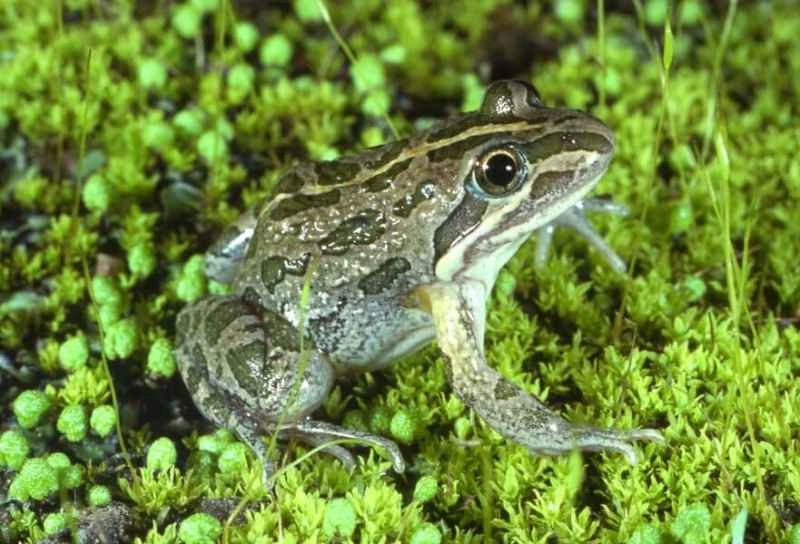
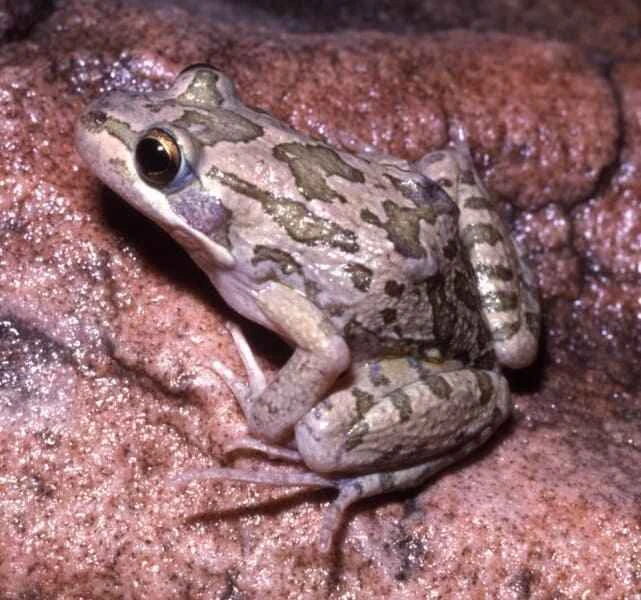
They are small to medium-sized and sturdy, with an olive-green to brown back covered with dark spots, and some individuals have a distinct light-colored midline on their backs; their abdomens are milky white or light gray, their limbs are of medium length, their hind limbs are well-developed, and their toes have some webbed membranes, making them suitable for swimming.
Detailed introduction
The Spotted Marsh Frog ( Limnodynastes tasmaniensis) is a small to medium-sized frog widely distributed in eastern and southern Australia, belonging to the genus Limnodynastes in the family Limnodynastidae. It is one of the most common frogs in Australia, frequently found in farmland irrigation ditches, urban wetlands, park ponds, and natural swamps—a typical "frog in your neighborhood."
Classification and nomenclature
Chinese reference name: Spotted Swamp Frog (common translation);
English name: Spotted Marsh Frog;
Scientific name: Limnodynastes tasmaniensis ;
Family: Limnodynastidae → Limnodynastes .
Appearance and Identification Features
The spotted swamp frog is medium to small in size, but has a sturdy build and is easily identifiable by its dark spots.
Size: Adults are typically 3–5 cm in length, with males being slightly smaller and females slightly larger;
Body shape: The body is slightly oval, with a wide head and a short snout, giving an overall impression of being "short, stout and sturdy".
Back color: The base color of the back is mostly olive green, yellowish brown or grayish brown, with many irregular dark brown or black spots on it;
Midline: Many individuals have a light-colored longitudinal stripe (yellow or light beige) running from the head to the tail on their back, but some individuals do not have a distinct midline;
Abdomen: The abdomen is milky white or light gray, generally quite clean, with occasional small spots;
Skin texture: The skin on the back is relatively smooth or slightly warty, unlike the rough skin of some toads;
Limbs: The limbs are of medium length, the hind limbs are well-developed, and the toes have a certain degree of webbing, which is suitable for swimming and activities in shallow water;
Tympanic membrane: The tympanic membrane is not particularly noticeable, but the round tympanic area is still visible behind the eye;
Overall impression: A small green-brown frog with spots all over its body and occasional light-colored dorsal stripes is very common on the edge of wetlands.
Distribution range and habitat
The spotted swamp frog is one of the most common frogs in eastern and southern Australia .
It is widely distributed in southeastern Queensland, New South Wales, Victoria, parts of South Australia, and Tasmania;
It can be found in a variety of wetland environments, from coastal areas to inland plains.
Typical habitats include:
Natural marshes, floodplains, lake edges, and seasonal wetlands;
Farmland irrigation ditches, irrigation canals, artificial ponds, and rural dams;
Artificial wetland environments include urban parks, garden ponds, drainage ditches, and rainwater storage ponds.
Lifestyle
The spotted swamp frog is a nocturnal, semi-aquatic frog .
During the day, they mostly hide in grassy areas near water, under rocks, in caves, or among floating plants.
They are most active in the evening and at night, especially on warm, humid nights or after rain;
They often leap or move slowly in shallow water, mud, and damp grasslands, preying on small invertebrates.
vocal characteristics
The call of the spotted swamp frog is very distinctive:
The call of male frogs is often described as a short, metallic sound, like "click" or "bang," as if striking glass beads or pebbles.
During the breeding season, multiple male frogs croaking simultaneously by a pond or ditch will form a dense "tick-tock" chorus.
Their calls mostly come from the water's edge or among floating plants, and can travel quite far at night when it's quiet.
feeding habits
The spotted swamp frog primarily feeds on small invertebrates and is an important "insect controller":
Terrestrial insects such as ants, small beetles, crickets, and grasshoppers;
Mosquitoes, midges, and other small flying insects that live near water;
Larvae and small arthropods that inhabit the mud and fallen leaves near water.
Reproduction and Development
The reproductive activities of the spotted swamp frog are closely related to rainfall and water levels.
The breeding season typically occurs during warm, rainy seasons or periods of increased rainfall;
Male frogs call out at the edge of still or slow-flowing waters such as ponds, swamps, and ditches to attract female frogs.
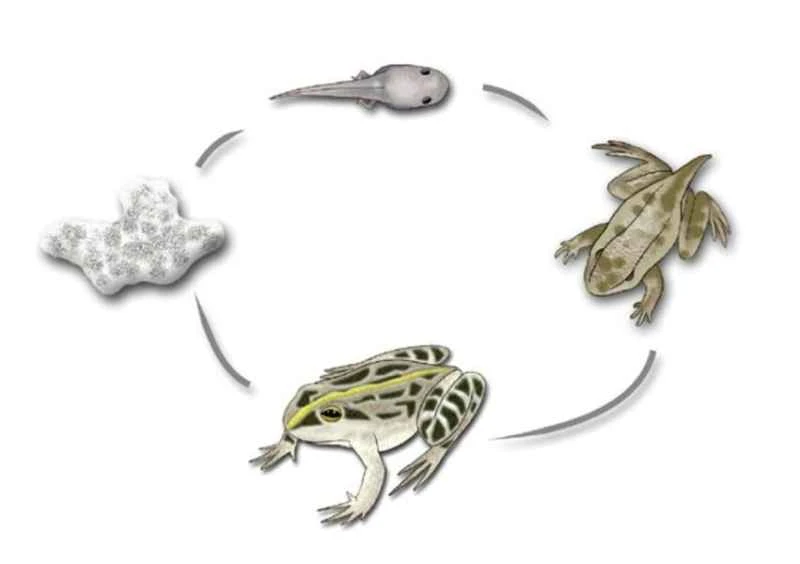
Female frogs lay their eggs on the water's surface or near the water's edge. The eggs usually form floating or attached clusters or foamy clumps on plants.
Tadpoles develop in water and are somewhat dependent on water quality and the duration of water exposure, requiring sufficient time to complete metamorphosis;
After metamorphosis, the young frog leaves the water and enters the surrounding moist land to live.
Protecting the status quo and threats
In the IUCN Red List, the spotted marsh frog is assessed as Least Concern (LC) , indicating that it is widely distributed and its population is generally stable.
Potential threats include:
Local wetlands have been filled in, drained, or polluted, leading to a reduction in water bodies for breeding.
Pesticides and fertilizers are lost into water bodies, which has an adverse effect on tadpoles and adult frogs.
Urbanization leads to habitat fragmentation and increased road traffic.
Because of its strong adaptability to human-modified environment, the spotted swamp frog can usually maintain a healthy population as long as a certain amount of water and waterside vegetation is preserved.
Frequently Asked Questions
Q1: Are spotted swamp frogs common in Australia?
Yes, the spotted swamp frog is one of the most common frogs in eastern and southern Australia, often found in farmland, city parks, drains and natural wetlands.
Q2: How can I quickly identify the spotted swamp frog by its appearance?
Its back is usually green or brown with many dark spots, and often has a light-colored dorsal midline - "spots + dorsal midline" is a very typical identifying feature.
Q3: Are spotted swamp frogs dangerous to humans?
Generally considered to pose no direct danger to humans and unlikely to attack unprovoked. Like other frogs, their skin secretions may slightly irritate mucous membranes.
Handle with care during observation and wash hands afterwards.
Q4: Why is the spotted swamp frog important to the ecosystem?
It preys on large numbers of insects and other invertebrates, helping to control pest populations; it is also an important food source for birds, snakes, and large invertebrates.
It plays an important intermediate role in wetland food webs.


