Basic Information
Scientific classification
- Chinese name: Haswell Frog
- Scientific name: Crinia haswelli (Haswell Froglet)
- Order: Anura
- Family: Myobatrachidae Crinia haswelli Haswell froglet
Vital signs data
- Body length: Adults typically measure only about 1.5–2.5 cm in length, making them extremely small terrestrial frogs.
- Weight: Each individual weighs only a few grams or even less than one gram, varying depending on body size and nutritional status.
- Lifespan: It is estimated that they can survive for several years in the wild, and can participate in reproduction multiple times in suitable habitats.
Significant features
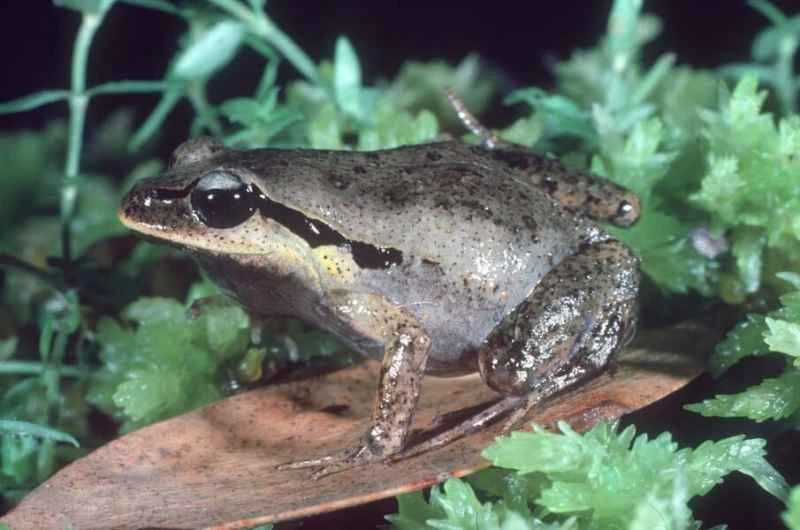
A tiny ground frog commonly found in the damp woodlands and valleys of eastern Australia, its body is brownish-gray with patterns that closely resemble fallen leaves and soil. It is adept at hiding in leaf litter and at the base of grass, making it a very well-hidden frog.
Distribution and Habitat
It is mainly distributed in New South Wales, eastern Australia, and adjacent high-rainfall areas. It inhabits moist woodlands, thickets, valleys, and wet grasslands, often hiding in leaf litter, moss, and rock crevices. Its breeding season is closely associated with small puddles and shallow wetlands.
Appearance
It is small in size and slightly flattened in body. Its back is brown or grayish-brown with irregular markings, sometimes in V or W shapes. Its abdomen is lighter in color and its skin is slightly rough with small warts. Its limbs are short and compact, making it suitable for jumping and hiding among fallen leaves and soil.
Detailed introduction
The Haswell Froglet ( Crinia haswelli ) is a small, plain-colored native Australian frog. It is a terrestrial froglet, primarily inhabiting damp woodlands, valleys, and wetlands along the eastern coast and near the interior of Australia. It is a small frog that is commonly found in leaf litter and grassy areas but is often difficult to spot.
Classification and nomenclature
Common Chinese name: Haswell Froglet (based on the translation of the English name Haswell Froglet)
English name: Haswell Froglet
Scientific name: Crinia haswelli
Family: Myobatrachidae → Genus: Crinia (small Australian frogs)
Appearance and Identification Features
The Haswell frog is very small and has an unassuming appearance, but some distinguishing features can still be identified upon closer inspection:
Size: Adults are typically only 1.5–2.5 cm in length, classifying them as miniature frogs;
Body shape: Slightly flattened body, short limbs, and a compact overall profile;
Back color: mostly brown, gray-brown or olive brown, often accompanied by patches and textures of varying shades;
Pattern: Some individuals have light or dark V-shaped, W-shaped, or irregular patterns on their backs, which help them camouflage themselves with fallen leaves and mud;
Abdomen: The abdomen is usually lighter in color, and may be grayish-white, creamy, or have fine spots;
Skin texture: The skin on the back is mostly slightly rough and has small warts;
Head and eyes: The head is relatively small, and the eyes are in proportion to the body, without any exaggerated bulging eyes.
Overall, the Haswell frog relies more on camouflage than bright colors, blending well into the surface environment of fallen leaves, soil, and grass roots, making it difficult to spot with the naked eye in the wild.
Distribution range and habitat
The Haswell frog is a native species of eastern Australia .
They are mainly distributed in the coastal and hilly areas of eastern New South Wales and neighboring regions;
It is more common in areas with high rainfall or humid coastal climates.
It prefers a damp environment close to the ground:
It inhabits moist woodlands, thickets, valleys, wet grasslands, and areas near forest streams;
They are often found in leaf litter, moss, piles of dead branches, and crevices between rocks;
The breeding season is associated with still or slow-moving water bodies, such as small puddles, the edges of swamps, and temporary waterlogged areas.
Lifestyle
Haswell frog is a nocturnal, terrestrial frog .
During the day, they mostly rest in sheltered places such as thick layers of fallen leaves, the roots of grass, and under rocks.
They are more active in the evening and at night, foraging and moving around on damp surfaces and near water.
When threatened, they usually quickly jump into denser vegetation or fallen leaves to hide.
Cry
Male Haswell frogs emit short calls during the breeding season to attract females:
The calls are often described as a series of short, thin "tik... tik..." or a soft "crick" sound;
It often occurs after rain and on damp nights, originating from the ground or low vegetation;
When multiple male frogs call simultaneously, they create a dense, fragmented background of croaking sounds in woodland or valley environments.
feeding habits
Haswell frogs primarily feed on tiny invertebrates.
Tiny ants, springtails, and other small soil arthropods;
Small beetles, aphids, young insects, and spiders, etc.;
They hunt various small prey passing by on damp ground and in the leaf litter.
Due to its extremely small size, it is well-suited to utilizing the abundant microscopic prey resources on the ground and in the gaps between fallen leaves.
Reproduction and Development
The reproduction of the Haswell frog is closely related to rainfall and surface water:
The breeding season usually occurs during warm, rainy periods, especially after heavy rainfall;
Male frogs call near small puddles, wet grasslands, and low-lying areas along streams;
Female frogs lay their eggs in still or shallow wetlands, where the eggs may attach to aquatic plants, dead branches, or sink in shallow water.
Tadpoles develop in small bodies of water and need to complete their metamorphosis before the puddle dries up.
After the tadpoles complete their metamorphosis, they quickly transition into the typical terrestrial frog lifestyle.
Protecting the status quo and threats
In the IUCN Red List, the Haswell frog is usually assessed as Least Concern (LC) , meaning that there is currently no evidence of significant rapid decline overall.
However, the following factors may still affect certain areas:
Habitat clearing for farmland, housing and roads has led to the fragmentation of wetland and understory environments;
Chemicals such as pesticides and herbicides enter the soil and water, affecting the health of small invertebrates and frogs.
Climate change factors such as extreme drought and changes in rainfall patterns affect the formation and reproduction success rate of temporary water bodies;
Potential fungal amphibian diseases, etc.
Protecting the Haswell frog requires maintaining the leaf litter under forests and shrubs, preserving small wetlands and seasonal waterholes, and reducing the impact of chemicals such as pesticides on the surface ecosystem.
Frequently Asked Questions
Q1: Why is the Haswell frog so inconspicuous?
It is small in size, with a body color that is mainly brown and grayish-brown, plus mottled patterns.
With its color closely resembling that of fallen leaves, soil, and grass roots, this highly camouflaged terrestrial frog is not easily noticed.
Q2: How do you find the Haswell frog in the wild?
You can take a slow walk along the edges of damp woodlands, streams, and grass on rainy nights or in the evenings when humidity is high.
While listening to the faint croaking of frogs, shine a flashlight on the ground and the leaf litter, and sometimes you can see the small frogs jumping around quickly.
Q3: Is the Haswell frog a threat to humans?
It is a very small insectivorous frog that poses no direct threat to humans and has no significant toxicity.
If you encounter it in the wild, simply walk around it or observe it briefly; there is no need to deliberately disturb it.
Q4: What is the role of the Haswell frog in the ecosystem?
It feeds on a large number of tiny invertebrates, helping to regulate the population of small animals in the soil and leaf litter.
It is also a potential food source for birds, snakes, and small mammals, and is an important part of the forest food web.


