Basic Information
Scientific classification
- Chinese name: Bali Ari Shepherd
- Scientific name: Balearic Shearwater, Puffinus mauretanicus, Balearic Shearwater, Pardela balear
- Classification: Waterfowl
- Family and genus: Procellariiformes, Procellariiidae, Procellarii
Vital signs data
- Body length: Approximately 38 centimeters
- Weight: 349-416g
- Lifespan: No verification data available.
Significant features
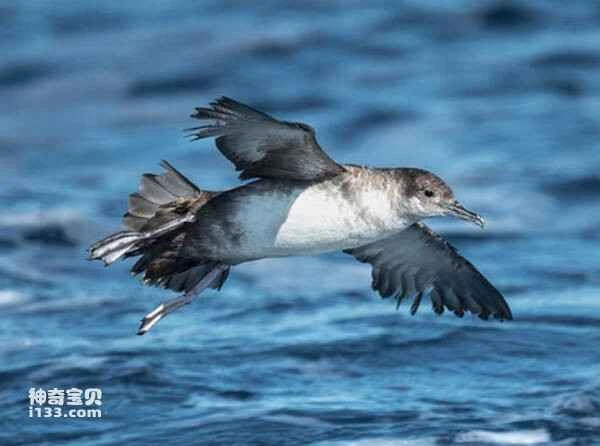
The upper body feathers of the Bali Ali petrel are dark brown, while the underparts, undersides of the wings, and abdomen have some lighter-colored areas that tend towards white.
Distribution and Habitat
Resident birds: France, Ireland, Italy, Portugal, Spain and the United Kingdom.
Breeding grounds: Algeria and Morocco.
Non-breeding area: Gibraltar.
Wandering: Belgium, Denmark, Germany, Israel, Netherlands, Norway, Poland, Sweden, and Tunisia.
Origin uncertain (seasonal uncertainty): Albania, Bosnia and Herzegovina, Croatia, Faroe Islands, Greece, Libya, Malta, Monaco, Montenegro and Slovenia.
The Balearic Islands are located in the Balearic Sea of the Mediterranean Sea, off the coast of Valencia, along the Barcelona-Algiers axis from north to south. They consist of five main island groups: Menorca, Mallorca, Cabrera, Ibiza, and Formentera. The Balearic petrels inhabit and breed in the caves and crevices of these islands and coastal cliffs. The Balearic petrel is endemic to the Spanish archipelago of the same name. However, the Balearic petrel is not confined to this region. Throughout the year, they wander and migrate to many other areas, and can be observed in other parts of Europe. They are found throughout the Mediterranean, from Egypt in the east to Morocco in the west, and along the entire Atlantic coast, from Portugal in the south to Norway in the north. It can be said that this bird spends most of the year in the Balearic Islands, then migrates north to the Atlantic in the summer and early autumn, before returning to the Balearic Islands to spend the winter.
Appearance
The Bali Ari warbler measures 38 cm in length, has a wingspan of 76-89 cm, and weighs 349-416 grams. Like all seabirds in this family, this species has tubular nostrils at the tip of its beak. Sexual differences are not observed. Their wings are long and thin compared to the rest of their body, enabling them to fly for extended periods at sea, although they require considerable wind and air movement to minimize energy expenditure during flight. This species can also propel itself through the water to capture prey.
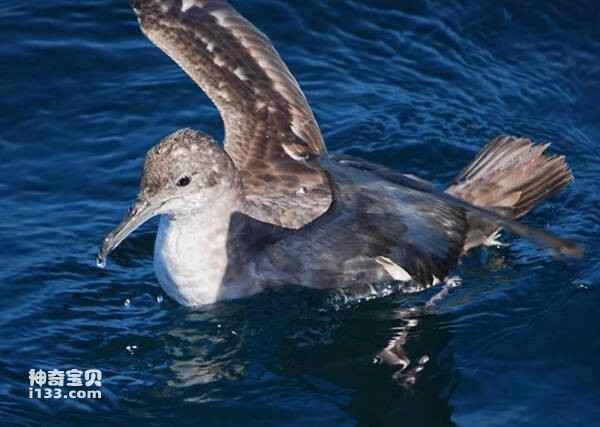
The upperparts of the Bali Ari warbler are dark brown, with lighter, almost whitish areas on the underparts, undersides of the wings, and abdomen. The flight feathers, the large feathers that adorn the wings, and the tip of the tail are even darker, almost black. Not all individuals of this species are alike; there is considerable variation in the shade of feathers. Some are darker than others of their species, mostly brownish, while others are lighter in color.
Detailed introduction
The Balearic Shearwater (scientific name: Puffinus mauretanicus), also known as Pardela balear, has no subspecies.
As a seabird, the Balearic petrel obviously forages at sea. They primarily hunt prey in open ocean waters, i.e., the high seas, in areas far from the coast, although its distribution is generally coastal. Pelagic fish (especially small pelagic fish) are the species' main food source. They also feed on plankton and widely utilize waste in the Mediterranean and Atlantic by diving to depths of up to 35 meters or catching things thrown back into the sea by fishermen, sometimes also consuming small plankton.
The Balearic petrel has a fairly wide coastal distribution and tends to choose production shelf areas most frequently associated with marine frontal systems. During the breeding season, the birds tend to forage in food-rich marine areas closest to the breeding colony. With the help of favorable winds during short windows, some individuals may also venture to the extremes of their distribution to these fertile areas. These fertile waters are rich in small, mid- to upper-water fish, and various types of fishing activities occur simultaneously, providing a large number of discarded fish to the areas where the petrels are active. Outside the breeding season, the species generally stays closer to the coast, forming large colonies. The location of these colonies varies from year to year (and even within years), likely due to fluctuations in the availability of small, mid- to upper-water fish.
The diet of the Bali ambert varies depending on the season, needs, and sex. For example, when they need energy to feed their offspring, they prefer sardines and anchovies, which are abundant fish.
Activity east of the Mediterranean coast is relatively rare, as the species typically breeds only in a few Balearic Islands. France is a particularly important habitat for the Balearic petrel, which flies there during its non-breeding season from June to September, crossing the French Atlantic waters and the English Channel, and to a lesser extent, during its breeding season from late February to early July—in the Mediterranean. The Balearic petrel's main breeding grounds in France are: the Bay of Mont Saint-Michel, the Bay of Saint-Brieu, the Bay of Lagne, the Vilaine-le-Mor-Braz estuary, Corniche vendéenne, and the southern Landes Plateau, in the Landes and Pyrenees—Atlantic. Breeding flocks are relatively small, ranging from isolated nests to loose gatherings of 10 or even 100 breeding pairs. Adults do not begin breeding until as young as three years old, although most breeding typically occurs between the ages of four and six. Birds lay their eggs in mid-March (especially late February); hatching occurs from late April to early May; and around late June, a few days before the chicks emerge (early July), the adults leave the breeding flock.

As of 2011, the breeding population size of the Balearic petrel was estimated to be between 2,000 and 4,500 pairs. In 2012, the official figure was 3,142 pairs. This included 900 pairs in Mallorca, 405 pairs in Menorca, 475 pairs in Cabrera, 650 pairs in Ibiza, and 712 pairs in Formentera. Marine studies using two methods (ship-based surveys and coastal counts at the Gibraltar migration bottleneck) suggest a global Balearic petrel population of approximately 25,000, indicating that the breeding population may be larger than previously assumed (Arroyo et al., 2014). Based on these global data and assuming a balanced species structure, the estimated breeding population size in 2016 was approximately 7,200 pairs, although this optimistic figure should be treated with caution.
In fact, very few Baliari petrels survive to sexual maturity and reproduce. The main reason is predation; mammals such as black and brown rats, wildcats, and scaly shrike prey on the eggs and chicks, and sometimes even adults, hindering the natural growth of the population. To combat these predators, rodent control campaigns have been underway for approximately two decades on the islands where the species breeds (as of 2018). The pressure has certainly decreased, but the threat remains.
Another reason for the low survival rate of adult petrels is hunting. Unfortunately, juveniles and adults are frequently caught accidentally by fishing gear, and they sometimes approach the gear to feed on the discarded material. According to the work of biologist Meritxell Genovart in 2016, the Bird Life Organization stated that these catches are the leading cause of death for the Balearic petrel, accounting for 50% of all deaths.
Like all seabirds, climate change is impacting this species. The latter is indeed affecting the increasingly northward distribution of populations and the abundance of prey. Furthermore, because the Balearic petrel lives in relatively close-knit colonies, even the slightest disturbance to its habitat can have a significant impact on the entire species. For example, oil slicks, light pollution that can disorient the birds and their young, maritime activity, or the construction of wind farms (collisions, avoidance of the area, prey scarcity, construction site disturbances) can severely disrupt individuals and affect the future of the species.
Listed as Critically Endangered (CR) in the IUCN Red List of Threatened Species 2018 ver3.1.
Protect wild animals and ban the consumption of wild game.
Maintaining ecological balance is everyone's responsibility!