Basic Information
Scientific classification
- Chinese name: Antennarius (frogfish genus)
- Scientific name: Antennarius
- Classification: Small fish
- Family: Antennariidae Antennarius
Vital signs data
- Body length: 3–25 cm; large sizes can reach ~35–40 cm
- Weight: Small to medium-sized near-bottom fish, increasing in weight as body length increases.
- Lifespan: Several years - 10+ years (estimated)
Significant features
Mimicry for ambush; the first dorsal spine on the head is specialized as a fishing rod and bait; instantaneous inhalation for predation; walking with pectoral fins and jet propulsion.
Distribution and Habitat
Tropical to subtropical shallow-water coral/reef, sponge beach, seagrass bed and lithophyte substrate (1–50 m).
Appearance
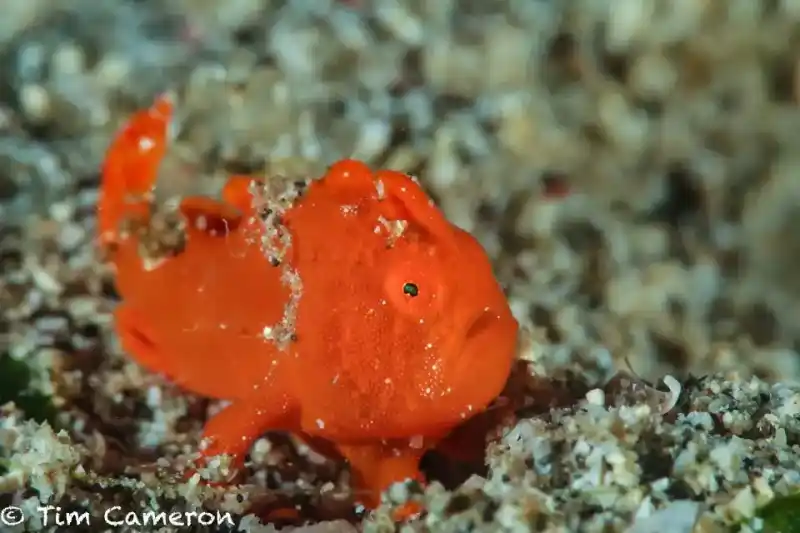
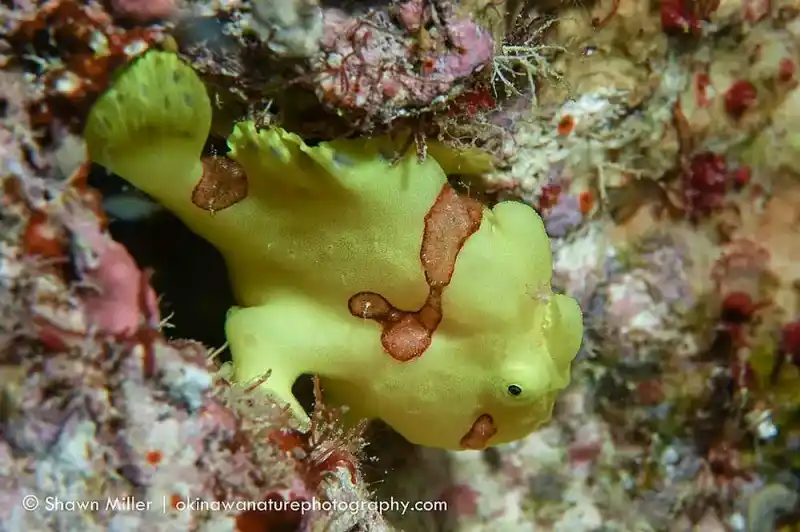
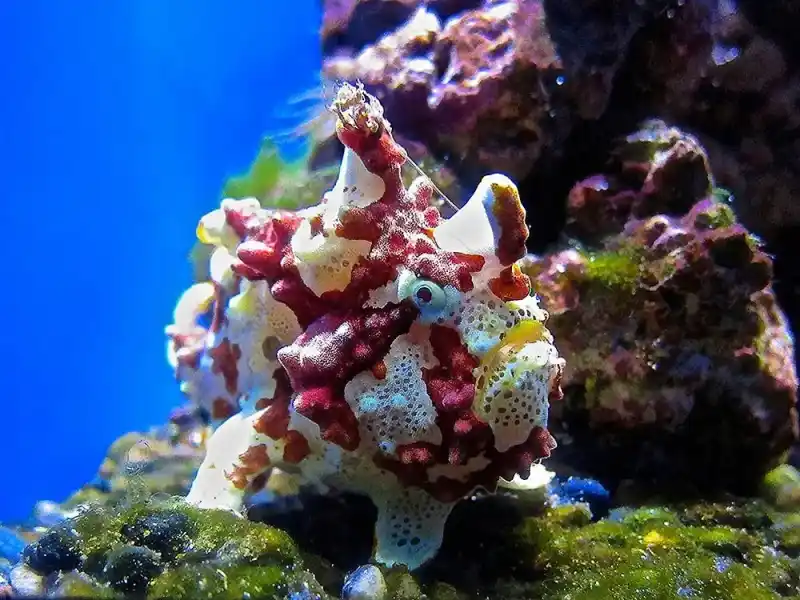
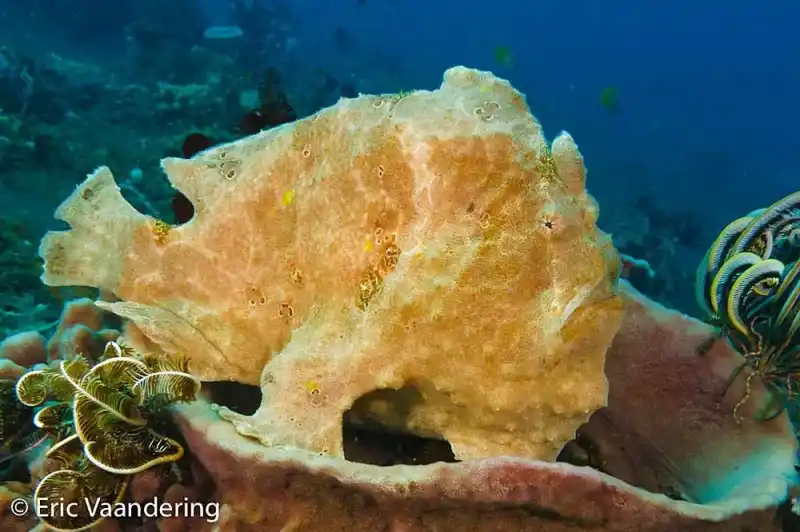
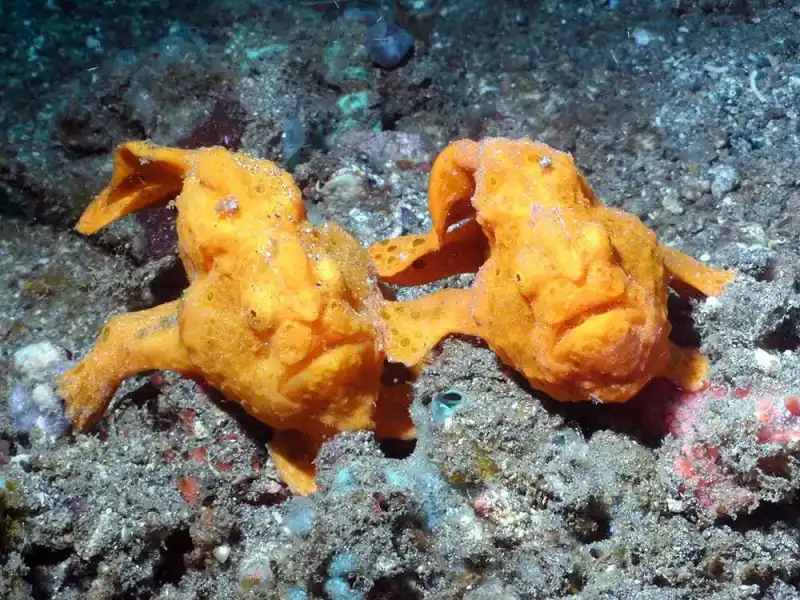
The body surface has warts and skin flaps; the body color is varied to mimic the appearance of sponges/algae; the mouth is large and can be everted and expanded.
Detailed introduction
The genus * Antennarius* (also known as frogfish or frog anglerfish ) belongs to the family Antennariidae and is a typical mimicry ambush predator . Its first dorsal spine has evolved into a "fishing rod" (illicium) and "bait" (esca) , which it uses to lure small fish/crustaceans closer by waving the bait, then inhaling it within milliseconds to complete the capture.
Ecology and Biology
Predation strategy: It is based on extreme camouflage and baiting , and uses mouth-opening suction to capture prey; the recorded predation reaction time can be as short as ~6–10 ms .
Movement methods: In addition to walking with its pectoral fins , it can also move short distances by jet propulsion (water jet propulsion) .
Reproduction: It releases a gelatinous "egg raft/veil" into the water; the eggs are tiny and drift with the water layer after fertilization.
Morphology and Recognition
Fishing rods and bait: The first dorsal spine is specialized as illicium + esca ; different species of bait have great differences in shape.
Camouflage: The body surface has warts, skin flaps and irregular markings , which can match the appearance of sponges, seagrass or algae; some species have limited color-changing ability.
Pectoral/pelvic fins: The base of the fin rays is thick, which can support and "walk" like limbs; the mouth is large and can be instantly everted and expanded .
Body size and lifespan
Body length: Commonly 3–25 cm ; large species can reach ~35–40 cm (such as the closely related to the striped frogfish).
Lifespan: Estimated to be several years to 10+ years in the wild, depending on species and habitat.
Distribution and Habitat
Widely distributed in tropical to subtropical seas, with the most diversity in the Indo-Pacific region , and also found in the Atlantic/Caribbean ; commonly inhabiting shallow seas (usually 1–50 m) with coral reefs, rocky reefs, sponge beaches, seagrass beds and rubble/algae-covered bottoms .
Conservation and Human Interaction
Threats: Reef degradation, coastal pollution, ornamental fish trade collection and bycatch.
Use and precautions: Occasionally for viewing; please do not touch or move the individual or the substrate in the wild.
IUCN: This article is a genus-level overview ; member assessments vary considerably (LC–DD, etc.). Entries in this site's overview are marked as unassessed (NE) .
Frequently Asked Questions
Q1: How to quickly identify a frogfish? Observe the "fishing rod + bait" on its head and its walking posture with its pectoral fins ; the warts on its body surface, skin flaps, and mimicry coloration are also key clues.
Q2: Will frogfish attack people? No, they are small ambush predators ; please avoid handling them with your bare hands to prevent injury.
Q3: Can it change its body color? Some species can adjust their hue to match their environment over a period of days to weeks , but it is not an instantaneous color change.
Q4: How to distinguish it from stonefish/scorpionfish? Frogfish have "fishing rods" and often appear in a clump for camouflage; stonefish/scorpionfish have venomous spines and more developed spiny processes on their head bony plates.