Basic Information
Scientific classification
- Chinese name: Rajiformes|Skates
- Scientific name: Rajiformes
- Classification: Medium-sized fish
- Family: Rajiformes Rajidae Arhynchobatidae
Vital signs data
- Body length: Disc width ranges from 30–60 cm to 2 m+ (depending on genus and species).
- Weight: From several hundred grams to over ten kilograms (larger species are even larger).
- Lifespan: 10–30 years or more (longer for large species in high latitudes)
Significant features
Oviparous; non-venomous tail spines; dorsal tail with spiny tubercles; pectoral fins fused with the head to form a disc; benthic predator.
Distribution and Habitat
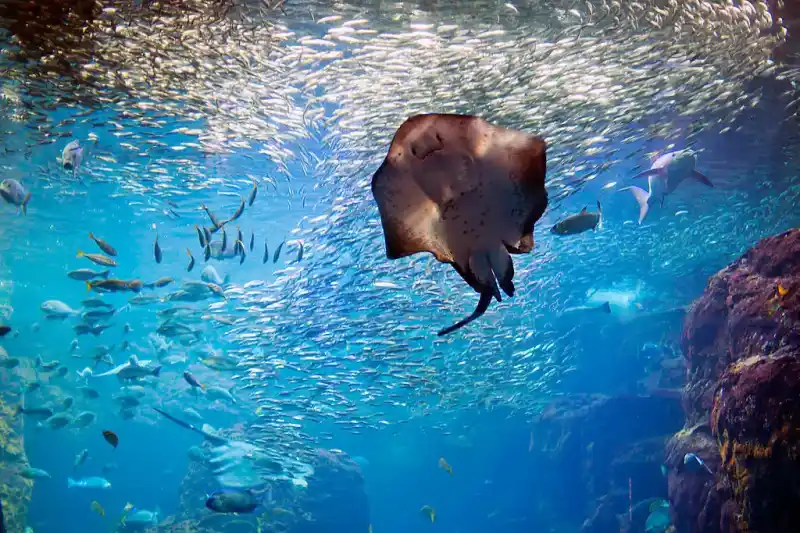
It is predominantly found on the sandy and muddy bottoms of temperate to frigid continental shelves and slopes, but also extends into deep water; it is benthic.
Appearance
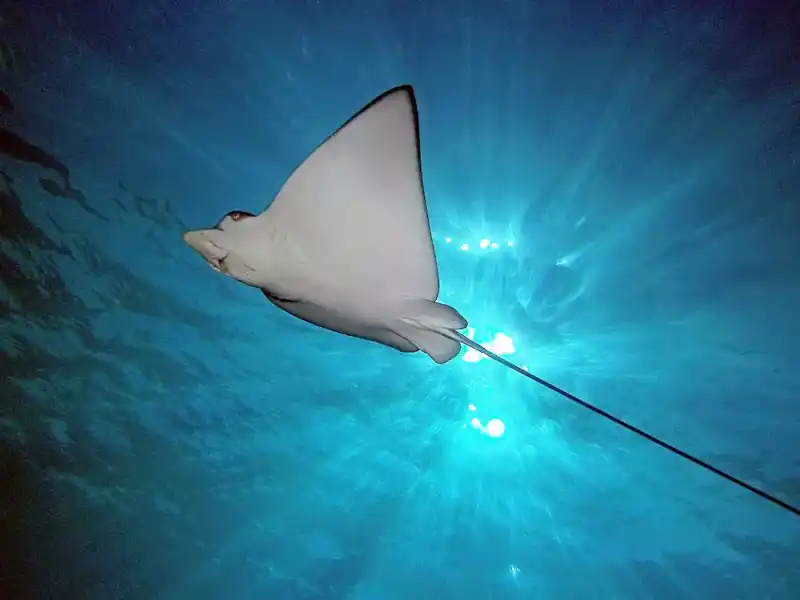
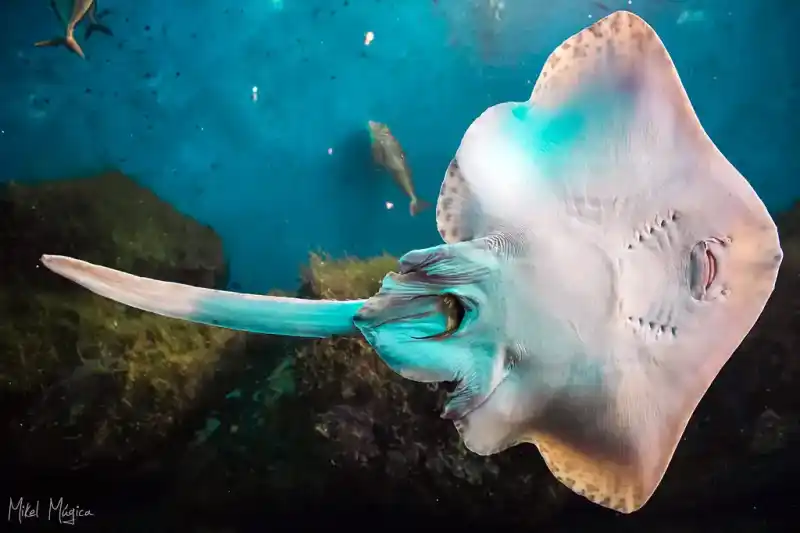
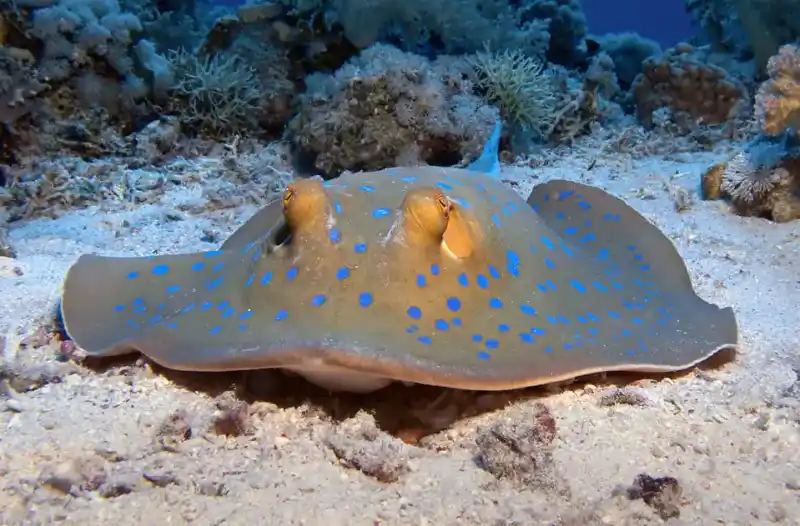
Rhomboid/round body disc; slender tail with 1–2 dorsal fins at the end; rough dorsal and tail with warts; mouth ventral.
Detailed introduction
In modern classification , the order Rajiformes usually refers to the clade of rays ( both belonging to the class Elasmobranchia—subclass Batoidea ). Unlike stingrays, which have venomous tail spines, rays do not have venomous tail spines , but instead have rough, small spines/warts along their backs and tails. They are typically oviparous , producing the famous "sea god's purse/mermaid purse" (egg sacs with horn-like tendrils).
Ecology and Biology
Feeding: small benthic fish, crustaceans, mollusks and polychaetes; mostly ambush/slow-moving foraging .
Reproduction: Oviparous (unlike stingrays and manta rays, which are mostly viviparous); the egg sac has tendrils at the four corners, which can attach to seaweed/substrate.
Life history: slow growth, late maturity, and low litter size ; the K-type strategy makes it sensitive to fishing pressure .
Morphology and Recognition
Body disc: The pectoral fins are fused with the head to form a rhomboid-circular body disc; there are skin flaps from the nostrils to the mouth, and the mouth is located ventrally.
Tail: Relatively slender, usually with two small dorsal fins at the tail end, lacking large tail spines ; the back and tail are often covered with spiny tubercles .
Electric organs: lack electric generators (distinguishing it from Torpediniformes).
Body size and lifespan
Disc width/body length: from 30–60 cm for common species to large rays (such as the genus *Ceratosporus*) that can reach 2 m+ .
Lifespan: Mostly 10–30 years , but larger species in high latitudes can live even longer.
Distribution and Habitat
They are widely distributed on temperate to frigid continental shelves and slopes with sandy and muddy bottoms , and are also found in subtropical/tropical deep-water areas; most are benthic , and their activity ranges from shallow seas to hundreds of meters .
Conservation and Management
Key threats: bottom trawl and gillnet by-fishing, targeted fishing, habitat degradation and pollution.
Management recommendations: set minimum body length/disc width , implement seasonal and spatial fishing bans , protect key habitats , and improve fishing gear .
IUCN: This article is a general overview at the order level ; assessments vary considerably among different species/populations (LC–EN). Entries in this site's overview are marked as not assessed (NE) .
Frequently Asked Questions
Q1: How to distinguish it from "stingray/martyr"? Most rays are oviparous, have no venomous tail spines, and often have 1-2 small dorsal fins at the end of their tails , with spiny tubercles on their backs and tails; stingrays are viviparous and have tail spines , and their tail structures are different.
Q2: Why are "mermaid wallets" so common? They are horn -shaped egg sacs of rays; empty egg sacs washed ashore are often seen on beaches.
Q3: Why are they vulnerable to fishing? They grow slowly, mature late, have a low reproduction rate , and inhabit the bottom, making them susceptible to bottom trawls and gillnets.
Q4: Do they have the ability to generate electricity? Rays (rays/slippery fish) do not have electric generators ; it is members of the order Electric Rays that generate electricity.