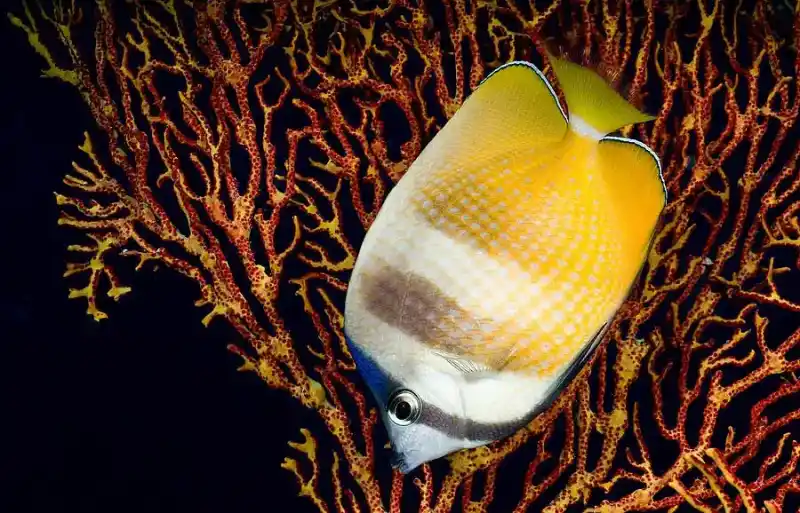
Basic Information
Scientific classification
- Chinese name: Butterflyfish (Chaetodontidae)
- Scientific name: Chaetodontidae
- Classification: Small fish
- Family: Chaetodontidae Chaetodon Heniochus
Vital signs data
- Body length: mostly 8–23 cm; large ones ~30 cm
- Weight: Increases with body length and height (typical small to medium-sized reef fish)
- Lifespan: Approximately 5–12 years (depending on species and environment)
Significant features
Small, brush-like teeth; specialized to omnivorous diet; found in pairs or small groups; armored larvae; indicator species value.
Distribution and Habitat
Tropical and subtropical coral reefs, lagoons, outer reef slopes, and seagrass/sponge communities in the Indo-Pacific and Atlantic; artificial reefs are also found.
Appearance
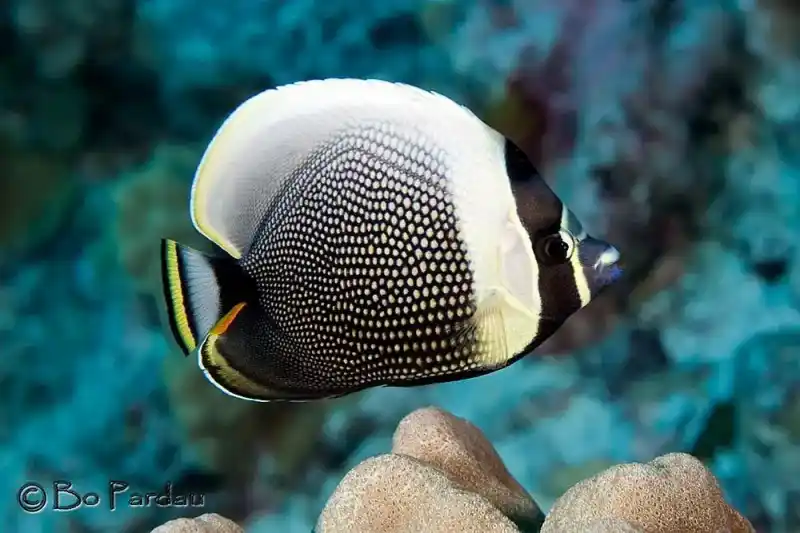
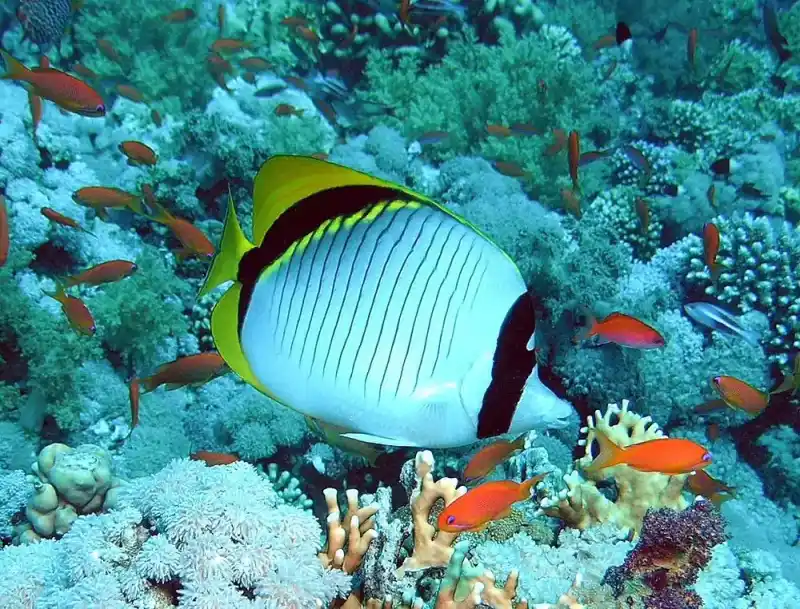
Body high and laterally compressed; dorsal fin continuous; diverse eye bands/false eyespots/lateral stripes; snout short to medium.
Detailed introduction
The family Chaetodontidae is one of the most strikingly colorful reef fishes in tropical coral reefs, with representative genera including *Chaetodon* and *Heniochus* . Most species feed on coral polyps and small benthic invertebrates , possessing small mouths with dense, brush-like teeth , and specialized mouthparts for feeding among coral branches. Their diverse lateral stripes, eyebands, and eye spots aid in camouflage and group identification, often serving as indicator species for healthy coral reefs.
Ecology and Biology
Diet: ranging from exclusively feeding on coral polyps (such as some Chaetodon) to omnivorous/predatory of small invertebrates (insects, snails, crustacean larvae, sponges, etc.).
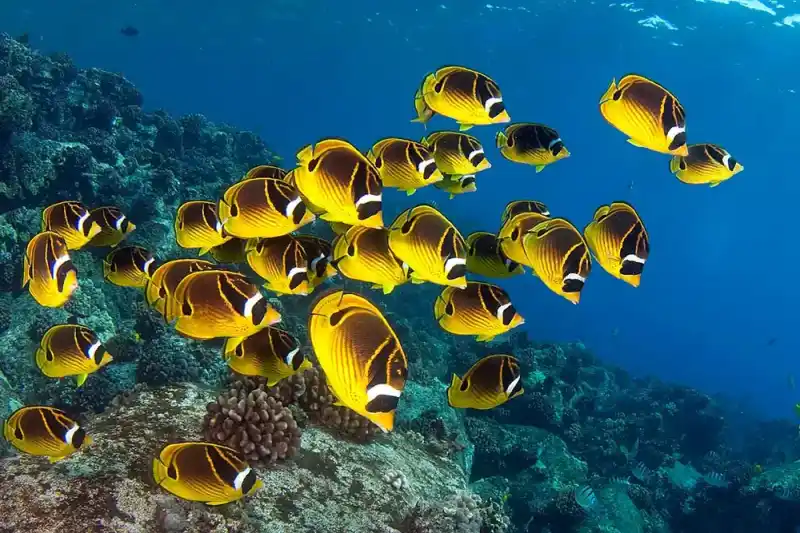
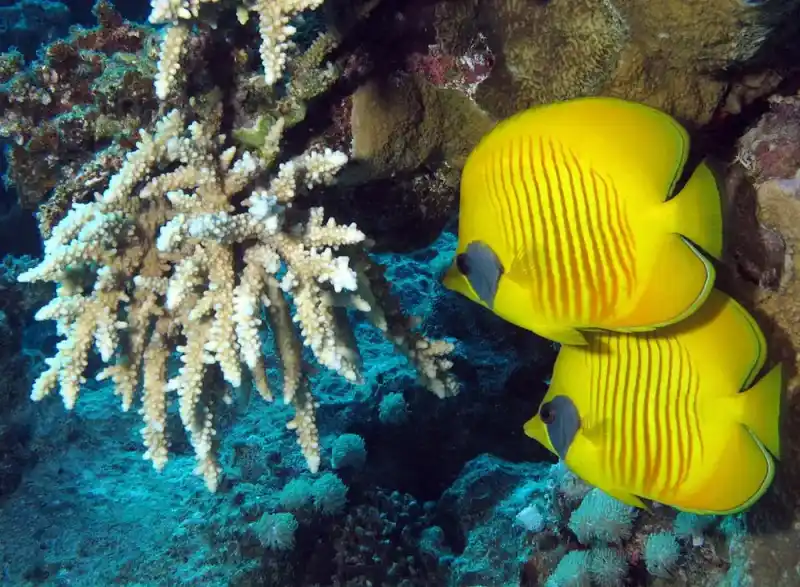
Social structure: They commonly engage in activities in pairs or small groups; some species form stable mating pairs and exhibit territoriality.
Reproduction: Eggs and sperm are released in the open ocean ; the eggs and fry are buoyant , and the larvae have a characteristic tholichthys stage.
Morphology and Recognition
Body type: High and laterally compressed body, continuous dorsal fin (with hard spines in the front and soft rays in the back), short to medium snout, and small mouth.
Patterns: Common eye bands (eye-covering bands) , oblique/reticulate stripes on the sides of the body , and colored bands on the caudal peduncle/caudal margin; some species have false eyespots .
Distinguishing it from angelfish: Butterflyfish have smaller mouths, more pointed snouts, and more prominent dorsal fin spines; Pomacanthidae (angelfish family) usually have preopercular spines .
Body size and lifespan
Body length: mostly 8–23 cm ; large species can reach ~30 cm .
Lifespan: Typically 5–12 years , longer in marine protected areas.
Distribution and Habitat
Widely distributed in the Indo-Pacific and Atlantic/Caribbean tropical-subtropical waters; commonly found on coral reef platforms, outer reef slopes, lagoons, and seagrass/sponge communities , and also utilizing artificial reefs and shipwrecks .
Conservation and Human Interaction
Threats: Coral bleaching and habitat degradation, ornamental fish trade harvesting, coastal pollution and overfishing.
Indicative significance: Butterflyfish, which feed exclusively on corals, are sensitive to coral coverage and are often used as an indicator of reef health.
Management: Establish marine protected areas , restrict harvesting and export, and improve habitat connectivity and water quality management.
IUCN: This article is a family-level overview , and the status varies greatly among different species (LC–EN); the overview entries on this site are not evaluated (NE) .
Frequently Asked Questions
Q1: How to distinguish it from angelfish? Butterflyfish have smaller mouths, more pointed snouts, and no pre-gill spines ; angelfish ( Pomacanthidae ) have obvious pre-gill spines.
Q2: Can they be kept in captivity? Most butterflyfish are picky about water quality and food, and those that feed exclusively on corals are not suitable for keeping as pets.
Q3: Why is it considered an "indicator species"? Its diet and behavior are highly sensitive to coral cover and reef complexity .
Q4: What are the representative genera/species? Chaetodon auriga , Chaetodon lunula , Heniochus acuminatus , etc.


