Basic Information
Scientific classification
- Chinese name: Common Eastern Small Frog
- Scientific name: Crinia signifera
- Order: Anura
- Family: Myobatrachidae Crinia signifera
Vital signs data
- Body length: Adults are about 18–30 mm in length, making them very small frogs.
- Weight: Individual weight is only a few grams, and varies depending on sex and nutritional status.
- Lifespan: It is estimated that individuals can live for several years in the natural environment, with some individuals experiencing multiple breeding seasons.
Significant features
This small, terrestrial frog, widely distributed in southeastern Australia, exhibits great variation in back color and patterns. The male frog emits a series of soft, continuous calls at the edge of water bodies, making it one of the most frequently heard small frogs in the area.
Distribution and Habitat
Native to southeastern Australia, it is commonly found in parts of New South Wales, Victoria, Tasmania, and South Australia; it inhabits various wetlands, streamsides, ponds, ditches, and shallow water environments around cities and farmlands.
Appearance
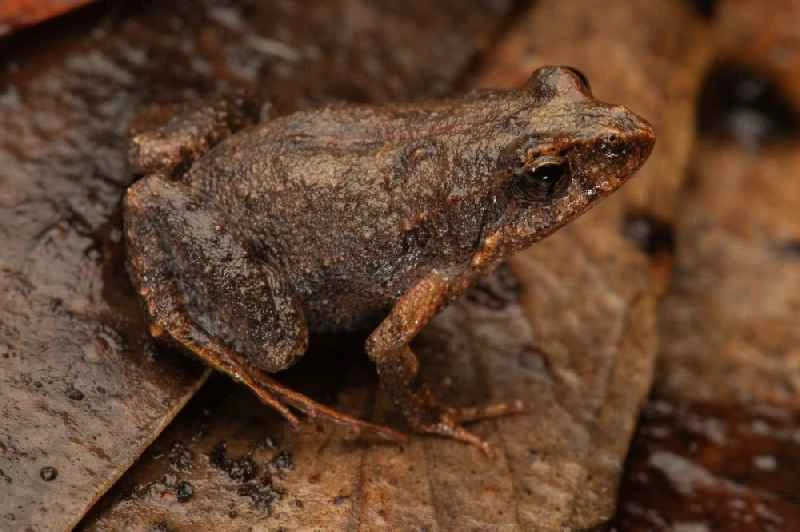
It has a small and slightly flattened body, with a gray, brown or olive back with irregular spots or stripes, and a lighter color on the belly; the skin is slightly rough, and the toes are partially webbed, which is suitable for activities at the edge of wetlands.
Detailed introduction
The Common Eastern Froglet ( Crinia signifera ) is a small, terrestrial frog with a melodious call. Belonging to the family Myobatrachidae , it is widely distributed in southeastern Australia and is one of the most common frogs there, easily heard near water but not always easily spotted.
Classification and nomenclature
Commonly used Chinese name: Common Eastern Small Frog (also translated as Common Eastern Frog, Common Eastern Small Frog, etc., there is currently no unified Chinese name)
English name: Common Eastern Froglet
Scientific name: Crinia signifera
Family and genus: Myobatrachidae (Family of Australian frogs) → Crinia
Appearance and Identification Features
Although the common eastern small frog is small in size, it has a wide variety of patterns and very distinctive details:
Size: Adults are typically 18–30 mm in length, making them very small frogs;
Body shape: The body is slightly flat and the limbs are slender, making it suitable for moving around in muddy areas near water, grass, and fallen leaves.
Back color: ranges from gray, brown, olive to near black, often with irregular spots, stripes or net-like patterns, with great individual variation;
Back texture: The skin appears slightly rough, with visible small bumps;
Abdomen: The ventral surface is mostly light-colored, such as white, grayish-white, or with fine spots; light spots may sometimes be seen on the throat.
Other features: Partial webbing between the toes facilitates movement in shallow water and at the edges of wetlands; overall body color is relatively low-key, which is beneficial for camouflage among mud and fallen leaves.
Because of the extreme variation in the patterns on its back, the common eastern small frog is often called the "variable-looking small ground frog". When identifying it in the wild, it is usually judged by a combination of body size, call and habitat.
Distribution range and habitat
The common eastern small frog is a common species in southeastern Australia .
It is distributed in New South Wales, Victoria, Tasmania, and parts of South Australia;
Records exist from coastal areas to inland low mountains and hills.
It has a wide range of habitat adaptations:
Natural environments: wetlands, streamsides, marshes, lake shores, meadows with small puddles, and forest clearings;
Artificial environments: irrigation ditches in farmland, puddles along roadsides, small ponds in city parks and gardens, etc.;
They can often be found and heard calling wherever there is shallow water or seasonal flooding nearby.
Habits and calls
The common eastern small frog is a typical nocturnal frog that prefers humid environments :
During the day, they mostly hide in grass, rocks, piles of fallen leaves, and crevices along the riverbank;
They are most active at dusk and night, especially after rainfall;
Male frogs call at the edge of water, in shallow water or stagnant water. Their calls are short and repetitive, often described as fine "clicks," "ticks," or continuous "kik-kik-kik" sounds.
In suitable seasons and environments, many male frogs will call out at the same time, forming a dense "frog chorus". However, due to their small size and camouflage, many people can only "hear their voices but not see them".
feeding habits
The common eastern small frog mainly preys on various small invertebrates:
Terrestrial insects such as ants, small beetles, and small flying insects;
Small spiders, mites, springtails, and other terrestrial arthropods;
They also occasionally feed on other tiny invertebrates and insect larvae.
They use their vision and sensitive receptors for vibrations to locate small prey nearby, then quickly extend their sticky tongues to capture them in their mouths.
Reproduction and Development
The reproduction of the common eastern small frog is closely related to rainfall and water conditions:
The breeding season varies by region, but is generally more concentrated in the warmer and more humid seasons.
Male frogs gather at the edges of ponds, still pools, ditches, and seasonal waterholes, calling out to attract female frogs.
Female frogs lay their eggs in shallow water or near waterside vegetation, and the egg clusters are usually attached to aquatic plants or submerged objects.
Tadpoles develop in water, are small in size, and are quite sensitive to water temperature and dissolved oxygen. It is especially crucial for them to complete their metamorphosis before the temporary water body dries up.
In some temporary waterlogged areas, large numbers of tadpoles can be seen moving together, a significant portion of which belong to this small eastern frog species.
Protecting the status quo and threats
The common eastern small frog is currently assessed as Least Concern (LC) on the International Union for Conservation of Nature (IUCN) Red List. This indicates that it has a wide distribution, a large population, and remains quite common in many areas.
However, local populations may still be affected by the following factors:
Wetland landfill and water pollution reduce suitable breeding grounds;
Urban sprawl and land development have led to the fragmentation of local habitats;
Long-term uncertainties arising from diseases (such as chytriditis) and climate change.
The key to protecting this small native frog species lies in maintaining diverse shallow wetlands and clean water bodies, as well as preserving microhabitats such as riparian vegetation and leaf litter.
Frequently Asked Questions
Q1: Is the common Eastern Small Frog common in the local area?
Yes, it is one of the most common small frogs in southeastern Australia.
In areas with bodies of water and wetlands, there is a good chance of finding them if you pay close attention to their calls and ground activity.
Q2: Are these small frogs poisonous? Can I catch them by hand?
The common eastern small frog does not have the same potent venom glands as the cane toad and is generally not toxic to humans.
However, out of respect for wild animals and for their own hygiene,
If you need to observe for a short period of time, it is recommended to gently hold the container with wet hands or a wet container, and then wash your hands.
Q3: Will hearing a lot of "tick-tock" frog calls at night affect the ecological balance?
This small frog is a native species and an important part of the local ecosystem.
They prey on large numbers of small insects and also provide food for birds, snakes, and other animals, generally without negatively impacting the ecological balance.
Q4: How can you distinguish the common eastern small frog from other small frogs in the wild?
It is very small and has a wide variety of patterns on its back, making it difficult to distinguish from other animals by appearance alone.
It usually requires consideration of geographical location, aquatic environment, and their unique vocal patterns.
Use professional illustrations or local amphibian information for identification.