Basic Information
Scientific classification
- Chinese name: Little Shepherd
- Scientific name: Puffinus assimilis, Little Shearwater, Water-snake
- Classification: Waterfowl
- Family and genus: Procellariiformes, Procellariiidae, Procellarii
Vital signs data
- Body length: 25-30 cm
- Weight: 140-275g
- Lifespan: Approximately 10 years
Significant features
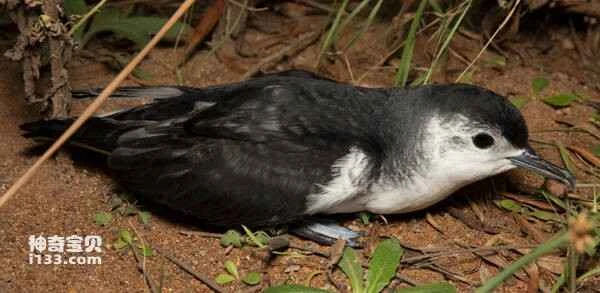
The bird has a black beak, dark brown eyes, and blue legs and webbed feet. Males and females are identical, but the female's tail is slightly shorter.
Distribution and Habitat
Resident birds: Australia, French Southern Territory, New Zealand and Norfolk Island.
Seasonal uncertainty: Cook Islands, Fiji, New Caledonia, Pitcairn and Tonga.
They breed in coastal waters or on ocean islands. This species nests in grasslands and even in forests. Besides breeding, they are frequently found in warm tropical and subtropical waters, and often in coastal areas, unlike most seabirds.
Appearance
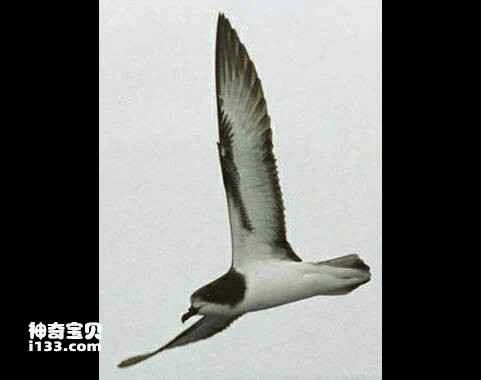
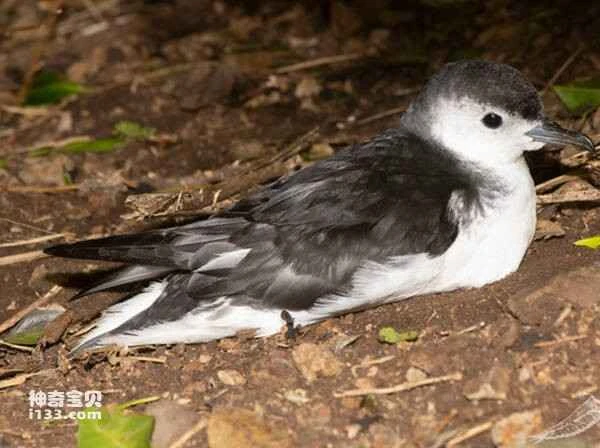
The Lesser Shearling measures 25-30 cm in length, has a wingspan of 58-67 cm, and weighs 140-275 g. The nominate subspecies has almost entirely black upperparts, including the head, wing coverts, and tail. However, the back of the neck may appear paler. The underparts are white, but with a narrow black border along the lower wing. The white underparts are slightly raised on either side of the rump. The head, cheeks, and narrow glabella are white, while the eye area has small black spots in front of the eyes and on the upper ear cover. The upper breast and lower neck are dark grey with slight white spots.
The beak is black with a bluish-grey base color. The iris is dark brown. The legs and webbed feet are blue, with some black on the outer sides of the tarsi and toes, while the membranes are slightly pinkish. Males and females are identical, but the female's tail is slightly shorter. Juveniles are similar to adults.
Detailed introduction
The Little Shearwater (scientific name: *Puffinus assimilis*) is a bird belonging to the genus *Puffinus* in the family Procellariidae. There are five subspecies.
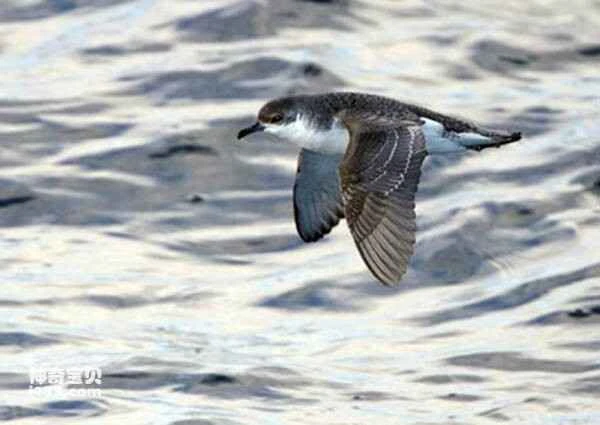
The Little Shearling is a resident bird, spending most of the year around its habitat, even visiting it outside the breeding season. This species flies to the water's edge when hunting prey. They glide effortlessly over the waves, accelerating with the wind as they fly at different altitudes. This little seabird flies fast in strong winds, but in light breezes it flies low above the waves, emitting a rhythmic humming and gliding sound.
Little petrels are usually quiet at sea. At night, they become more talkative at their roosts, where they emit a typical, rather loud but hoarse call, often accompanied by wheezing. Another description is a hoarse, rapidly repeating call, "kakakakak-urr," with the last syllable seemingly uttered by a bird breathing heavily. These cries can be heard both in the air and on the ground near the burrows.
The Little Shearling is not a true social bird, often foraging alone, but sometimes hunting fish with dolphins. Groups can be seen outside of breeding colonies. Its diet consists mainly of cephalopods, small fish, and krill. Prey is typically caught by dropping from the air, catching it on the surface, or chasing it in shallow water.
Little petrels typically nest in burrows within territorial bushes or forests. Like many petrel species, they are monogamous, with a lasting bond between mates. The breeding season occurs during the local summer and varies depending on the range. These birds spend about a month at sea hunting to build up their energy reserves before laying eggs. They nest in their habitat, sometimes affected by competition for nesting burrows with other species. The nest is a burrow dug by the bird itself, 30–200 cm long, with the ground lined with loose material. This burrow is usually dug in very fragile soil, which weakens the structure. Nests are placed in coastal forests, bushes, tall grass, grassy slopes, or within forests. Little petrels may also use rock crevices or settle between rocks, depending on available locations.
Females lay one white egg per clutch. Two adult birds take turns incubating for 52-58 days, molting every day in Australia and every 7-10 days in New Zealand. At hatching, the chicks are covered in grey down. They feed at night for 3-4 days after hatching. The chicks reach maximum weight at 45-48 days after hatching and leave the nest at approximately 70-75 days. This species produces one clutch per season. Both parents share all the brooding duties.
According to data reviewed by Brooke (2004), the global population of Little Shearlings is estimated to exceed 100,000 pairs, equivalent to over 200,000 mature individuals. Therefore, the population ranges from 100,000 to 499,999 mature individuals. Thus, the total number is set at an average of 300,000 to 750,000 individuals. Trends demonstrate that the suspected population is declining due to predation by invasive species. They are threatened by predators (cats and rats) introduced to their islands, as well as human disturbance, leading to population decline and even local extinction. In these fragile soils, burrows are extremely vulnerable, and human movement within their habitat can easily destroy their simple passageways. Dune erosion leading to habitat degradation is also a significant problem.
Listed as Least Concern (LC) in the IUCN Red List of Threatened Species 2018 ver3.1.
Protect wild animals and ban the consumption of wild game.
Maintaining ecological balance is everyone's responsibility!