Basic Information
Scientific classification
- Chinese name: Wolf spider
- Scientific name: Lycosidae (family Lycosidae, collectively known as wolf spiders)
- Classification: Arthropoda
- Genus and family: Lycosidae (Tarantula)
Vital signs data
- Body length: Most species are about 5–25 mm in length, while a few large wolf spiders can exceed 30 mm in length.
- Weight: Weight varies depending on size and species, ranging from tens of milligrams to several grams, with most being small to medium-sized terrestrial spiders.
- Lifespan: Generally 1–2 years, some species of female spiders can live longer in the wild and experience multiple breeding seasons.
Significant features
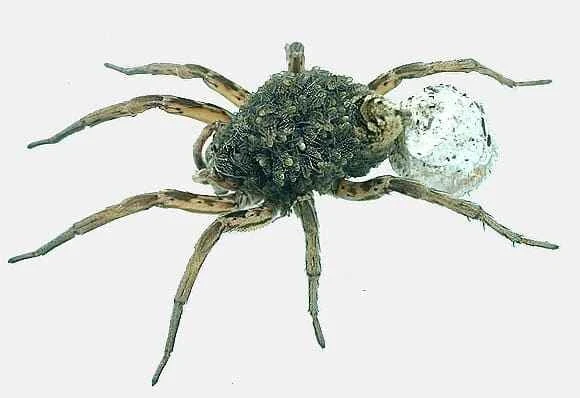
These terrestrial hunting spiders do not rely on large webs but instead use running and sight to actively hunt prey. They are known for their parental behavior of carrying egg sacs and spiderlings on their backs.
Distribution and Habitat
It is widely distributed across all continents of the world, and can be found in grasslands, farmlands, sandy areas, forest edges, and wetlands. It is mostly found on the ground, in leaf litter, and in low vegetation, and can also be found in urban green spaces and courtyards.
Appearance
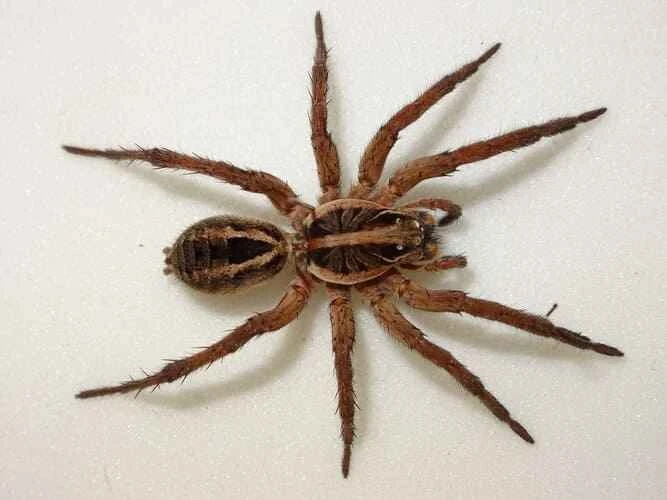
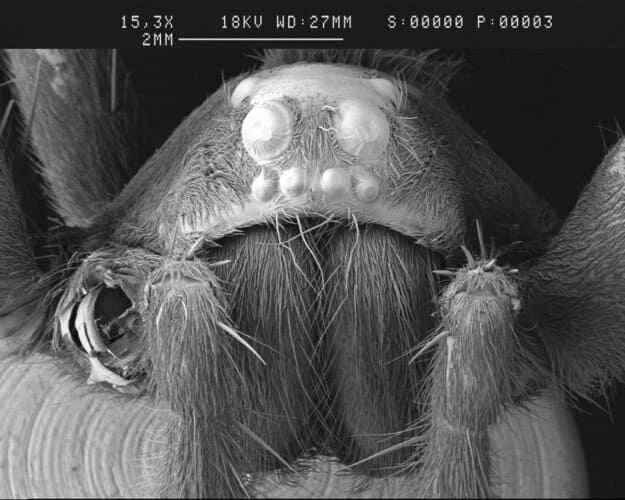
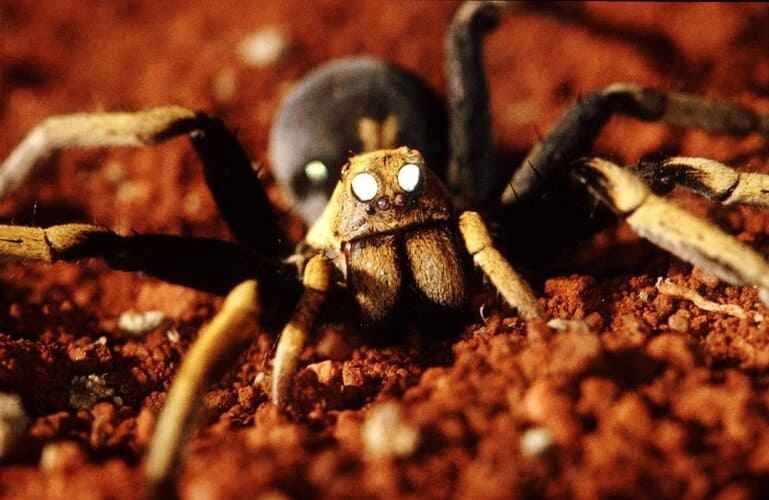
Their body color is mostly brown, grayish-brown, or dark brown, often with longitudinal stripes; their eyes are arranged in a three-layered structure, with a pair of large, prominent eyes in the middle; and their feet are powerful and suitable for running.
Detailed introduction
Wolf spiders are a collective term for the large group of spiders in the family Lycosidae , with over two thousand known species worldwide. They are not the giant "monster spiders" depicted in movies, but rather a group of terrestrial predators known for their running and hunting methods, which are somewhat similar to small "wolf packs," hence their name.
Classification and nomenclature
Common Chinese names: Wolf spider, ground wolf spider (the names may vary slightly in different regions)
English name: Wolf Spiders
Scientific name (at the departmental level): Lycosidae
Belongs to: Phylum Arthropoda → Class Arachnida → Order Araneae → Family Lycosidae
Appearance and Identification Features
Tarantulas vary in size and color from species to species, but they share some common identifying features:
Size: Most species are about 5–25 mm in length, with a few large species exceeding 30 mm;
Body color: mostly brown, grayish-brown or dark brown, often with longitudinal stripes or spots, which are very similar to the color of soil, fallen leaves and stones, making it easy to camouflage.
Eye arrangement: Tarantulas have 8 eyes, usually arranged in three layers :
The bottom row has four small eyes, arranged in a slightly curved horizontal line;
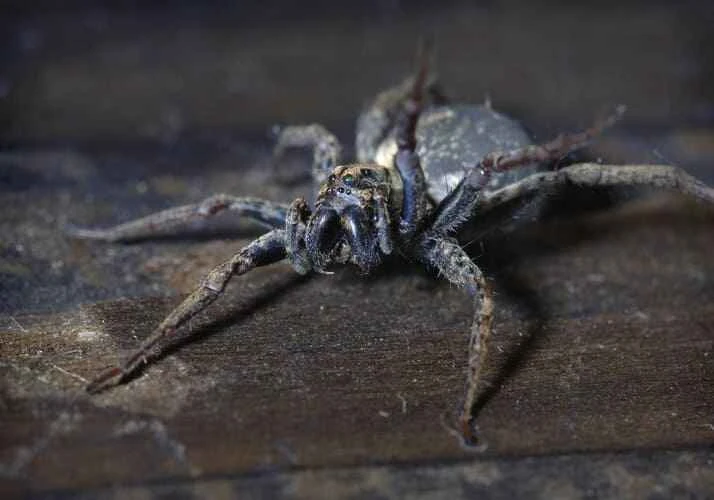
The two larger eyes in the middle row are located in front of the head and chest, and are very conspicuous when viewed from the front;
The top two small eyes, located at the top of the head and chest, are responsible for observing the environment above.
Body shape and gait: The body is slightly flat and the feet are powerful, making it suitable for fast running and sudden sprints.
When illuminated by a flashlight or lamp, their large eyes will reflect light strongly . At night, tiny "bright spots" can often be seen on the grass, which are often the eyes of the tarantula.
Life habits and hunting methods
Unlike many spiders that rely on webs to catch prey, wolf spiders are typical roaming predators :
Most species do not weave large predatory nets, but instead actively patrol the ground, leaf litter, and grass.
They rely on their keen eyesight and sense of touch to spot insects, other spiders, and small arthropods;
Once it locks onto its target, it will quickly sprint and pounce on its prey, paralyzing it with venom before feeding.
Some species dig small holes in the ground or use natural crevices to ambush passing insects near the entrance; others prefer to be active near water and can even move on or underwater for short periods to chase prey.
Distribution range and habitat
Tarantulas are a group of spiders with a very wide global distribution , found in everything from tropical rainforests to temperate grasslands, deserts, mountains, and even urban green spaces.
Commonly found in grasslands, farmland, gardens, wetlands, and sandy areas;
It also appears on forest edges, lawns in front of and behind houses, flower beds, and piles of stones;
Many species prefer to live on the ground, while a few live on tree trunks, rock walls, or the edges of water.
They are usually active during the day and at dusk, with some species being more active at night.
Reproduction and "carrying babies" behavior
One of the most famous aspects of wolf spiders is their exceptional parental care behavior , which is quite remarkable among spiders:
The female spider will put the eggs she lays into a silken egg sac and use the spinnerets on her hindquarters to fix the egg sac to the end of her abdomen , like dragging a small ball around.
After the eggs hatch, the baby wolf spiders climb onto their mother's back, forming a "baby-carrying ball." For a period of time, the female spider carries the baby spiders on her back while walking, foraging, and avoiding predators.
Once the spiderlings are large enough to hunt independently, they gradually separate from their mother's back.
In the wild, if you see a "mother spider" with its back covered with tiny spiders, it is most likely a wolf spider.
Toxicity and its effects on humans
Tarantulas possess venom used to subdue prey, but most species are relatively weakly toxic to humans .
They generally do not attack humans unless they are grabbed, oppressed, or suddenly threatened;
After being bitten, the symptoms are usually local pain, redness and swelling and mild itching, similar to a stronger version of bee sting or mosquito bite;
A small number of individuals may experience transient headaches, nausea, or mild general malaise, which usually subside within one or two days.
It is generally recommended to do the following after being bitten:
Wash the wound immediately with soap and water;
Apply cold compresses to reduce pain and swelling;
If symptoms worsen, allergic reactions occur, or the injured person is a child or elderly person, seek medical attention immediately.
Ecological role and its relationship with humans
As active surface predators, wolf spiders play an important "insect control role" in the natural environment and farmland:
It preys on large numbers of small arthropods such as ants, beetles, locust nymphs, and moth larvae;
It helps to suppress the population of some pests in farmland and vegetable gardens;
It also provides a food source for birds, lizards, and small mammals.
In human-inhabited environments, they generally only roam outdoors. Occasionally, they may wander indoors, mostly because they have "gone astray" while hunting insects. As long as they are not handled with bare hands, they usually do not cause any trouble.
References
Simon-Brunet, B. 1994, *The Silken Web*, Reed Books, Chatswood.
York Main, B. 1976. *Spiders*, William Collins Publishers Pty Ltd, Sydney.
Frequently Asked Questions
Q1: Do tarantulas attack people on their own initiative?
Most tarantulas are cautious and will choose to flee rather than attack when they encounter humans.
They may bite defensively only when stepped on, pressed down, or grabbed.
Q2: Is the venom of a tarantula very potent?
While "powerful" for insects, most tarantula bites cause only localized pain, redness, and mild swelling in healthy adults.
It usually does not cause severe poisoning reactions.
Q3: If I find a tarantula near my home, do I need to get rid of it?
Generally, it's not necessary. Tarantulas help prey on mosquitoes, small beetles, and other pests, making them nature's "free pest control agents."
If you don't want them to get close, you can clear away weeds and fallen leaves to reduce their hiding places.
Q4: How can I distinguish between a tarantula and a common house spider?
Tarantulas are typically more robust, with thicker legs, a particularly large pair of eyes in the middle, and an abdomen that blends well with the ground.
Many house spiders are more slender and tend to stay on webs rather than running on the ground.