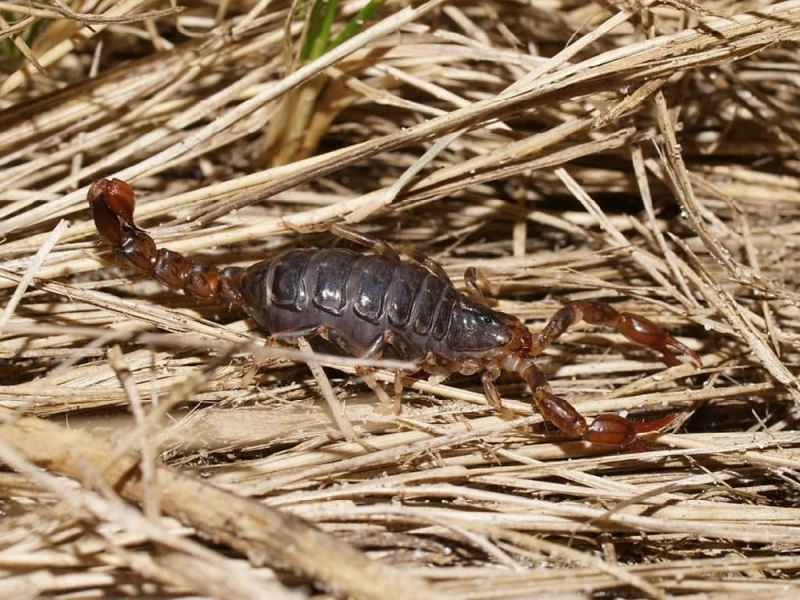
Basic Information
Scientific classification
- Chinese name: Forest Scorpion / Wood Scorpion
- Scientific name: Scorpiones (a type of wood scorpion that lives in woodlands and dead wood environments)
- Classification: Arthropoda
- Family: Scorpiones Forest scorpion
Vital signs data
- Body length: Different species range from approximately 3 to 12 centimeters in length, with small wood scorpions measuring only a few centimeters and large forest scorpions exceeding 10 centimeters.
- Weight: Weight varies depending on body size and species, ranging from a few grams to tens of grams, and is mostly found in small to medium-sized arthropod predators.
- Lifespan: Most scholars believe that scorpions can live for several years, and some forest scorpions can live for 3-5 years or even longer in the wild.
Significant features
Scorpions mainly live in forests and dead wood environments. They are nocturnal, terrestrial, and adept at ambushing and preying on small arthropods among fallen leaves and rocks. They have the typical scorpion "pincers + stinger" structure.
Distribution and Habitat
It is widely distributed in forests, shrublands and mountain forest edges in tropical, subtropical and some temperate regions around the world, and prefers dark and humid microenvironments covered with dead branches, fallen leaves and stones.
Appearance
Its body color is mostly brown or dark brown, similar to tree bark and soil; it has large pincer-like tentacles at the front, and its tail is clearly segmented with a venomous stinger at the end, which can fluoresce blue-green under ultraviolet light.
Detailed introduction
Wood scorpions (or forest scorpions) are generally a general term for a group of scorpions that primarily live in forest, scrubland, and deadwood environments, rather than a single species name. "Wood scorpions" or "forest scorpions" from different regions may belong to different families and genera, for example:
Forest scorpions such as *Heterometrus *, which live in the tropical rainforests of Asia;
Cercophonius squama, a wood scorpion found in the woodlands and mountains of southeastern Australia;
And other small to medium-sized scorpions with similar habits that prefer the woodland's dead leaf litter layer.
This entry provides a comprehensive overview of "Wood / Forest Scorpion" as a scorpion ecotype in woodland and wood-dwelling environments .
Classification and nomenclature
Common Chinese names for: forest scorpion, wood scorpion
Common English terms: Wood Scorpion, Forest Scorpion
Representative taxa examples: forest scorpions ( Heterometrus) , wood scorpions (Cercophonius squama) , etc.
Belongs to: Phylum Arthropoda → Class Arachnida → Order Scorpiones
Appearance and Identification Features
Different species of forest scorpions vary in size and color, but their overall physical characteristics are similar:
Size: Body length usually ranges from about 3 to 12 centimeters, with small wood scorpions only a few centimeters long, while some forest scorpions can exceed 10 centimeters;
Body color: Mostly brown, dark brown or nearly black, with some individuals being yellowish-brown or olive-colored, which is close to the color of tree bark, decaying wood and soil, thus providing camouflage.
Body structure: The anterior part is the cephalothorax with a pair of large pincer-like tentacles (pincers), the middle part is the segmented trunk, and the posterior part is the distinctly segmented tail with a venomous stinger at the end;
Pincers and tail: Most forest scorpions have strong and powerful pincers used to grasp prey; their tails can bend forward and can be used to inject venom when necessary.
Fluorescence characteristics: Like most scorpions, forest scorpions emit blue-green fluorescence under ultraviolet (UV) light , which is a common method for scorpion surveys in the field.
Distribution range and habitat
"Forest scorpions" are widely distributed in tropical, subtropical, and temperate forests and shrublands .
Asia: The leaf litter, fallen trees, and tree roots under rainforests, monsoon forests, and montane forests;
Australia: Eucalyptus forests, mountain forest edges, rocky slopes, and under fallen trees;
Africa and Central and South America: humid, sheltered environments such as tropical rainforests and forest edge scrubland;
In some temperate regions: under rocks and inside decaying wood in mixed coniferous and broad-leaved forests and deciduous forests.
They prefer dark, humid microenvironments with abundant dead branches, fallen leaves, and rocks . During the day, they mostly hide under rocks, in crevices of rotten wood, behind tree bark, or in caves, and go out to forage at night.
Lifestyle and Diet
Forest scorpions are typical nocturnal terrestrial predators :
During the day, they mostly lie still in hidden places to rest, reducing the risk of water evaporation and being discovered by predators;
They come out at dusk and night, slowly patrolling along the ground, fallen logs, or tree trunks;
They use their limbs and receptors on their bodies to detect vibrations and smells of their prey.
They primarily feed on the following small animals:
Insects, such as crickets, beetles, cockroaches, and moth larvae;
Other arthropods, such as spiders, millipedes, and small centipedes;
Some large species will also prey on smaller lizards or frogs of similar size.
When hunting, most forest scorpions first quickly clamp their prey with their pincers, then finish the attack with their stinger, injecting venom before dragging the prey to a secluded spot to slowly devour it.
Reproduction and raising young
Like all scorpions, forest scorpions are viviparous : the female scorpion completes embryonic development inside her body and gives birth to live young scorpions ("scorpion babies").
Newborn scorpion chicks will climb onto their mother's back and lie neatly in a layer of "white dots";
Before the first few molts, the young scorpions mostly stay on the mother's back, and are led by the mother scorpion and provided with protection.
Once the young scorpions' bodies harden and they are able to hunt independently, they gradually leave their mother's back and disperse to live in the surrounding environment.
This obvious parental care behavior is a major characteristic of scorpions, which also means that when encountering a female scorpion with "a back full of baby scorpions" in the wild, one should be especially careful to avoid disturbing her.
Toxicity and Safety
All scorpions possess venom glands, but the potency of their venom varies greatly among different groups . Most small to medium-sized scorpions in woodlands and forests have mild to moderate venom.
Common symptoms after being stung include stinging pain, redness and swelling, local burning or numbness;
Some people may experience mild systemic symptoms such as headache, nausea, or temporary fatigue.
A small number of people (especially children, the elderly, or those with allergies) may experience a stronger reaction, so caution is advised.
It is important to note that some small scorpions living in forests or thickets may belong to highly venomous groups . Therefore, without knowing the specific species, any scorpion should still be considered a potentially dangerous wild animal , and one should "not catch, pinch, or play with it with bare hands."
After being stung by a scorpion, it is recommended to:
Get away from the scorpion immediately to avoid being stung again;
Wash the wound with soap and water to keep it clean;
Apply cold compresses to reduce swelling and pain, and avoid cutting or sucking the wound yourself;
If you experience difficulty breathing, chest tightness, persistent severe pain, or a systemic allergic reaction, seek medical attention as soon as possible.
Relationship with and protection of humans
In natural ecosystems, forest scorpions are important nocturnal predators , playing a role as "natural pest control agents" to some extent by preying on a variety of insects and arthropods.
For humans:
In normal outdoor encounters, as long as there is no provocation, problems generally will not occur;
When staying in forest camps, mountain cabins, or log cabins, making your bed and shoes and checking for gaps in the planks can help reduce close contact.
In some areas, excessive deforestation and habitat fragmentation can impact forest scorpion populations and overall forest biodiversity.
When engaging in outdoor activities and science popularization, respecting the ecological role of scorpions and avoiding indiscriminate capture or killing is not only a responsibility for one's own safety but also a way to protect the forest ecosystem.
Frequently Asked Questions
Q1: Are forest scorpions/wood scorpions very poisonous?
The toxicity varies greatly among different species; most stings from small to medium-sized forest scorpions only cause localized pain and swelling.
However, we should not be complacent. If the species is unknown, it is best to treat it as potentially dangerous and seek medical attention promptly after being stung.
Q2: How can I reduce the risk of encountering scorpions when camping in the forest?
Try to avoid walking barefoot. Shake out your clothes and sleeping bag before going to bed, and check your shoes, backpack, and the gaps in the ground.
Also, avoid reaching your hands into piles of dead wood and crevices between rocks.
Q3: Will forest scorpions attack people on their own initiative?
Most scorpions, including forest scorpions, tend to be "conservative" and prefer to hide or remain still and camouflage themselves.
It may only sting defensively when stepped on, squeezed, or directly grasped.
Q4: Why do scorpions "glowing" under ultraviolet light?
The scorpion's exoskeleton contains a substance that fluoresces under ultraviolet light.
Therefore, they exhibit blue-green fluorescence under UV flashlights or black lights, a characteristic that researchers use to find and investigate scorpions at night.


