Basic Information
Scientific classification
- Chinese name: Musk Duck
- Scientific name: Musk Duck, Biziura lobata
- Classification: Waterfowl
- Family: Anseriformes, Anatidae, Muscatidae
Vital signs data
- Body length: 61-73 cm
- Weight: 990-3100g
- Lifespan: Approximately 20 years
Significant features
The male musk duck is the largest duck in Australia, with a robust build, dull plumage, and tubercles on its bill.
Distribution and Habitat
It is distributed in southwestern and southeastern Australia, Tasmania and its nearby islands.
They inhabit lakes, wetlands, open water areas, and deep freshwater ponds with dense reeds.
Appearance
The Musk Duck measures 61-73 cm in length, with males weighing 1800-3100 grams and females 990-1800 grams. Its lifespan is 20 years. The male Musk Duck is the largest duck in Australia, while the female is smaller. It has black or brown plumage, with a relatively pale belly. The male has an air sac in its throat, resembling a large leaf-shaped piece of skin hanging below its beak; this sac-like structure begins to enlarge during the breeding season. The female also has a leaf-shaped air sac under her beak, but it is small and only visible at a short distance. The duck's beak is dark grey, and its eyes are dark brown. Young Musk Ducks resemble adult females but have slightly paler plumage, a dark yellow beak, and lack the leaf-shaped air sac.
Detailed introduction
The Musk Duck (scientific name: Biziura lobata) is the largest duck in Australia, and the male Musk Duck is the largest duck in the country.
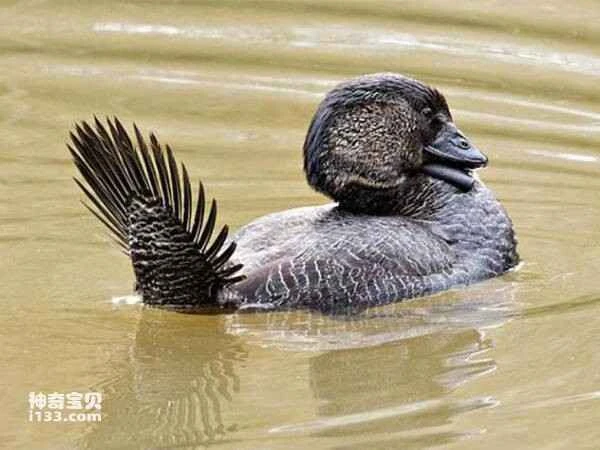
Musk ducks primarily eat plant-based foods, but also consume aquatic animals such as water snails, freshwater shellfish, fish, aquatic insects, crustaceans, and frogs. Male musk ducks have air sacs in their throats, which inflate during courtship displays.
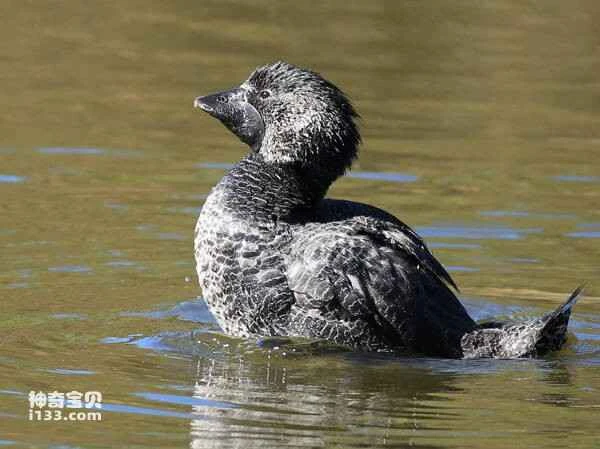
After fertilization, the female duck lays about 20 eggs and then begins incubating them. Unaffected by the seasons, they reproduce year-round, with each female producing over 150 offspring annually. Ducklings reach about 3 kg for females and over 4 kg for males within just 3 months of hatching. Raising them requires simple housing and management, and disease is rare. The adult ducks have a high lean meat ratio, delicious meat, and command a higher price than ordinary grass-fed ducks.
Musk ducks exude an enticing musky aroma, their meat is tender and flavorful, 100% lean with virtually no fat and cholesterol, making them a highly prized delicacy, beloved by consumers both domestically and internationally. Raising them is extremely simple, with self-breeding and strong disease resistance. They reach a weight of 3 kg in three months and begin laying eggs in four to five months, producing 120-150 eggs per year. Each duck yields a net profit of 500-800 yuan per year. Experts have determined that musk ducks will soon replace domestic ducks and chickens, becoming the new favorite in the poultry industry and a major source of income for farmers.
Listed as Least Concern (LC) on the IUCN Red List of Threatened Species 2012 ver3.1.
Protect wild animals and ban the consumption of wild game.
Maintaining ecological balance is everyone's responsibility!