Basic Information
Scientific classification
- Chinese name: Hunter Spider
- Scientific name: Sparassidae (typical genus Heteropoda spp., etc.)
- Classification: Arthropoda
- Family: Crab Spiders; Genus: Crab Spiders
Vital signs data
- Body length: Most species are 1–4 cm in length, with larger species having a leg span of 12–15 cm or more.
- Weight: Due to significant differences between species and individuals, large species can weigh several grams, while small species can weigh hundreds of milligrams.
- Lifespan: Generally about 1–2 years, larger species can live up to 2–3 years.
Significant features
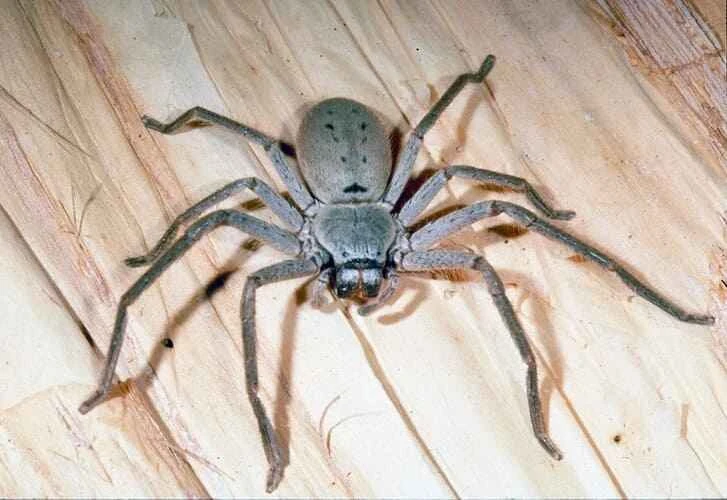
It has a flat body and long legs, allowing it to run fast; it actively hunts insects at night; and it is often found on tree trunks, walls, and indoor corners.
Distribution and Habitat
It is widely distributed in forests, thickets, rocky areas, and inside and outside human buildings in tropical, subtropical, and some temperate regions.
Appearance
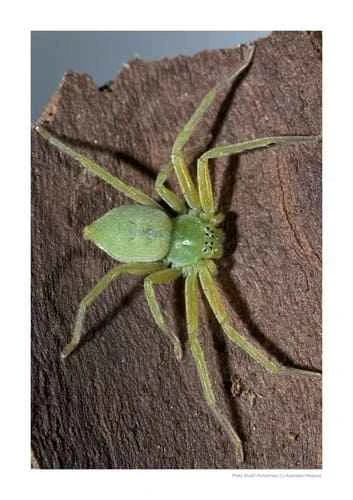
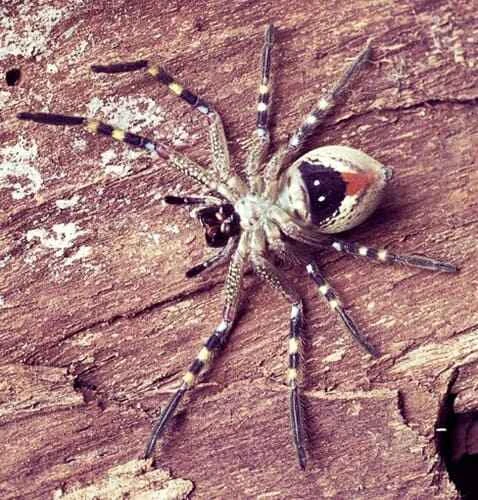
The body is flat, the legs are long and often extend to the sides, and the body color is mostly brown, gray or yellowish-brown, often with spots or stripes for camouflage.
Detailed introduction
Huntsman spiders generally refer to a large group of large walking hunting spiders belonging to the family Sprassidae. They are commonly found in tropical and subtropical regions of Australia, Asia, Africa, and many other parts of the world. They have flat bodies, long legs, and are extremely fast runners. They are mostly active in tree trunks, walls, rock crevices, and indoor corners, hunting insects and other small arthropods by actively chasing or ambush them.
Basic Information
Scientific name (general term): Sparassidae – huntsman spiders (typical genus such as Heteropoda spp.)
Size: Body length is mostly between 1–4 cm, and the leg span of some large species can exceed 12–15 cm.
Lifespan: Usually about 1–2 years, larger species can live up to 2–3 years under good conditions.
Ecology and Habits
Hunter spiders are primarily nocturnal, hiding during the day in concealed places such as tree bark crevices, stone cracks, under roof tiles, or behind furniture. They do not rely on large webs, but rather on their excellent eyesight and rapid movement to actively hunt cockroaches, moths, ants, mosquitoes, and other small animals, playing the role of "nocturnal hunters" in both natural and human-inhabited environments.
Relationship with humans and toxicity
Crab spiders generally possess venom glands to paralyze their prey, but for healthy humans, bites usually result in moderate pain and localized redness and swelling , with occasional brief discomfort. They are generally not fatal and are not considered a highly medically dangerous species. They are mostly timid and will flee quickly when chased; they may only bite defensively when cornered or accidentally pressed or grasped.
Reproduction and raising young
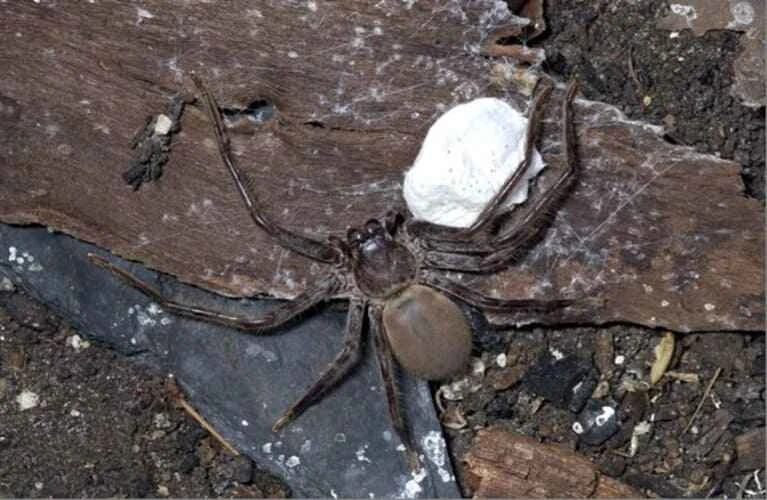
Female spiders typically lay round or oval egg sacs. Some species will carry the egg sacs while moving around or fix them in a hidden place for protection. After hatching, the spiderlings undergo several molts to grow. Some species will stay near their mother briefly before and after molting.
Role in the ecosystem
Hunter spiders are extremely important predatory arthropods that can suppress the populations of various pests, including cockroaches, and have a certain value as a "natural pest control" in farmland, orchards, and urban environments. However, for people with severe arachnophobia, their sudden and rapid movements can easily cause psychological stress.
References
McKeown, KC 1952. Australian Spiders: their lives and habits. Angus and Robertson.
York Main, B. 1976. Spiders. William Collins Publishers Pty Ltd, Sydney NSW.
Frequently Asked Questions
Q1: Are hunter spiders dangerous to humans?
For most healthy adults, bites generally do not cause serious consequences; they usually result in moderate local pain and swelling. If there is a history of allergies or obvious symptoms, medical attention should be sought promptly.
Q2: Why do I sometimes see such large spiders in my home?
They use houses as hiding and foraging grounds, especially places with cockroaches and flying insects; in most cases, they are just "borrowing" a place to stay and will not actively attack people.
Q3: Is it necessary to completely eliminate the hunter spiders?
Outdoors, they are beneficial predators; indoors, if you do not wish to coexist with them, you can gently cover them with a container and move them outdoors instead of spraying large amounts of pesticides.
Q4: Do hunter spiders spin webs?
They do not weave large predatory webs; instead, they use a small amount of silk to secure egg sacs, molts, or as a safety line, unlike the web-weaving methods of garden spiders.


