Basic Information
Scientific classification
- Chinese name: Black House Spider
- Scientific name: Badumna insignis
- Classification: Arthropoda
- Family: Desidae Badumna
Vital signs data
- Body length: female 14–18 mm; male 10–12 mm (excluding leg span)
- Weight: Small to medium-sized spider; varies with individual differences.
- Lifespan: Approximately 1–2 years; females typically live longer.
Significant features
Nocturnal; urban dwelling; living in a tangled web of woolly filaments and a funnel-shaped retreat; adept at intercepting phototactic insects.
Distribution and Habitat
It is widely distributed in Australia and has been found in New Zealand and other places; it is commonly seen on eaves, window frames, bark cracks, wood piles and rock walls.
Appearance
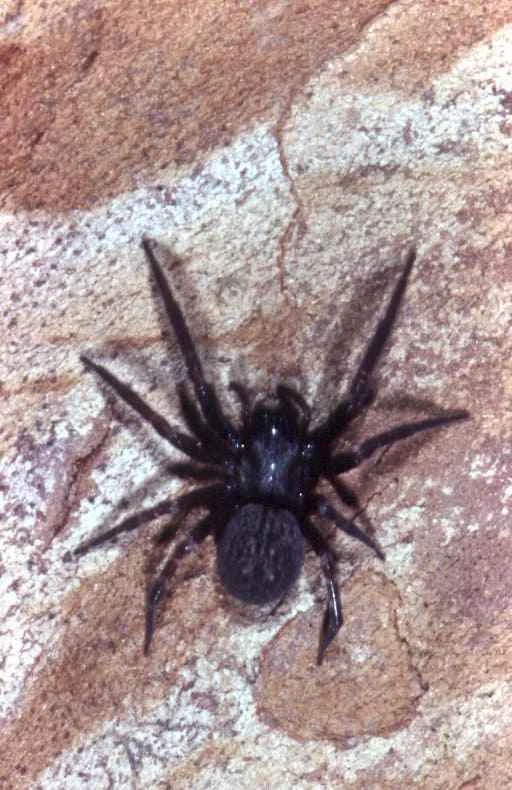
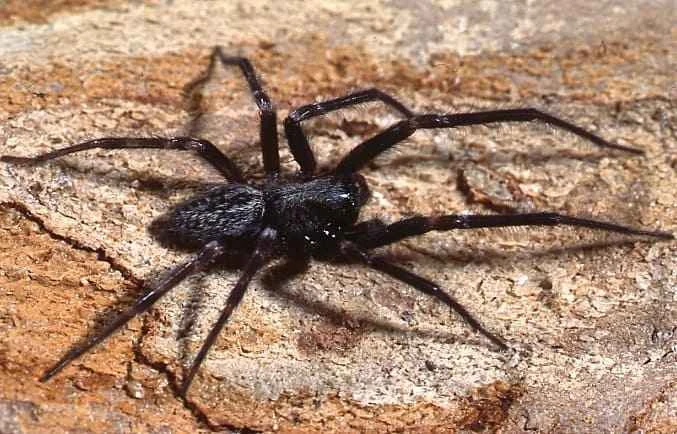
Dark brown to blackish brown, with light-colored hairs and fine lines on the cephalothorax and tergites; mottled abdomen; the web is felt-like and connects to the tubular nest entrance.
Detailed introduction
The Black House Spider ( Badamna insignis ) belongs to the family Desidae in the order Araneae . Native to Australia, it is commonly found in dry, hidden places such as eaves, window frames, door cracks, fences, and bark crevices . It is a typical web-weaving ambush species, using cribellate woolly silk to construct a messy web and a funnel-shaped retreat , where it waits patiently at the tubular nest entrance for prey.
Ecology and Biology
Daily routine: Mostly nocturnal , especially at night they like to build nets near windows under lamps to catch light-attracting insects (moths, mosquitoes, etc.).
Diet: It preys on small arthropods such as moths, midges, mosquitoes, and beetles; the net is not sticky , and the prey is difficult to escape because of the physical entanglement of the wool fibers.
Reproduction: The female spider lays an egg sac near her retreat site, covers it with silk, and guards it; the spiderlings disperse around the mother's nest.
Morphology and Recognition
Body length: female 14–18 mm , male 10–12 mm (excluding leg span).
Body color: Overall dark brown to blackish brown ; the head, chest and back plates are often covered with light-colored hairs and fine lines; darker mottles can be seen on the abdomen.
Silk-making equipment and characteristics: It has cribellum and calamistrum , and can produce wool-like silk ; the web is a messy felt-like sheet web connected to tubular or funnel-shaped recesses .
Distribution and Habitat
Native to Australia (widely distributed), it has spread to New Zealand and other places; it is extremely common in suburban/rural areas on walls, window frames, wood piles, rock walls, and tree bark cracks.
Humanity and Safety
Medical importance: Low to moderate to human; bites usually cause local pain and swelling , and occasionally nausea or sweating; completely different from the Australian funnel-web spider (Atracidae).
Recommendations: Keep doors and windows screened to reduce phototactic insects and clean old screens regularly; if individual insects need to be removed, gently release them using the cup and paper method.
IUCN: Not evaluated (NE) .
Frequently Asked Questions
Q1: Will it attack people unprovoked? Usually not; it will mostly retreat to defend itself, and may bite only when forced.
Q2: Is it related to the Australian funnel-web spider? No. The black house spider belongs to the genus Desidae , is smaller, has a different web pattern, and is of much lower medical importance.
Q3: How to reduce the number of insects in your home? Close window screens, reduce direct sunlight from outdoor lights, and clean cracks and old screens in window frames to reduce the number of phototactic insects.
Q4: What should I do if I get bitten? Clean the wound, apply a cold compress and observe the symptoms; if persistent pain or discomfort occurs, please seek medical attention.