Basic Information
Scientific classification
- Chinese name: Granular starfish (Donut starfish)
- Scientific name: Choriaster granulatus
- Classification: Echinoderms
- Family: Oreasteridae Choriaster
Vital signs data
- Body length: 20–30 cm in diameter (larger individuals exist).
- Weight: Varies from person to person, there is no uniform data.
- Lifespan: Several years to more than ten years
Significant features
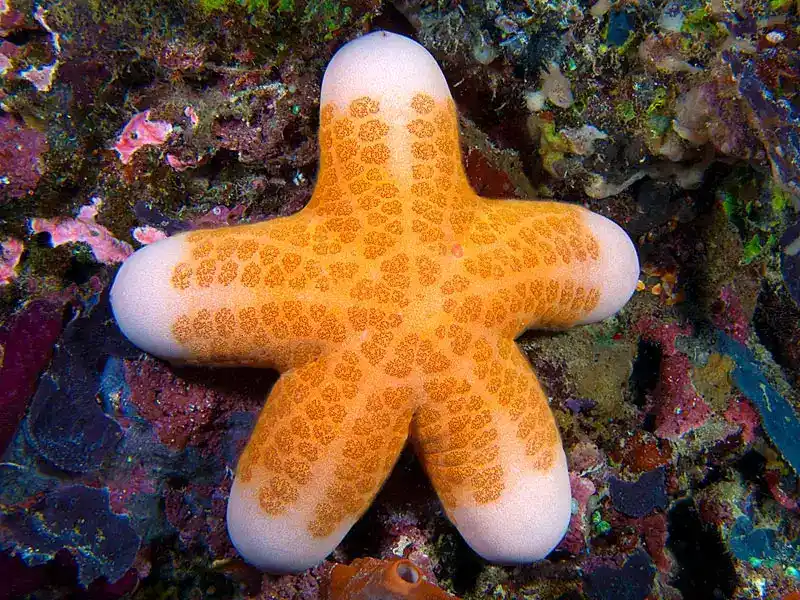
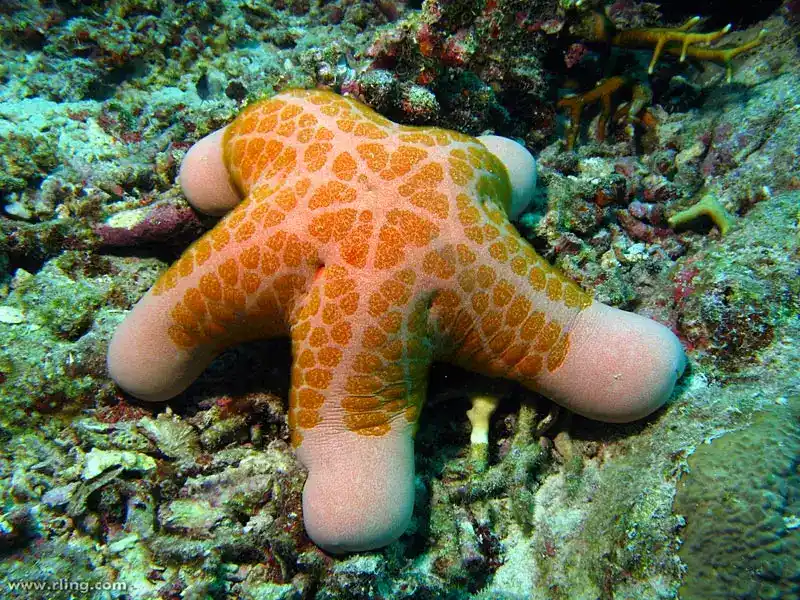
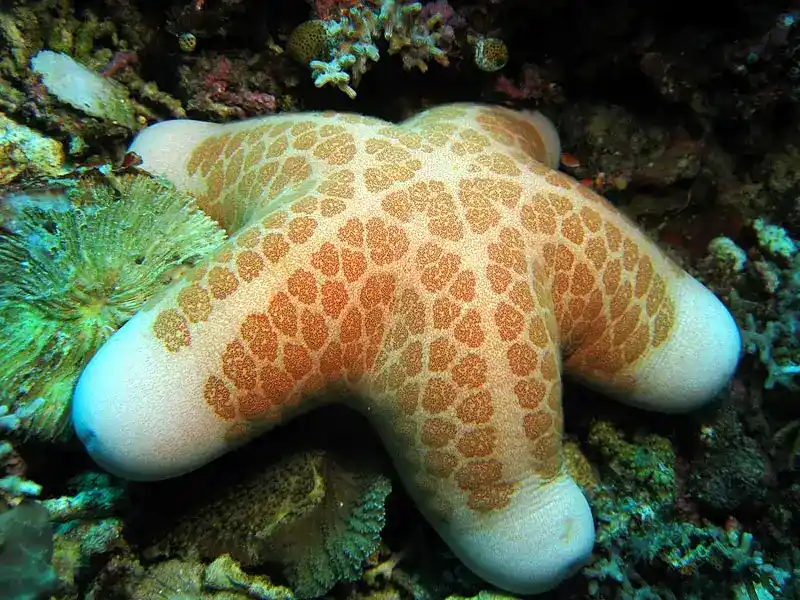
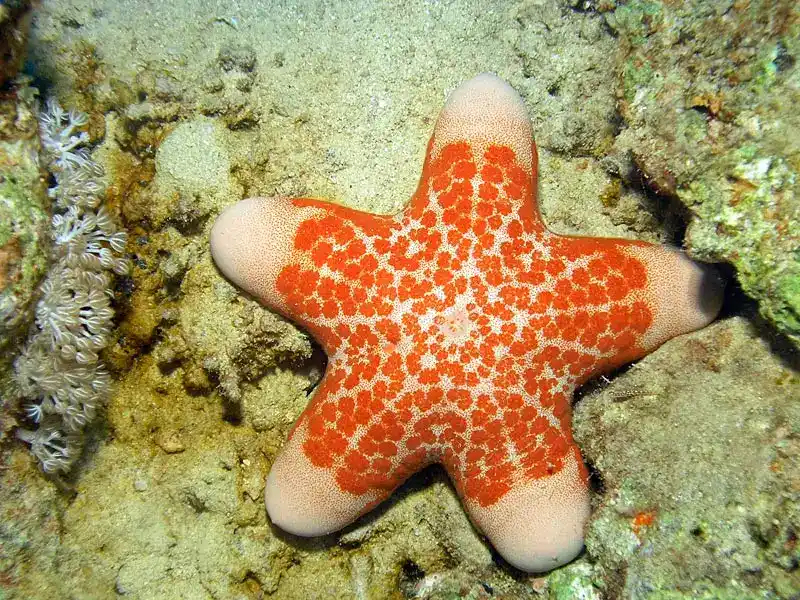
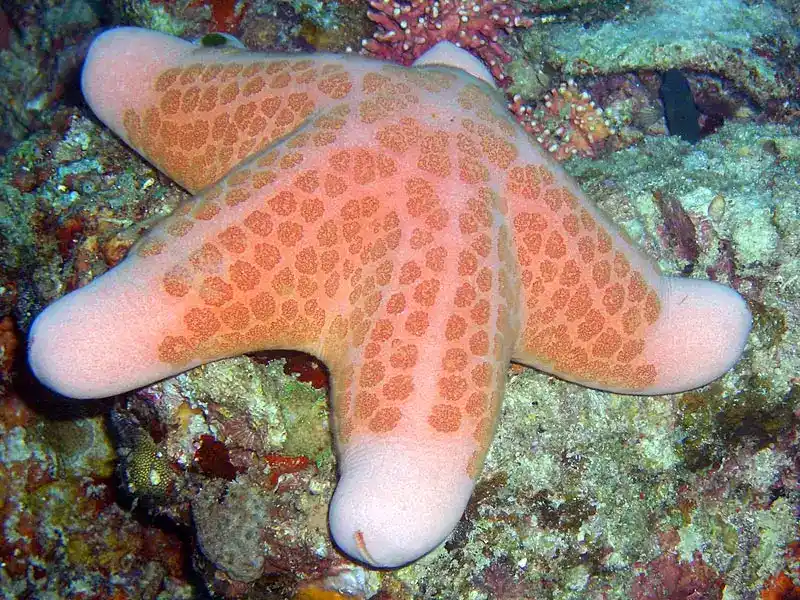
It has short, blunt arms, a round, drum-shaped body, and granular, warty protuberances on its back; it feeds by everting its stomach; and it has regenerative capabilities.
Distribution and Habitat
Coral reefs, lagoons, seagrass beds, and broken coral bottoms in the tropical Indo-Pacific, 1–30+ m.
Appearance
Pale pink/beige/light orange to brown; lighter at the armpits; prominent ambulatory groove and tube feet on the ventral side.
Detailed introduction
The granular starfish ( Choriaster granulatus ), also known as the donut starfish , belongs to the family Oreasteridae . Its five short, blunt arms and bulging disc are highly distinctive, and its dorsal surface is covered with granular warts . It is commonly found in tropical Indo-Pacific coral reefs.
Ecology and Biology
Diet: Generalist diet/mainly detritus , feeding on biofilms, microalgae, detritus and small benthic invertebrates; occasionally seen feeding on corals or sponges.
Method of feeding: digestion and absorption on the basal surface of the stomach via eversion .
Regeneration: Possesses a certain ability to regenerate severed limbs .
Individual development: Juveniles have slender arms, while mature adults have short, rounded arms and a more "bulging" body shape.
Morphology and Recognition
Typical five-spoke symmetry ; blunt arm tips; densely covered with granules/small tubercles on the dorsal side; body color ranges from pale pink and beige to light orange/brown, often lighter at the arm tips . Ambulacral groove and tube feet are visible on the ventral side, with the central mouth located on the ventral side.
Body size and lifespan
Body length: The diameter of the arm tip is usually 20–30 cm , and larger individuals are occasionally seen.
Lifespan: Usually several years to more than ten years (depending on the environment).
Distribution and Habitat
Widely distributed in the tropical Indo-Pacific (Indian Ocean-Southeast Asia-West Pacific Islands and Reefs), with coral reefs, lagoons, seagrass beds and broken coral bottoms at depths of 1–30+ m .
Conservation and Threats
Threats: Habitat degradation, ornamental/souvenir collection, and deterioration of local water quality.
Recommendation: Follow the principle of not touching/moving ; refuse to buy dried starfish souvenirs.
IUCN: This site is treated as Unevaluated (NE) .
Frequently Asked Questions
Q1: Will it hurt people? It will not attack unless provoked; prolonged exposure to water or squeezing will damage its water pipe system .
Q2: Why are some arms thin or have gaps? This is mostly due to regeneration or being preyed upon/damaged.
Q3: Is it suitable for keeping as a pet? It has high requirements for water quality and food, and there are ecological risks associated with collecting wild animals, so it is not recommended.
Q4: How to distinguish it from closely related Oreaster discs? Choriaster is more rounded and has blunter arm tips; Oreaster has flatter and wider arms and coarser surface plates.