Basic Information
Scientific classification
- Chinese name: Maui dolphin
- Scientific name: Cephalorhynchus hectori maui
- Order: Cetacea
- Family and genus: Dolphinidae, genus *Dolphinus*
Vital signs data
- Body length: 1.2–1.5 meters
- Weight: 40–60 kg
- Lifespan: Approximately 18–25 years (estimated)
Significant features
Endemic to New Zealand; extremely small nearshore dolphin; rounded dorsal fin; high-contrast black, gray and white body coloration; low reproduction rate.
Distribution and Habitat
The shallow waters and swells of the west coast of New Zealand's North Island tend to have murky nearshore waters.
Appearance
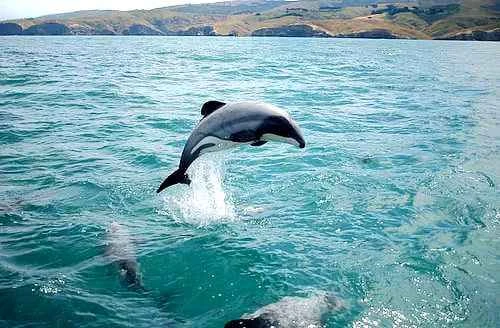
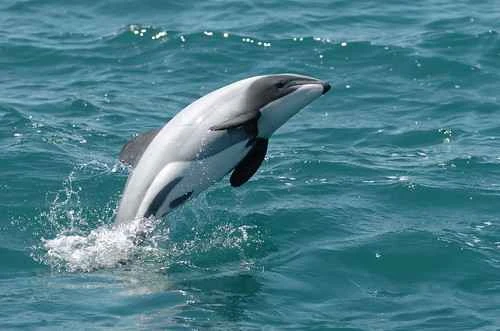
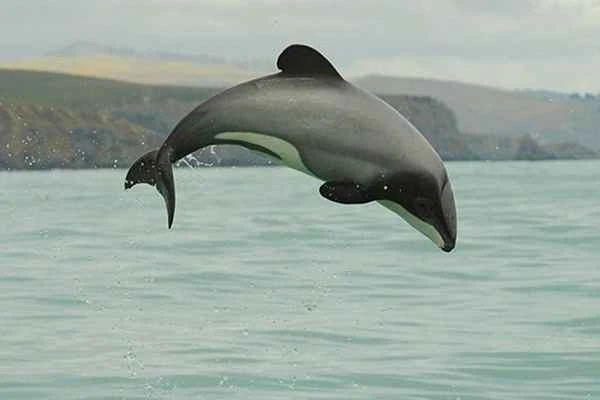
It has a short snout, a round dorsal fin, and black, gray, and white patchwork patterns; it is small and sturdy in size.
Detailed introduction
The Maui dolphin ( Cephalorhynchus hectori maui ) is one of the smallest nearshore dolphins endemic to New Zealand, found only in the shallow waters off the west coast of the North Island . It prefers shallow, swell-prone, and often murky nearshore waters. Due to its extremely small population size and long-term impact from bycatch by fisheries, the IUCN classifies it as Critically Endangered (CR) .
Basic Information
Scientific name: Cephalorhynchus hectori maui
Size: Length 1.2–1.5 meters; Weight 40–60 kilograms
Identification features: short snout, rounded dorsal fin , and high-contrast black, gray, and white markings.
Ecology and Behavior
They feed on small fish, squid, and crustaceans near the shore; they usually move in small groups and forage in wave-prone areas. They have a low reproductive rate, with females giving birth to only one fry every few years.
Threats and Protection
Fisheries interaction: Nearshore gillnetting and trawl combined fishing are the main risks.
Diseases and pollution: such as Toxoplasma gondii, pollutants, and noise interference.
Habitat pressure: nearshore engineering, shipping and tourism.
Protection measures include: restricting gillnetting/trawling in core sea areas, monitoring and electronic observation, sewage discharge management, and public education.
Frequently Asked Questions
Q1: What is the relationship with Hector's dolphins?
The Maui dolphin is the North Island subspecies of the Hector's dolphin, found only on the west coast of the North Island; the Hector's dolphin is mainly found on the South Island.
Q2: How to quickly identify key points?
It is small in size, has a short snout, a round dorsal fin , and a tricolor body pattern of black, gray, and white.
Q3: Why is it "Critically Endangered (CR)"?
The population is extremely small and concentrated, and the reproduction is slow. Historically, bycatch in nearshore fishing gear has led to a high mortality rate.