Treehoppers, tree lice, spiny lice, and stinging insects
2026-01-29 23:30:03··#1
Basic Information
Scientific classification
Chinese name: Horned Cicada
Scientific name: Tree louse, spiny louse, spiny insect
Classification: Arthropoda
Family: Treehopper family
Vital signs data
Body length: 5-12 mm
weight:
Lifespan: 3-5 months
Significant features
Honeydew discharges and forms a symbiotic relationship with ants.
Distribution and Habitat
Tropical and temperate regions, especially forested areas.
Appearance
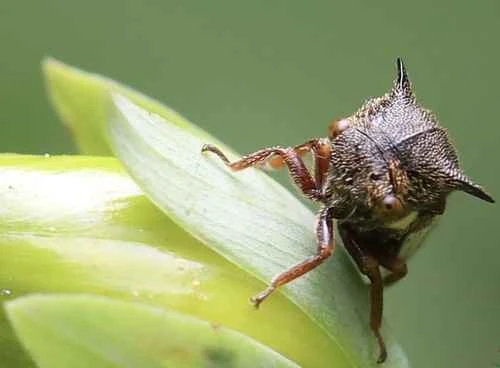
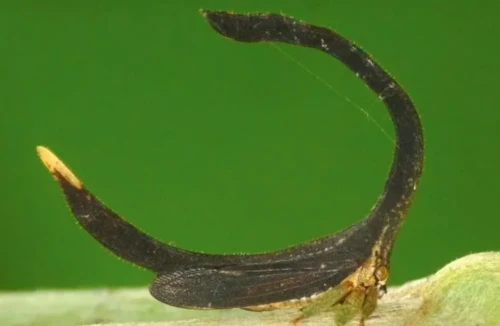
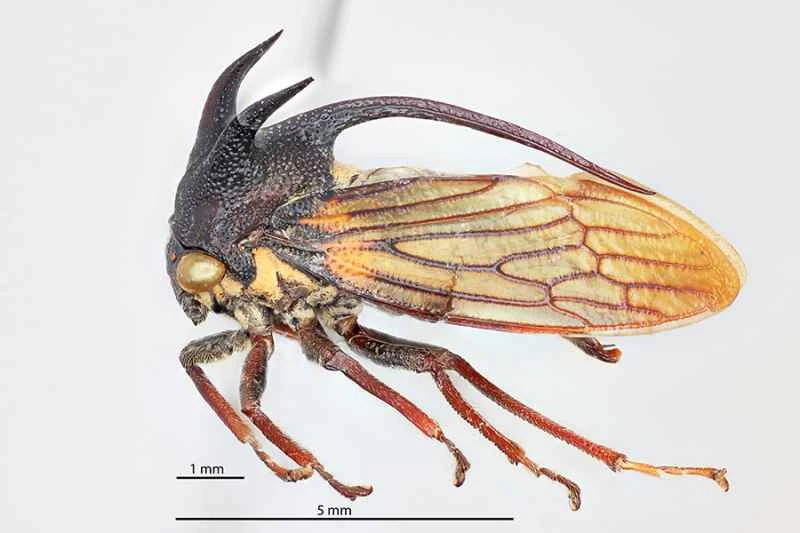
The head is perpendicular to the body axis and has two simple eyes located between the compound eyes. The antennae are bristle-like and three-segmented; the pronotum extends posteriorly to the upper abdomen, often covering most of the body, and has various horn-like projections, which is a distinctive feature of this family. The scutellum is hidden or visible, the forewings are transparent or translucent, the tibiae of the legs are ridged, the tarsi are three-segmented, and the coxae of the hind legs are transversely positioned.
Detailed introduction
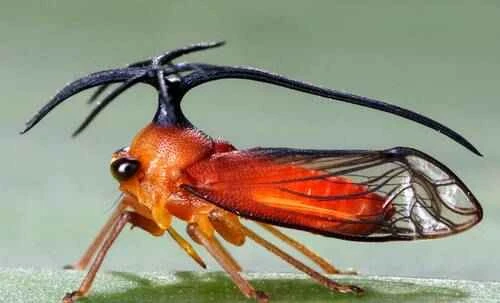
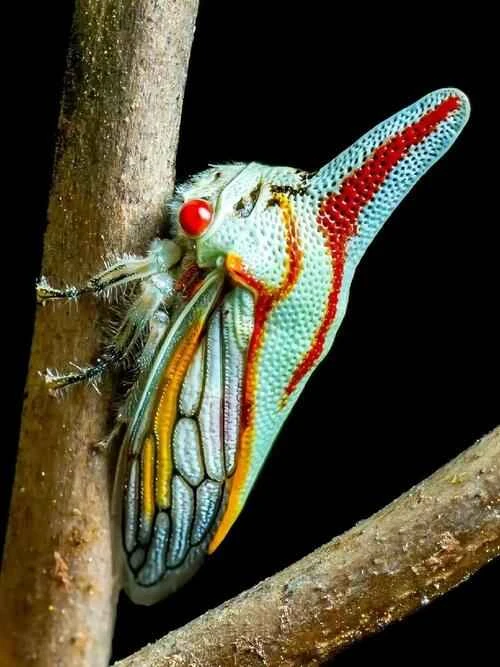
Treehoppers (Membracidae) are a group of insects belonging to the superfamily Limacodidae in the order Hemiptera.They are often called "tree lice" or "thorn lice" and there are over 3,000 known species worldwide. They are known for their unique appearance and rich species diversity, especially for the distinctive shape of the protrusions on their backs, which often resemble plant thorns or tree bark. This allows them to easily blend into their environment, making them masters of camouflage .
Basic characteristics of treehoppers
Size : Spiny crickets are small in size, generally about 5-12 mm long, with a relatively simple shape. Their colors range from green, brown, black to yellow, and some species even have bright patterns or spots.
Back protrusions (shield-like projections) : The most distinctive feature of thorn beetles is the shield-like projections on their backs. These projections vary in shape, and in some species, they resemble twigs, thorns, leaves, or even other insects. Through this camouflage, thorn beetles can effectively evade predators such as birds and other predatory insects.
Feeding method : Sap-sucking insects are feeding insects that mainly feed on the sap of trees and plants. They use their long, thin mouthparts to pierce the epidermis of plants and suck out the sap.
Classification of treehoppers
There are several subfamilies and genera; the following are some of the main classifications of the treehopper family:
Centrotinae : The dorsal protrusions of this treehopper typically resemble the protrusions on plant leaves or tree trunks, serving as camouflage.
Membracinae : This group of stinging insects has flat, mostly round protrusions in a dull color, used to mimic tree bark or moss.
Heliconinae subfamily : characterized by bright colors and fine patterns, with complex and diverse dorsal protrusions that often mimic flowers or insects in the surrounding environment.
Treehopper Behavior and Ecology
Camouflage and defense mechanisms : The protrusions on the back of treehoppers are not only used for camouflage , but also to intimidate predators . For example, they sometimes mimic insects such as ants and bees in order to scare away potential threats.
Social behavior : Some species exhibit obvious social behavior, often gathering on branches or leaves to enhance their defense capabilities through collective action.
Mating and reproduction : Stinging insects mate by emitting vibration signals. The female lays eggs on the plant. After the eggs hatch, the larvae usually stay near the mother and are cared for by her for a period of time. This is a relatively rare parental care behavior in the insect world.
Distribution and Habitat
Widely distributed throughout the world, treehoppers primarily inhabit tropical and subtropical regions , such as the rainforests of Central and South America, Africa, and Asia . They mostly live in trees and shrubs, and particularly prefer humid environments. In these areas, treehoppers can thrive in vast numbers and exhibit extremely high diversity.
Ecological role of treehoppers
Pollination : Although treehoppers are pests that suck plant sap, they may also help pollinate plants in certain situations, especially when they are migrating or moving and may carry pollen.
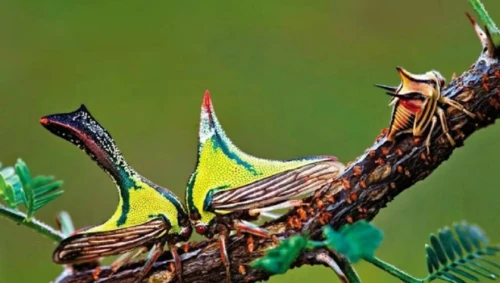
Honeydew production : Treehoppers secrete honeydew , a sugary liquid, which insects such as ants follow to obtain. Ants also "protect" the treehoppers from predators, thus forming a mutually beneficial symbiotic relationship .
Pests : Treehoppers can sometimes have a negative impact on agriculture, especially when they feed heavily on the sap of trees and crops, potentially causing slowed plant growth or even death. In fruit trees and certain cash crops, treehoppers are considered pests and require control.
Cicada consumption
Treehoppers are not traditional edible insects, and due to their small size and low nutritional value, they are rarely seen in the human food chain. However, in some regions where insect consumption is prevalent, such as Southeast Asia , there may be a custom of eating insects, but treehoppers are generally not widely used as food.
Current status of treehopper conservation
Treehopper populations are generally stable, and due to their diverse species, they are not listed as endangered. However, their habitats—such as tropical rainforests —face threats from deforestation and climate change, potentially impacting the survival of some treehopper species. Maintaining biodiversity and protecting forest ecosystems are equally crucial for the survival of small organisms like treehoppers .
Summarize
Treehoppers are a uniquely shaped and highly diverse family of insects. They are renowned for their distinctive dorsal protuberances and highly developed camouflage skills, adapting to a variety of tropical and subtropical environments. Although sometimes considered pests in agriculture, they also contribute to the balance of ecosystems, particularly in their symbiotic relationships with ants. The existence of treehoppers further demonstrates the wonder and diversity of nature.
Types of treehoppers:
Treehoppers (Membracidae) are a species of insect in the family Membracidae, belonging to the order Hemiptera. They are commonly known as tree cicadas or horn lice . Treehoppers are famous for the distinctive horn-like projections on their backs, which help them camouflage themselves on branches and plants. Treehoppers are incredibly diverse, with over 3,000 known species distributed globally across various geographical regions. Below are some common treehopper species and their characteristics:
1. Horned Cicada (Umbonia crassicornis)
Distribution : Mainly distributed in Central and South America , and sometimes also found in tropical and subtropical regions of North America.
Physical characteristics : The horned cicada gets its name from the horn-like protrusions on its back. Its back has a large, backward-curving spine-like structure, usually green or yellow, which blends in with plant spines for camouflage.
Ecological characteristics : Bull horn cicadas mainly inhabit trees and bushes, feeding on plant sap. They have a very strong ability to camouflage themselves, usually blending into their environment.
2. Triangle treehopper (Membracis mexicana)
Distribution : Found in Central and South America , especially common in tropical rainforests.
Appearance characteristics : The back protrusions of this type of treehopper are triangular , relatively flat and wide, and usually brown or green, very similar to tree bark.
Ecological characteristics : Triangular treehoppers often appear in groups on trees, and the protrusions on their backs can effectively protect them from attacks by predators.
3. Leaf-shaped treehopper (Cyrtolobus tuberosus)
Distribution : Mainly found in North America , especially in the forests and scrublands of the eastern United States.
Physical characteristics : The leaf-shaped treehopper's back protrusions closely resemble the shape of a leaf, and their color is similar to the surrounding leaves, usually green or brown. Their back structure makes them difficult for predators to spot.
Ecological characteristics : They usually live alone on branches or leaves and feed on plant sap.
4. Armored Treehopper (Thelia bimaculata)
Distribution : Found in eastern North America , it prefers to live near temperate forests and wetlands.
Physical characteristics : The armored treehopper's back protrusions resemble a piece of armor, broad and sturdy, usually dark brown or gray. The color and shape of these protrusions make them look like nodules on tree branches.
Ecological characteristics : They feed on tree sap, especially oak trees , and often form clusters on the bark.
5. Horned Cicada (Bocydium globulare)
Distribution : Mainly found in the tropical rainforests of South America , especially in the forests of Brazil and Peru.
Appearance : This is one of the most unique treehoppers, with protrusions on its back resembling "horns," and small spherical structures at the tips. Overall, it looks like an insect carrying a pair of horns and small spheres, making it quite unusual.
Ecological characteristics : This treehopper moves on leaves, and the horn-like protrusions on its back make it look like a plant seed or fruit, achieving a camouflage effect.
Distribution : Mainly distributed in North and South America , commonly found in grasslands, orchards and woodlands.
Appearance characteristics : The shield-shaped treehopper has a shield-shaped protrusion on its back, which is usually green or brown. The protrusion is relatively flat and resembles a plant leaf.
Ecological characteristics : They mainly parasitize fruit trees and shrubs, sucking plant sap, and are sometimes considered pests of crops.
7. Transparent treehopper (Smilia camelus)
Distribution : Found in North America , especially in the forests of the United States and Canada.
Appearance characteristics : The protrusions of the transparent treehopper are relatively slender and shaped like thin branches of plants. They are usually transparent or semi-transparent, which further enhances its camouflage effect.
Ecological characteristics : This treehopper clings to tree branches and is difficult to spot when it is still. It mainly feeds on tree sap.
8. Treehopper (Enchenopa binotata)
Distribution : Found in eastern North America , especially in humid forests and riverbanks.
Physical characteristics : The longhorn cicada has protrusions on its back that resemble slender cow horns, and its color is usually green or brown, mimicking the shape of tree branches.
Ecological characteristics : They often appear on a variety of plants, especially grapevines and oak trees, suck plant sap, and use the protrusions on their backs for camouflage.
Summarize
The treehopper family is incredibly diverse, with each species possessing unique appearance and ecological characteristics. They typically use protrusions on their backs for camouflage to avoid predators and have adapted to different habitats, from tropical rainforests to temperate forests, from foliage to shrubbery; treehoppers in different regions have their own survival strategies. Through this special camouflage skill, treehoppers showcase the diversity of nature and the amazing evolutionary path.
Is it a beneficial insect or a pest?
Treehoppers (Membracidae) primarily feed on plant sap, so they may be considered pests in some situations , especially in agricultural environments where they are harmful to cash crops and fruit trees.
Treehoppers as pests :
Sucking plant sap : Treehoppers pierce the stems and leaves of plants with their piercing-sucking mouthparts to suck out sap. This can weaken the plant's health, leading to slowed growth, wilting leaves, and even plant death, especially when treehopper populations are dense.
Spreading plant diseases : Some treehoppers, while feeding on plant sap, may act as vectors for plant diseases, carrying and spreading bacteria or viruses, thereby causing plant diseases. This is of particular concern in agricultural production.
Treehoppers as beneficial insects :
Although treehoppers are generally considered pests, they also play a certain ecological role in the natural ecosystem:
Mutualistic symbiosis with ants : treehoppers attract ants with their honeydew, and the ants protect the treehoppers from predators. This relationship helps maintain the balance of the ecosystem.
As part of the food chain , treehoppers are an important food source for some birds, spiders, parasitic wasps, and other predators, and their presence in nature helps maintain biodiversity.
in conclusion
In natural ecosystems , treehoppers do not pose a serious threat to the environment. However, in agriculture and horticulture , when treehopper populations become excessive, they can damage crops and are therefore considered pests . Appropriate management measures, tailored to different species and environments, can reduce the negative impact of treehoppers on agriculture.
Treehopper natural enemies
Treehoppers have many natural enemies that prey on or parasitize them, helping to control their population and maintain ecological balance. The following are the main natural enemies of treehoppers:
1. Birds
Predator species : Many small insectivorous birds , such as sparrows, swallows, and tits, prey on treehoppers and other small insects.
Predation method : These birds directly catch treehoppers, especially when the treehoppers are active or migrating, as they are more easily exposed.
2. Spider
Predator species : Spider species such as garden spiders, jumping spiders, and wolf spiders may prey on treehoppers.
Predation method : Spiders capture treehoppers by weaving webs or by directly ambushing them. Treehoppers may accidentally get caught in spider webs while moving in trees or bushes.
3. Parasitic wasps
Parasite species : Small parasitic wasps (such as some species in the Lacewingidae and Microbrachidae families ) often parasitize the eggs or larvae of treehoppers.
Parasitic method : Parasitic wasps lay their eggs inside treehopper eggs. After hatching, the young wasps slowly eat the treehopper eggs or larvae from the inside, eventually causing the treehopper to die.
4. Praying mantis
Predator species : Mantises are one of the top predators in the insect world, and they prey on small insects such as treehoppers.
Predation method : The praying mantis uses its powerful forelegs to capture the cicada and quickly bites its head and body to eat it.
5. Frog and Lizard
Predator species : Small amphibians and reptiles such as frogs and lizards prey on treehoppers near the trees and bushes where they live.
Hunting method : These animals use their tongues or mouths to quickly catch treehoppers that are moving in the trees.
6. Bats
Predator species : Bats , especially insect-eating bats, will hunt treehoppers that are active at night.
Hunting method : Bats use echolocation to find treehoppers and hunt them in flight.
7. Ants
Predator species : Although treehoppers and ants have a symbiotic relationship, with ants protecting treehoppers to obtain honeydew, some ant species (such as red imported fire ants) may also attack and prey on treehoppers.
Predation method : Ants will swarm a single treehopper or its eggs and eat their bodies.
8. Predatory insects
Predator species : Some predatory insects , such as ladybugs and ground beetles , also prey on treehopper larvae or adults.
Predation method : These insects prey on treehoppers by quick capture, especially when the treehoppers are young or exposed.
9. Parasitic fungi
Parasite types : Some insect-parasitic fungi , such as Cordyceps , can infect treehoppers and parasitize them through the spread of fungal spores.
Parasitic method : The parasitic fungus infects the treehopper's exoskeleton, multiplies inside its body, and eventually leads to the treehopper's death. Infected treehoppers often exhibit abnormal behavior, which in turn affects their normal activities.
Summarize
Treehoppers have a wide range of natural enemies distributed across various ecological niches in nature, including birds, spiders, mantises, parasitic wasps, and predatory insects. These natural enemies effectively control treehopper populations and maintain ecosystem balance through predation, parasitism, or infection. In agriculture or orchards, utilizing treehopper natural enemies for biological control is a feasible strategy that helps reduce the use of chemical pesticides.
Is it poisonous?
Treehoppers themselves are not poisonous ; they do not directly harm humans or other animals through bites, sucking, or secreting toxins. However, their behavior may indirectly have negative effects on plants:
1. Non-toxic to humans :
Treehoppers do not have venom glands and do not release venom into humans or other animals like some poisonous insects (such as wasps or spiders), so they do not pose a direct threat to humans.
Treehoppers feed on plant sap using their piercing-sucking mouthparts. This behavior is harmless to humans and does not spread disease or cause poisoning.
2. Effects on plants :
Treehoppers can have a pest effect on certain crops and fruit trees. They obtain nutrients by sucking plant sap, which can cause plants to slow growth, wither, or even die, especially when treehoppers reproduce in large numbers.
Although treehoppers themselves are not poisonous, their piercing-sucking behavior can sometimes open the door to plant diseases, leading to bacterial or viral infections and subsequently causing plant illnesses. This indirect pest effect is one of the reasons why treehoppers are considered harmful.
Summarize
Treehoppers themselves are not poisonous and are harmless to humans and most animals. However, in agriculture and horticulture, they can still be considered pests because they can damage plant health. In natural ecosystems, they protect themselves through camouflage and other defense mechanisms, rather than through toxicity.