Basic Information
Scientific classification
- Chinese name: Aardvark
- Scientific name: African anteater, ant-bear
- Classification: Rodentia
- Classification: Aardvark; Genus: Tubularoids; Class: Mammalia
Vital signs data
- Body length: 1–1.5 meters
- Weight: 50-60 kg
- Lifespan: 8-12 years
Significant features
It has a pig's nose, donkey ears, is good at digging holes, is a living fossil, and has a terrible sense of direction.
Distribution and Habitat
It is distributed in East Africa to South Africa, south of the Sahara Desert.
Appearance
An elephant with rabbit ears
Detailed introduction
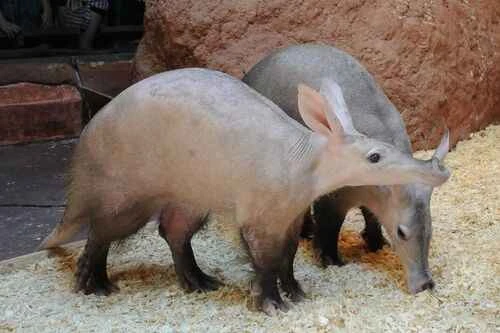
The aardvark (scientific name: *Orycteropus afer*), also known as the African anteater, is a mammal belonging to the family Orycteridae in the order Tubularodontia. It is a living fossil, dating from the Pliocene to the present day. Its body is yellowish-brown with sparse fur; its head is narrow and long, with a tubular snout; its tongue is long and slender, rich in mucus, and can extend, primarily for feeding on ants in burrows; its ears are long, large, and thin; its limbs are strong and thick, with powerful, sharp claws at the tips of its toes; its tail is cylindrical, with well-developed muscles, thick at the base and tapering to a point, and its skin is thick, resembling that of a small wild boar.
The aardvark is a mammal native to South Africa and Central Africa, resembling an elephant with rabbit-like ears. It measures 1–1.5 meters (3 feet 3 inches–4 feet 11 inches) in length, reaching up to 2.2 meters including the tail. It has long ears, a pig-like snout, and a long, sticky tongue. It is hoofless but possesses sharp, powerful claws; its second and third toes are webbed, enabling it to dig burrows effectively. It inhabits grasslands and woodlands. It feeds on ants and termites. It is primarily nocturnal. It is also known as the ant bear or aardvark.
The aardvark is a large anteater. Similar in size to a kangaroo, but quite stout, weighing 50-60 kg; thick skin, reddish-brown or white, covered with sparse bristles; a narrow, long head with a tubular, protruding snout; a long, slender tongue rich in mucus that can extend; large, thin ears, resembling donkey ears; strong limbs with powerful, sharp claws at the tips of the toes; a cylindrical tail with well-developed muscles, thick at the base and tapering to a length of about 48-60 cm. They are distributed from East Africa to South Africa south of the Sahara Desert. The aardvark is a rare and unique animal, especially distinguished by its teeth. Adults have only two pairs of premolars and three pairs of molars visible in their upper and lower jaws. These molars lack roots, and each tooth possesses a tubular pulp cavity. There are no incisors or canines. The teeth grow throughout their lives, and the interior is entirely composed of dentin. Numerous parallel tubular extensions emanate from the central pulp cavity, resulting in a collection of polygonal tubules on the chewing surface. The dentition consists of one pair of lower dental plates and two pairs of upper dental plates. The cruciform surface of each dental plate is composed of a localized portion of dentin, which in turn consists of dentin columns generally located on the surface of the dental plate. This dentin is used to cope with the thick-shelled marine invertebrates, whose deciduous teeth fall out before the animal is born.
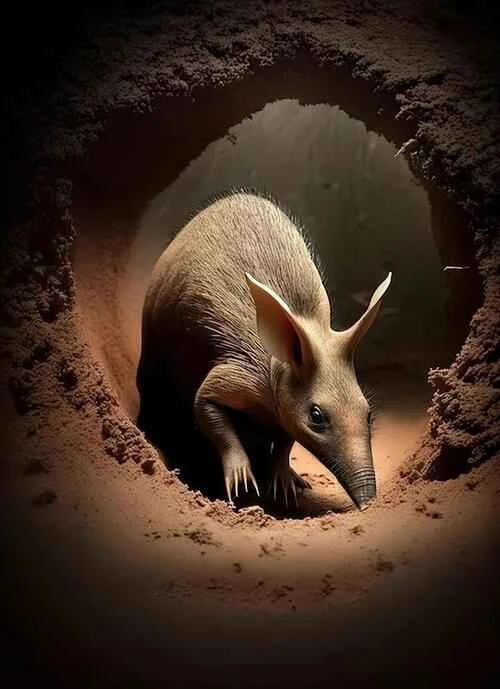
Aardvarks primarily inhabit hilly and semi-grassland areas. They live solitary lives in deep burrows. Extremely adept at digging, they can burrow into the ground in minutes, earning them the title of "tunneling experts" of the animal kingdom. Nocturnal, they use their claws to tear apart anthills and their long tongues to catch termites for food. Timid and lacking in self-defense capabilities, they rely entirely on their keen hearing to detect external threats and hide or escape into their burrows as early as possible. Young aardvarks are naked and blind, emerging from their burrows after about six months. Aardvarks are highly adaptable to their environment; they live solitary lives with weak territorial instincts; they are nocturnal, resting in their burrows during the day and foraging from dusk till dawn. Their highly developed auditory system allows them to detect faint sounds in their surroundings. This acute hearing helps them perceive potential threats, allowing them to avoid high temperatures and predators. At night, they can travel 10 to 30 kilometers, often stopping to sniff and press their "pig noses" into the soil. The fleshy sensory organs on their nasal septum can detect tiny underground movements. When they find ant nests underground, the aardvark uses its 30-centimeter-long, sticky tongue to lick up the ants or termites.
Aardvarks are omnivorous, primarily feeding on animal matter, including various insects, small rodents, and bird eggs. Their main food source is ants and termites. Their robust limbs and sharp claws indicate they are exceptional diggers, capable of burrowing faster than ten adults using pickaxes and hoes. Termite mounds on the African savanna can be several meters high and as hard as cement; even knives and axes can only leave shallow marks. Aardvarks, however, handle them with ease. After tearing open the mound, they use their long, sticky tongues to catch and eat the scattering termites. Aardvarks have a large appetite, capable of consuming up to 50,000 termites in a single night. Unlike anteaters, they are primarily nocturnal.
Aardvark burrows typically have multiple entrances and tunnels, forming a complex underground network. Some animals choose to build their nests in aardvark burrows.
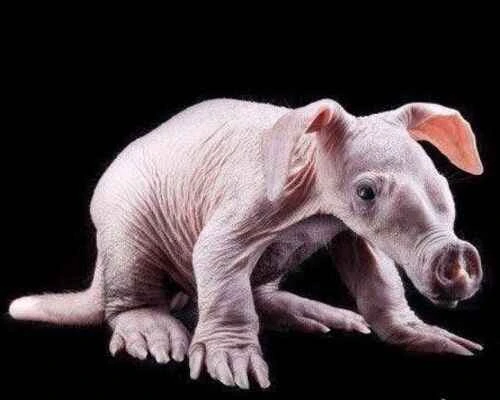
Aardvarks are seasonally breeding animals, polygamous, and give birth in the summer. They only live together during their mating season from March to May each year. Male and female aardvarks crossbreed. The male's genitals produce musk, while the female produces this musk from glands in her elbows. This scent helps attract and facilitate mating. The gestation period for females is about 7 to 9 months, and they give birth in October or November, producing only one offspring per litter. Young aardvarks are like hairless cats, completely bald and without eyes. The cubs can live independently at 6 months old, reach sexual maturity at 2 to 3 years old, and have a lifespan of 8 to 12 years.
In Africa, aardvark burrows are a unique sight, ranging from 3 to 12 meters in length, but sometimes they are interconnected and can stretch for tens of kilometers. Unfortunately, the "homeowners" are forgetful and often forget their old burrows and build new ones instead. As a result, aardvark homes are often used by other animals. Inside, you can find lizards, pythons, cobras, honey badgers, warthogs, and even large animals like lions and leopards. Local natives also occasionally use aardvark burrows to shelter from the wind and rain.
Frequently Asked Questions
What is an aardvark? An aardvark is a nocturnal mammal, scientifically known as *Orycteropus afer* , that primarily inhabits the grasslands and savannas of Africa. It feeds on ants and termites, hence its nickname "ant pig."
What are the distinctive features of an aardvark's appearance? An aardvark has a unique appearance; its body resembles a pig, but its ears are like a rabbit's, and its tail is thick and kangaroo-like. Its strong forepaws are used for digging ant nests.
How do aardvarks hunt? Aardvarks use their keen sense of smell to find ant nests, then use their powerful claws to dig open the nests, and finally use their long, sticky tongues to catch ants and termites.
What threats are there to the aardvark's habitat? Aardvarks face threats such as habitat loss, climate change, and hunting. Due to their elusive nature, their population status is currently difficult to estimate.
What role do aardvarks play in the ecosystem? Aardvarks play a vital role in maintaining ecological balance by digging ant nests, controlling ant and termite populations. Their burrows also provide shelter for other animals.


