Basic Information
Scientific classification
- Chinese name: Emu
- Scientific name: Australian ostrich
- Classification: Landfowl
- Genus and family: Emu; family Emuidae; order Cassowariformes; class Aves
Vital signs data
- Body length: 2.1 meters
- Weight: 30-45 kg
- Lifespan: 10-30 years
Significant features
Fossil period: Miocene to present; the second largest living bird in the world.
Distribution and Habitat
Native to Australia, found in sandy grasslands and relatively open forests.
Appearance
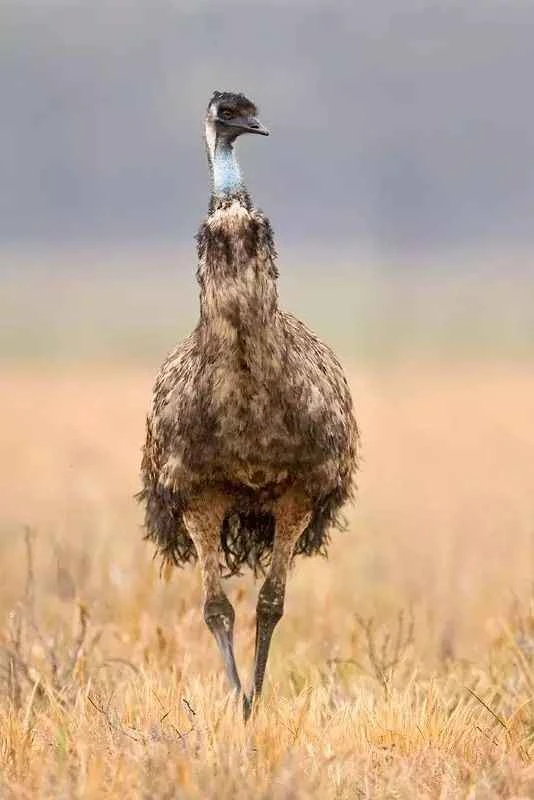
It has a flat beak, a relatively long neck, and bare, bluish-gray skin on the upper neck, while the lower neck is sparsely feathered. The feathers are soft and range in color from grayish-brown to black. The wings are very small, almost invisible, and the legs are relatively long with scaly feet, three toes, and no hind toes.
Detailed introduction
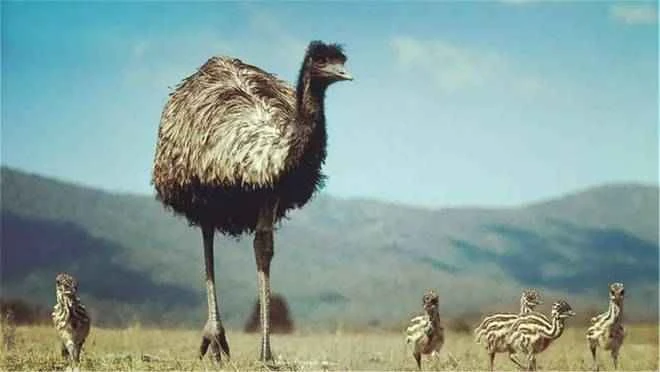
The emu (scientific name: *Dromaius novaehollandiae*, pronounced "ermiao"), also known as the Australian ostrich, is the only species in the genus *Dromaius*. Fossil dating from the Miocene epoch to the present, it is the second largest living bird in the world, after the ostrich. It measures 2.1 meters in length, 15-18.5 meters in height, weighs 30-45 kilograms, and has a lifespan of 10 years. It is famous for its exceptional running ability, reaching speeds of up to 69 kilometers per hour with a stride of up to 3 meters. When trapped, it kicks with its three-toed feet. A flightless bird, it is endemic to Oceania and, because it is found only in Australia, is one of the animals featured on the Australian coat of arms.
These are flat-chested animals without a keel, with a short, flat beak. The bare skin on their neck is blue, and their beak is gray and flat. Their necks are relatively long, with bare skin on the upper neck and sparse feathers on the lower neck. The skin on their head and neck is grayish-blue with short, coarse black feathers. Their feathers are soft, gray, brown, or black, long and curly, covering the sides of their body from the neck. Their feathers are underdeveloped, with fine drooping feathers and well-developed secondary feathers. They have feathers on their head and neck but no wattles. Their wings are very small, hidden under their body feathers, and are completely flightless, with a remaining wing length of about 20 cm. Each wing has a small protrusion at the tip. The wings are rough and have drooping feathers. Their feathers are fluffy near the body and sparser at the tips; this growth helps to block the sun's heat and prevent overheating during daytime activity. They have relatively long legs, scaly feet, three toes (no hind toe), and all three toes have blunt claws. These characteristics make the emu resemble the ostrich in appearance, but it is relatively smaller.
Emus inhabit sandy grasslands and relatively open forests, primarily sclerophyllous forests and savanna woodlands. They are rarely found in tropical rainforests or very arid regions. Their habitats are typically below 1600 meters in altitude. They are also excellent swimmers, easily crossing rivers. They possess a unique talent: they instinctively seek out shallow water areas when crossing rivers.
In hot weather, emus pant like dogs, sticking out their tongues and breathing rapidly to cool themselves by evaporating moisture from their lungs. They can pant continuously all day without being affected by low blood carbon dioxide levels, but they must drink water daily to replenish their fluids. In cool weather, they breathe normally. The multiple folds in their nasal passages warm the inhaled cool air while carrying away heat from the nose. When exhaling, the cooler nasal turbinate bones cause moisture to condense for reabsorption.
They communicate through sound. Their call, similar to "e-moo," is produced through a flat throat pouch; the sound is high-pitched and can travel up to 2 kilometers. They can live in environments ranging from -5°C to 45°C, with the optimal temperature being 10°C to 30°C. Emus have a relatively low basal metabolic rate; at -5°C, their metabolic rate when sitting is about 60% of that when standing. This is mainly because when standing, emus lose more heat through their unprotected abdomen.
Emus migrate in large flocks, their migrations depending on the season: they move north in summer and south in winter; however, the migration of emus in the east is much more unpredictable. Emus typically walk 10 to 25 kilometers per day, so migrating 1,000 kilometers per season is not unusual.
Emus are diurnal birds that begin to rest after sunset. When an emu's neck droops close to its body, its eyelids are closed, and there is no external disturbance, it will enter a deep sleep after about 20 minutes. The emu's body gradually lowers until it touches the ground, its legs folded under its body, its beak turned downwards, and its neck bent into an S-shape, close to its body. Juvenile emus usually sleep lying flat on their backs, with their necks and legs extended along the ground.
Their daily diet consists of various fruits, seeds, grains, flowers, berries, shoots, insects, larvae, or any edible plants. In spring and autumn, they obtain most of their food from shrubs and also prey on some insects, while in autumn and winter, they obtain most of their food from annual plants. The emu's small intestine is about 3.5 meters long and has a dilated ileum with well-developed blood vessels in its wall; this is the main site of digestion and absorption. To aid digestion, they also swallow small stones. Although emus often eat farmers' crops, Australian farmers have a love-hate relationship with them because they also enjoy eating insects that feed on crops, thus improving crop growth.
The male emu practices polyandry, with each pair occupying a territory of approximately 30 square kilometers and living together for about five months. As the weather cools, hormonal changes in the male emu cause a decrease in appetite, and they begin building a platform-shaped nest on the ground using twigs, leaves, bark, and grass. Once the female attracts the male's attention, she will walk around him at a distance of 10-40 meters, turning her neck to look at him.
Adult females lay eggs only from November to April of the following year. Males and females mate every one to two days, and the sperm produced during mating is enough to fertilize approximately six eggs. Each female lays 9-12 eggs. After mating, the emu lays a dark green egg. The eggshell is thick, and it weighs about 550 to 600 grams. After laying about seven eggs, the male emu takes on the responsibility of incubating them. The male emu begins to sit on the egg and incubate it. The incubation temperature is 33-35°C, slightly lower than that of most birds.
From then on, the male emu neither eats nor drinks, only standing up about 10 times a day when it needs to turn the eggs. For approximately eight weeks, it survives on its body fat reserves, drinking only a small amount of morning dew each day. During incubation, the male loses about one-third of its weight. Incubation lasts eight weeks, during which the male does not leave the nest. After hatching, the male protects the flock and teaches the chicks how to hunt. During this time, the male emu remains aggressive towards other emus, and even females. The nursing period lasts up to seven months. The chicks stay with their father for two years after birth.
After hatching, the chicks are cared for by their father for nearly two months. Although the male emu guards the nest, emu eggs are still frequently stolen, especially by monitor lizards. Emu chicks have longitudinal stripes that help them camouflage. Emus are precocial; newly hatched chicks are very active and can leave the nest after a few days. They start at about 25 centimeters tall with brownish-yellow stripes, which fade and disappear after three months. The emu father raises them for at least six months. Young emus grow very quickly (up to one kilogram per week), becoming adult birds after 12 to 14 months. Many continue to live with their parents for another six months before separating to raise the next generation.
Young birds grow
The average birth weight of emus is 500 grams. The chicks have creamy white down feathers with brown longitudinal stripes and brown spots on their heads. Emus leave their flocks at 15-18 months of age and reach sexual maturity at 2-3 years old. Their lifespan is generally 10-30 years, reaching up to 30 years in captivity; however, their lifespan is shorter in the wild.
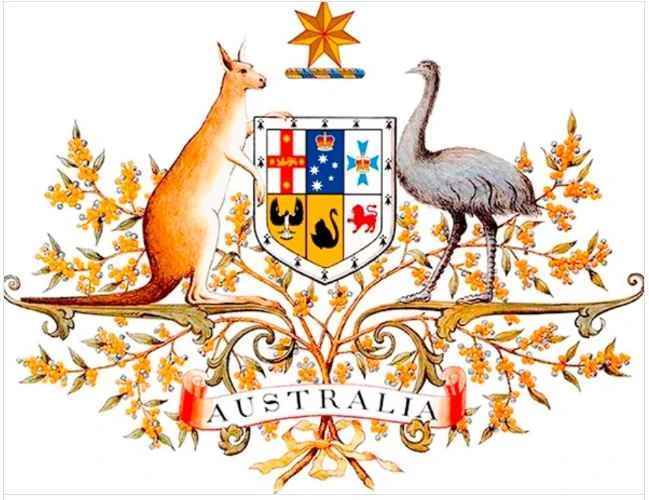
The emu is considered Australia's national bird and is one of the guardian creatures on the Australian coat of arms; its image is inlaid on the coat of arms.