Basic Information
Scientific classification
- Chinese name: Persian cat
- Scientific names: Persian, Chinchilla, Himalayan, Long-haired cat
- Order: Carnivora
- Classification: Carnivora, Felidae, Chordata
Vital signs data
- Body length: 40-50 cm
- Weight: 3.5-7 kg
- Lifespan: 14-15 years
Significant features
Physical characteristics: Persian cats are known for their long, soft fur, round faces, and large eyes. They have round, broad heads, full cheeks, small, pointed ears, short noses, and large, round eyes, usually yellow, but the color can vary depending on their coat color. Persian cats have short, thick limbs, large paws, and short, fluffy tails, giving them an overall air of elegance and nobility.
Personality Traits: Persian cats have a very gentle temperament, enjoy quiet, are friendly towards people, and are easy to get along with. They are generally not easily angered and love learning new things and skills. Persian cats are also very intelligent, with a strong learning ability, and can quickly master various skills. In addition, Persian cats are loyal and affectionate to their owners, enjoy interacting with people, but are not well-suited to overly noisy places.
Distribution and Habitat
Originally from Iran (Persia), they are now mainly distributed globally.
Appearance
Persian cats are known for their long, soft fur, round faces, and large eyes. They have round, broad heads, full cheeks, small, pointed ears, short noses, and large, round eyes, usually yellow, but the color can vary depending on their coat color. Persian cats have short, thick limbs, large paws, and short, fluffy tails, giving them an overall air of elegance and nobility.
Detailed introduction
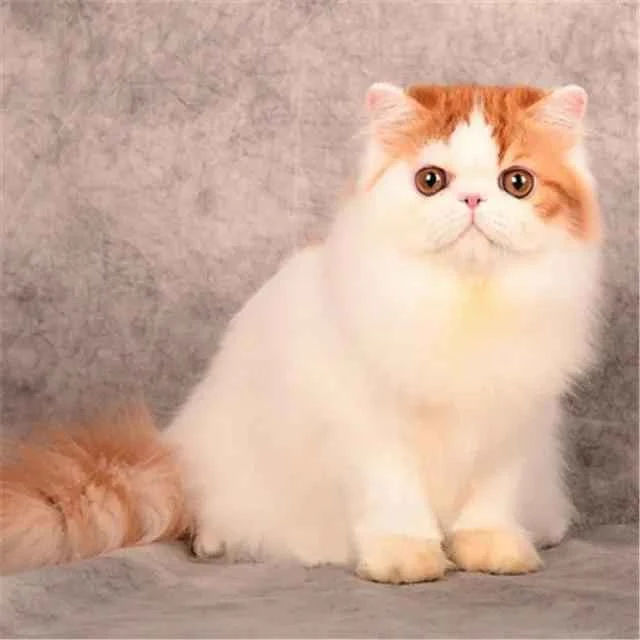
The Persian cat ( scientific name: Persian cat , English name : Persian Cat , Persian longhair ) , also known as Persian, Chinchilla or Himalayan, is one of the oldest cat breeds, and one of the most well-known Persian cats is the Chinchilla . Lifespan is 14-15 years and weight is 3.5-7 kg .
Variety Origin
The Persian cat originated in Khorasan, Persia (present-day Iran), and was introduced to Italy. It first appeared in England in the 16th century. It is generally believed that the Italian traveler Pietro Della Valle was the first to bring the Persian cat to Europe . Based on the native long-haired cats of Afghanistan and the Angora long-haired cats of Turkey, it was selectively bred in England for more than 100 years. Its snow-white, fluffy long fur was regarded as a symbol of nobility and status .
Morphological characteristics
Known as the " Prince of Cats " and " Queen of Cats , " the Persian cat is highly prized for its beauty and adorable appearance. It weighs 3.5-5 kg, is 40-50 cm long, has a tail length of 25-30 cm, and a shoulder height of 30 cm. Its body is robust and rounded, resembling a miniature horse , with short, sturdy limbs and large, rounded paws. The front paws have five toes, and the hind paws have four , with the toes closely spaced . It has a medium-sized body with a large, strong, but not obese, bone structure . Show-quality Persian cats have extremely long, fluffy fur, relatively short legs, a round, well-proportioned head, full cheeks, and a rounded forehead. The ears are small, round, low-set, and wide, with dense fur inside, slightly slanted, and of moderate width at the base. The eyes are large, round, bright, and expressive, often orange, but white and other colored cats may have blue or heterochromatic eyes. Pointed cats typically have deep blue eyes, while golden and silver cats have vibrant green eyes. The nose is short, broad, and well-defined, not exceeding the lower eyelid. The Persian cat has a broad, strong chin and a short, sturdy neck. While the breed wasn't originally designed this way, these features have become increasingly emphasized over time, particularly in North America. An overly flat face can cause numerous health problems, especially respiratory ones. However, breeders now typically select suitable and healthy cats to reduce the risk of respiratory issues in their offspring.
Persian cats come in various colors, with white, tabby, blue, and brown being the most common. Their tails are short and rounded, proportionate to their bodies, and slope over their backs without dragging on the ground when they walk. The tail fur is fluffy.
The Persian cat has a white undercoat, with long, soft, fluffy, and glossy fur covering its entire body. The ears are adorned with long, curly fur, and the fur between the toes is even longer. The fur is soft as cotton and light as silk , with the tips varying from black, silver-grey, or gold depending on the coat color. Black and silver-grey tips are known as " Silver White Chila , " while gold tips are " Golden Chila . " The color gradually fades to white from the tips of the fur to the undercoat .
Persian cats come in five main color families, totaling nearly 88 varieties, including solid colors, gradient colors, smoke colors, spotted colors, and mixed colors. Red and tortoiseshell are relatively rare, making these colors of Persian cats highly prized.
Distribution range
Originally from Persia (present-day Iran), it was introduced to Italy and France after 1620, and then spread throughout Europe . It was introduced to the United States in the late 19th century and quickly became popular throughout the country, and then spread to all parts of the world .
Lifestyle characteristics
Persian cats are known for their gentle and refined temperament, quick reflexes, and understanding nature. They prefer quiet environments and possess a noble and elegant demeanor. Their melodious voices are delicate and beautiful, and they are highly adaptable, earning them the title of "aristocrats among cats ."
Persian cats are naturally quiet and don't like to be noisy. They often prefer to lie down and sleep quietly, and they don't jump around much, nor do they enjoy exercise . They are loyal to their owners, easy to communicate with, and make excellent companion cats. When not in the company of their owners, Persian cats will find their own entertainment and will not cause damage .
Persian cats need to eat at regular times and in the same place. They dislike eating in noisy or brightly lit areas, so owners need to provide a clean and quiet place for them to eat. In addition, kittens often lick themselves to clean themselves, which is part of their daily grooming routine .
Regarding diet, while the exact origin of the Persian cat is not explicitly stated, according to some sources, their diet includes animal organs, fish, shrimp, and mixed grains. For adult cats, food should be chopped, while for kittens, food should be chewed before feeding. Adult cats need to be fed three times a day, with each feeding consisting of approximately 100-200 grams. It's important to pay attention to the combination of their diet to avoid nutritional imbalances caused by a single type of food. These characteristics contribute to the health and growth of Persian cats.
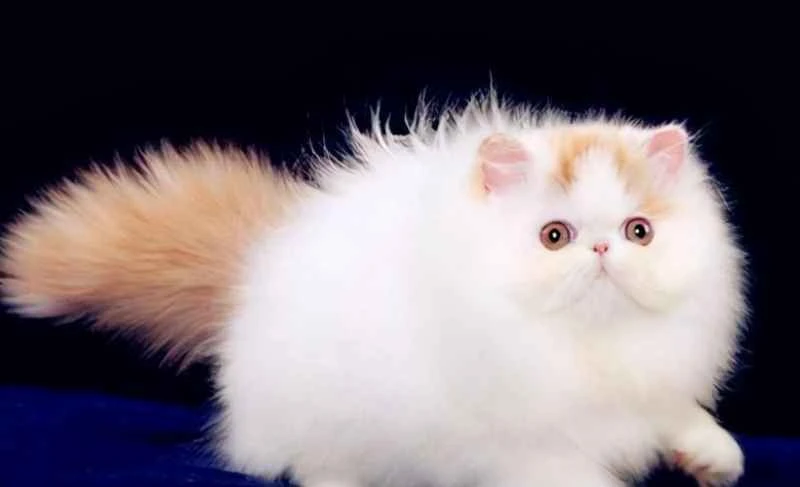
Reproductive frequency: Male cats reach sexual maturity at 10-14 months of age, and female cats at 7-12 months of age. They are seasonally estrous animals, usually starting in September each year , with an estrus cycle of 14 days and a duration of 2-4 days. They generally breed once a year, but Persian cats can have 1-2 litters a year . The number of litters depends on the mother cat's physical condition and postpartum recovery. A strong, well-nourished female cat can give birth three times a year. Persian cats are induced ovulators, with a gestation period of approximately 63 days, and a litter size of 3-5 kittens. The lifespan of a Persian cat is 14-15 years.
Breeding Precautions :
During a Persian cat's pregnancy, owners need to provide special dietary management, especially in the mid-to-late stages of pregnancy. They should prepare sufficient, nutritious food, such as lean meat and fish (protein-rich foods), and supplement with calcium appropriately. At the same time, reduce the intake of grain-based carbohydrates to prevent the Persian cat from becoming obese, which could lead to dystocia (difficult labor) .
When mating, choose purebred cats of the same breed to ensure the purity of the offspring's bloodline. For inexperienced female cats, human assistance may be needed to restrain them and ensure a smooth mating process .
Breeding Management: As the Persian cat approaches its due date, owners should help prepare for childbirth, including choosing a quiet and comfortable birthing location and preparing necessary tools such as a birthing box and scissors. During the birthing process, maintain a quiet environment and avoid disturbing the cat to ensure the safety of both mother and kittens.
Health and Nursing :
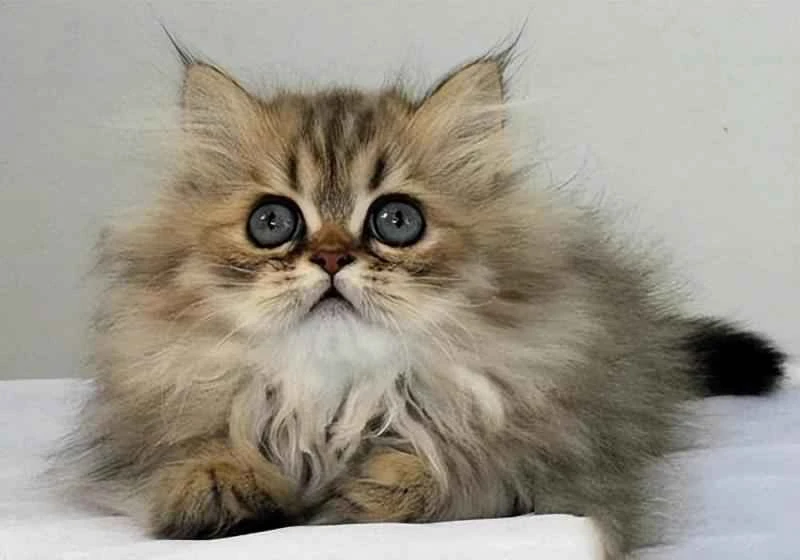
Persian cats are not heat-tolerant because of their dense and long fur, so special care needs to be taken to prevent them from getting too hot in the summer. In winter, they need to be kept warm .
Persian cats need regular grooming to keep their fur dry and clean, reducing the risk of skin diseases and parasite infections. They require adequate nutrition and appropriate exercise to maintain their health .
Feeding Instructions :
Persian cats have relatively weak digestive systems, so care must be taken when feeding them to avoid causing gastrointestinal discomfort. It is recommended to choose low-salt, easily digestible cat food and feed them at regular times and in measured amounts .
Persian cats are prone to tear stains and need regular eye cleaning to reduce eye discharge and tear stains .
In conclusion, Persian cats are loved not only for their unique appearance and gentle temperament, but also for their special health and care needs, which owners must pay special attention to to ensure they grow up healthy and become loyal family companions .
Disease prevention and control
Persian cats can pass on polycystic kidney disease to their offspring through a single dominant gene. Approximately 36%-49% of Persian cats and related breeds worldwide suffer from this disease, which has a very high mortality rate. Studies have found that the prevalence of polycystic kidney disease in Persian cats and related breeds is 36% , while the prevalence in other breeds is only 4.2% .
This disease causes cysts to form in the proximal and distal tubules of the Persian cat's kidneys. These cysts enlarge over time, compressing the kidneys and surrounding tissues, leading to renal ischemia, structural damage, kidney cell death, and a further reduction in the number of glomeruli. Ultimately, this results in glomerular sclerosis, tubular atrophy, interstitial fibrosis, and kidney failure. In advanced stages, cysts may even appear in the liver, pancreas, and uterus, often leading to hypertension, uremia, and ultimately death .