Basic Information
Scientific classification
- Chinese name: Misaki acornworm
- Scientific name: Balanoglossus misakiensis, stigmata, jade hook
- Classification: Hemichordates
- Family and genus: Asteriformes, Asteridae, Asteriformes
Vital signs data
- Body length: 228-545 mm
- weight:
- life:
Significant features
The *Mitsubodon spp.* has a strong regenerative ability; the anterior part of the worm, which has a snout, collar, and gills, can regenerate the posterior organs to restore the complete individual.
Distribution and Habitat
It is distributed in Shandong and Guangxi provinces in China. It is also found in Japan. It inhabits the intertidal zone, burrowing into sandy or muddy bottoms.
Appearance
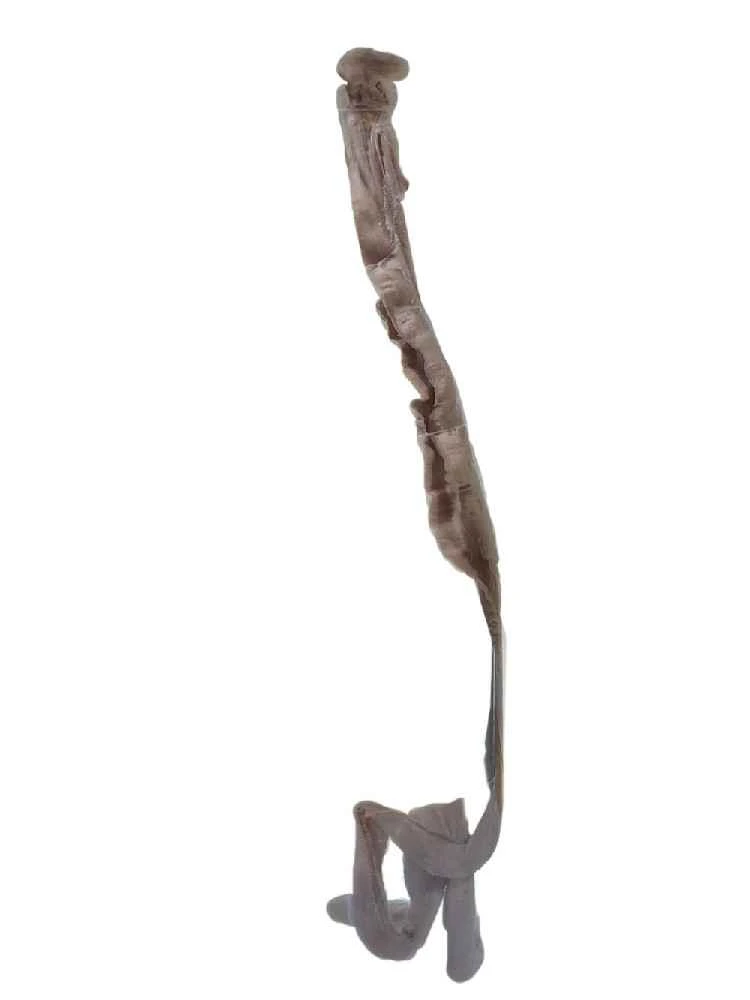
The snout is subconical, orange-yellow, with a deep longitudinal groove down the center of the back. The collar is cylindrical, with numerous longitudinal folds and distinct transverse bands; the collar groove is pale yellow, with a deep orange-red transverse band at the rear. The genital wings are well-developed; females are grayish-brown, while males are egg-yolk yellow. The trunk has distinct rings. The liver sacs are arranged in two rows. The tail region has two longitudinal stripes running along its dorsal surface.
Detailed introduction
*Balanoglossus misakiensis* is a small, intestinal gill worm found in coastal areas of Japan and China, ranging in number from the Yellow Sea to the South my country Sea. It belongs to the genus *Balanoglossus* in the family Balanoglossidae.
The *Mitsubaki* stigmata has a strong regenerative ability; the anterior part of the worm, which includes the snout, collar, and gills, can regenerate the posterior organs to restore a complete individual. *Mitsubaki* stigmata mainly lives in fine sandy and muddy sandy beaches in the mid-tide and low-tide zones of the coast.
Acorn worms are more abundant in China than in any other country in the world. Because they are coastal intertidal species, they are easily damaged by human activities such as production, pollution, and tourism. For example, the mudflats of Cangkou, Nügukou, and Huangdao in Jiaozhou Bay, which have historically been rich in acorn worms, have become difficult to find in recent years due to pollution.