Basic Information
Scientific classification
- Chinese name: Mountain Broomtail Pompadour
- Scientific name: Trichosurus cunninghami
- Classification: Rodentia
- Family: Possumidae; Genus: Possum pumilum
Vital signs data
- Body length: Adults are about 81–93 cm long (including tail), with a long and bushy tail.
- Weight: Adult weight is mostly in the range of about 2.5–4.5 kg, with considerable differences between individuals.
- Lifespan: Individuals in the wild can live for at least 12 years, which is considered a relatively "long-lived" type among marsupials.
Significant features
Nocturnal, semi-arboreal forest marsupials often live in tree cavities; their diet includes leaves and fruits, as well as fungi and lichens.
Distribution and Habitat
It is distributed in southeastern Australia (from Victoria to central Queensland), inhabiting moist sclerophyllous forests and other forest types, relying on tree cavities and mature stands, and is also found in forest edges and fragmented woodlands.
Appearance
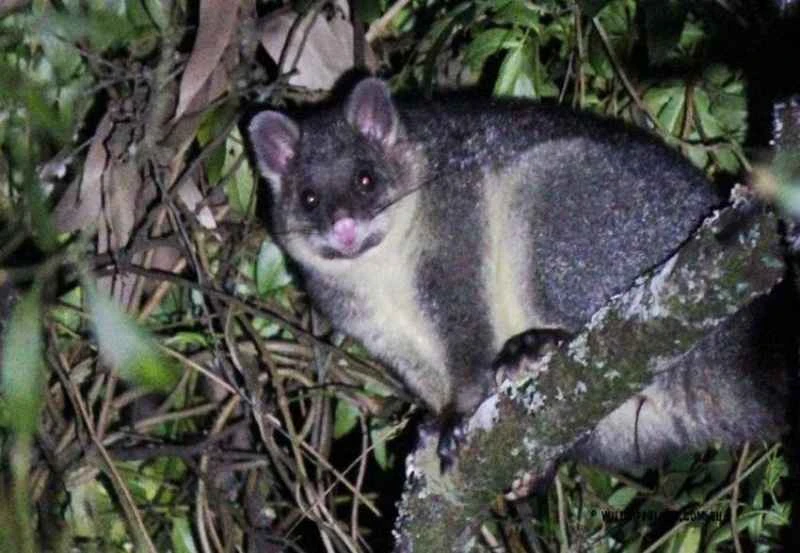
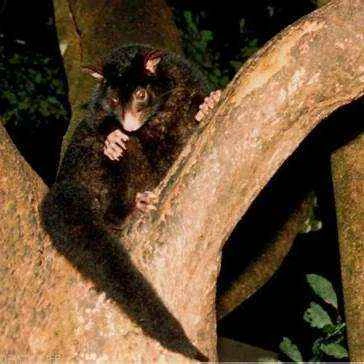
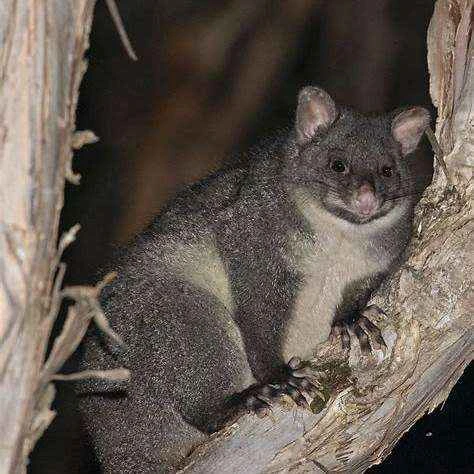
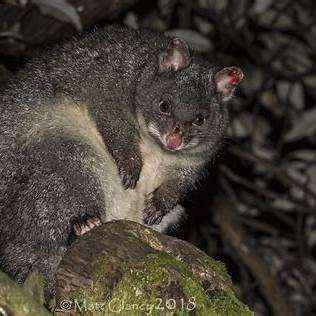
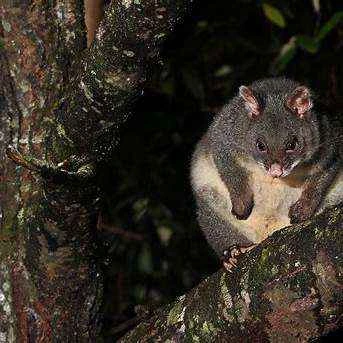
The fur is dense, with the back mostly light grayish-brown to grayish-brown and the belly even lighter; the tail is long and bushy and dark gray, with well-developed claws that are good for climbing, and there is no obvious difference in appearance between males and females.
Detailed introduction
The Mountain Brushtail Possum, also known as the Southern Bobuck, is a marsupial mammal that lives in the forests of southeastern Australia. It is nocturnal, foraging on the ground and adept at climbing tree trunks and branches, while resting during the day in secluded places such as tree hollows.
Compared to the common brushtail possum, which is adapted to urban environments, the mountain brushtail possum relies more on stable forest habitats. They primarily feed on plant matter, especially acacia leaves, but also consume lichens, buds, fruits, and fungi; therefore, in forest ecosystems they are not only leaf-eaters but may also influence the relationship between understory plants and fungal communities through their fungal diet.
Classification and nomenclature
The mountain broomtail possum belongs to the order Diprotodontia, family Phalangeridae, and genus Trichosurus . Its scientific name is Trichosurus cunninghami . In taxonomic history, it was not until the early 2000s that it was generally described and discussed as a separate species, and it is adjacent to the closely related short-eared possum ( T. caninus ) in terms of morphology and distribution.
Appearance features
Adults are medium to large in size, with dense fur. The back is mostly light grayish-brown to grayish-brown, while the belly is lighter in color. The tail is long and bushy, usually dark gray, with even denser fur. The head is rounded and blunt, the ears are relatively small, and the eyes reflect light clearly at night. The limbs are powerful, with well-developed claws on the fingers and toes, which facilitate climbing and grasping bark. There is no obvious difference in appearance between males and females.
Distribution range and habitat
They are mainly distributed in southeastern Australia, extending from Victoria to central Queensland. Typical habitats include wet sclerophyll forests, but they can also be found on forest edges and in more fragmented woodlands. During the day, they mostly rest in "high nests" such as tree cavities or artificial nest boxes, and some individuals will also briefly hide in dense ground vegetation.
Lifestyle Habits and Behaviors
Mountain broomtail possums are nocturnal animals, spending their days in their dens and venturing out to forage at night. Many individuals remain within relatively fixed, small areas and use multiple den sites for extended periods; some populations exhibit stable pairings, with partners frequently sharing dens during the breeding season.
feeding habits
Their diet is primarily plant-based, mainly consisting of acacia leaves, buds, fruits, and bark, as well as lichens and fungi. The composition of their diet varies with the season and forest stand type.
Reproduction and life cycle
They typically breed once a year, with most females giving birth to one cub per year. The cub stays in the pouch for about 6 months, after which it rides on its mother's back for 1–2 months, continuing to learn foraging and movement. They have a relatively long lifespan, with wild individuals surviving at least 12 years.
Relationship with humans
In some areas, mountain broomtail possums venture into plantations or forest edges to forage, and are occasionally considered "forest pests." However, from an ecological perspective, they rely on resources such as mature stands and hollow trees, making the structural protection of forests crucial for the survival of their populations.
Protecting the status quo and threats
Globally, the mountain brushtail possum is assessed as Least Concern (LC) by the IUCN, but this does not mean it is without pressure. For populations in many regions, habitat fragmentation due to logging and land-use change, reduction of hollow trees, and the risk of invasive predators due to forest marginalization can all contribute to localized population declines. Conservation priorities typically include: preserving old forests and hollow trees, maintaining forest connectivity, and establishing nest boxes and buffer zones in managed forests.
Frequently Asked Questions
Q1: What is the difference between the mountain brushtail possum and the common brushtail possum?
Both belong to the genus *Pseudococcus*, but the mountain *Pseudococcus* prefers humid forest environments and is not as common in cities and suburbs as the common *Pseudococcus*; they also differ in distribution range and some morphological characteristics.
Q2: Where do they live during the day?
They usually rest in hidden places such as tree holes, crevices in fallen logs, or artificial nest boxes, and sometimes they will temporarily hide in dense ground vegetation.
Q3: What do they mainly eat?
Their diet is mainly plant-based, with common foods including acacia leaves, buds, fruits, lichens, and fungi. Their diet varies with the seasons.
Q4: Are they endangered animals?
Globally, it is assessed as Least Concern (LC), but local areas may still be affected by factors such as logging, habitat fragmentation, and the reduction of hollow trees. Therefore, the protection of forest structure and connectivity is important.