Basic Information
Scientific classification
- Chinese name: Foxbat
- Scientific name: Pteropus: flying foxes
- Order: Chiroptera
- Family and genus: Pteropodidae, Pteropoda
Vital signs data
- Body length: Body size varies greatly depending on the species, with head and body length typically around 15–30 cm and wingspan ranging from about 0.9–1.7 meters.
- Weight: mostly from several hundred grams to over 1 kilogram; large species can approach or exceed 1 kilogram (varies by species, sex and season).
- Lifespan: Typically up to 10–20 years; some large species may live longer under favorable conditions.
Significant features
A general term for large fruit bats, which rely mainly on sight and smell to forage at night; their main diet consists of fruits, nectar and pollen, and they are key seed dispersers and nocturnal pollinators.
Distribution and Habitat
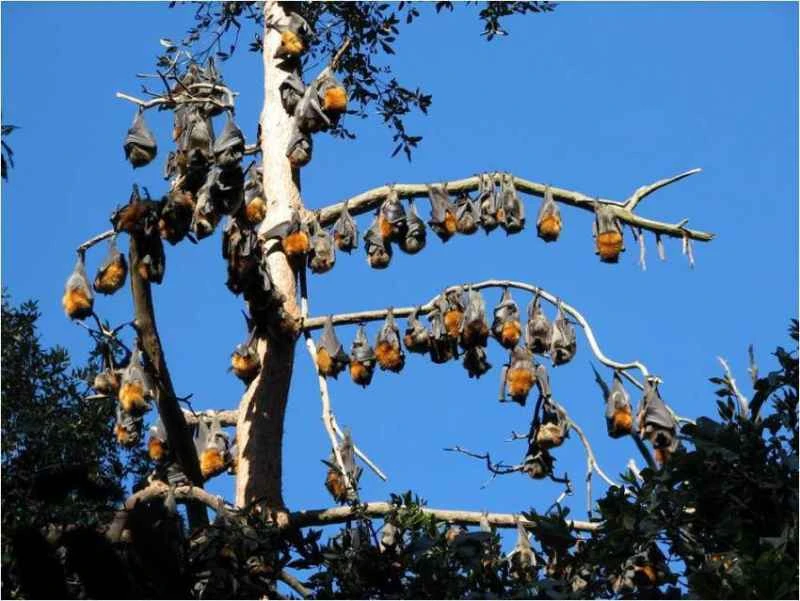
They are widely distributed in tropical and subtropical forests, mangroves, coastal woodlands, and island environments, often forming large diurnal habitat communities on tall trees.
Appearance
Its face resembles a fox, with large eyes and a pointed snout. Its fur is mostly dark brown or blackish-brown. It has well-developed wing membranes and a large wingspan, making it suitable for long-distance flight. Its hind limbs have claws, allowing it to hang upside down and live in groups.
Detailed introduction
Flying foxes are a general term for a group of relatively large fruit bats, most typically represented by species in the genus * Pteropus *. They have fox-like pointed snouts, large eyes, and furry faces, leading many to call them "flying foxes." Unlike most small bats that primarily rely on echolocation, flying foxes depend on their excellent eyesight and sense of smell to find food at night. Their main diet consists of fruits, nectar, and pollen, making them important seed dispersers and key pollinators in tropical and subtropical ecosystems.
Flying foxes typically roost in large groups high in the treetops during the day, forming roosts ranging in size from dozens to hundreds of thousands. At dusk, they leave their nests like "black clouds" to forage, sometimes flying tens of kilometers or even further in a single night. Due to their ecological value in forest regeneration, island plant reproduction, and flowering plant fruit setting, flying foxes are often considered "ecosystem engineers." However, in some areas, they also conflict with orchards and face multiple pressures, including habitat loss, hunting, and extreme weather.
Classification and nomenclature
"Flying fox" is a common term that usually refers to the larger fruit bats in the family Pteropodidae, especially a series of species in the genus Pteropus . They belong to the class Mammalia, order Chiroptera, and family Pteropodidae. In different regions, the English term "flying fox" may also refer to large fruit bats in general.
Appearance features
Flying foxes are typically large, with a head-body length of about 15–30 cm and a wingspan of 0.9–1.7 meters (varying greatly among species). Their body color ranges from dark brown and blackish-brown to golden brown, with many species having a lighter "cape" color on their neck and shoulders. They have long muzzles, large eyes, and relatively small and simple ears, giving them an overall appearance more like a small "canine face."
The wings are made of a membrane formed by the elongation of the forelimb phalanges, and flight is more like a combination of "gliding and flapping," suitable for long-distance cruising. The hind limbs have claws, which can be used to hang upside down or grasp branches; some species will use the wing membrane to wrap the young around their chest and carry them.
Distribution range and habitat
Flying foxes are widely distributed in parts of Africa, South and Southeast Asia, northern and eastern Australia, and numerous islands in the Pacific and Indian Oceans. They prefer tropical and subtropical forests, mangroves, coastal woodlands, river valley forests, forest edges rich in fruit trees, and agricultural landscapes. Urban green spaces, botanical gardens, and parks with large groves of trees may also serve as their daytime habitats.
Key habitat features include: tall trees (suitable for gregarious hanging), nearby stable flowering and fruiting resources, and relatively safe, low-disturbance habitats. Island populations are often more sensitive to storms and habitat destruction.
Lifestyle Habits and Behaviors
Most flying foxes are nocturnal, resting in groups in trees during the day. The group maintains order through calls, scents, and physical contact. After leaving the nest at dusk, they travel along fixed flight corridors to fruit trees or flowering trees, foraging in sections at night and returning to their roost before dawn.
They exhibit strong migratory and foraging flexibility: when certain tree species are in full bloom or bearing fruit, flying foxes may engage in seasonal migrations within a region, "following the flowers/fruits." Larger colonies often indicate abundant surrounding resources, but also a greater likelihood of visible conflicts with humans (noise, feces, orchard foraging, etc.).
feeding habits
Their diet consists mainly of ripe fruit, nectar, and pollen, but they also feed on tender leaves or a small number of insects (usually not their main food source). When feeding on fruit, they often crush the pulp and spit out the fibrous residue, or carry the fruit away to feed at a distance, thus carrying seeds to places farther from the mother tree. When feeding on nectar, their faces and chests are easily covered with pollen, completing pollination by the time they fly to the next tree.
Reproduction and life cycle
The breeding rhythms of flying foxes often coincide with the local rainy season and flowering and fruiting season. Most species give birth to one offspring per litter. After birth, the offspring will attach itself to its mother for a period of time, and then either nurse its young in the roost or hang independently, continuing to nurse its young. The young require a relatively long learning period to develop, including recognizing food, flight routes, and social interaction within the group.
Lifespan varies depending on species and environment, typically reaching 10–20 years, with some large species potentially living longer under favorable conditions. Low reproductive rates mean that population recovery is slow once a large number of adult individuals die.
Relationship with humans
Flying foxes make significant contributions to the ecosystem: they disperse seeds, aid in forest regeneration, and pollinate many nocturnal flowering plants. On the other hand, they can also prey on orchard crops, causing economic losses and management conflicts. In some areas, they are also hunted for food or driven away due to misunderstandings.
More rational approaches to coexistence include: using orchard protective netting (choosing specifications that are safer for wildlife), implementing sound and light deterrence during critical seasons while avoiding harm, preserving natural food sources in the wild, and properly separating high-intensity human activities from large-scale habitats.
Protecting the status quo and threats
There is no single IUCN classification for flying foxes as a group: different species range from Least Concern to Critically Endangered. Overall, flying foxes in many regions face similar pressures: habitat loss and fragmentation, illegal hunting, entanglement in fishing/orchard nets, and mass mortality caused by climate events such as extreme heat, drought, and severe storms.
Key conservation measures typically include: preserving and restoring habitat trees and forest corridors, promoting safety netting in orchards to reduce entanglement, reducing hunting and disturbance, strengthening monitoring of small island populations, and mitigating risks during heat events through habitat shading and water management.
Frequently Asked Questions
Q1: Do flying foxes use echolocation?
Most flying foxes rely primarily on sight and smell to find food; a few fruit bats may have simpler echolocation abilities, but overall they do not rely on echolocation as much as insectivorous bats.
Q2: Why are flying foxes so important to the forest?
They disperse seeds and pollinate many night-flowering plants, promoting forest regeneration and maintaining plant diversity, which is especially important for island ecosystems.
Q3: Do flying foxes attack people?
Generally not. They usually avoid contact with humans. If grabbed or startled, they may bite defensively, so do not touch wild individuals with your bare hands.
Q4: How can orchards minimize losses without harming flying foxes?
Compliant and safer orchard protective netting can be used, non-injury repellent measures can be adopted during critical seasons, and surrounding wild food sources can be preserved to reduce the dependence of flying foxes on orchards.


