Basic Information
Scientific classification
- Chinese name: Dingo
- Scientific name: Canis lupus dingo (also often written as Canis familiaris dingo)
- Order: Carnivora
- Family and genus: Canidae, Canis
Vital signs data
- Body length: Adults typically have a shoulder height of about 45–60 cm, a head and body length of about 85–120 cm, and a tail length of about 30–40 cm.
- Weight: Most weigh around 13–20 kg, with males usually being larger and heavier; there are significant differences in body size between different regions.
- Lifespan: Common lifespan in the wild is about 5–10 years, which is greatly affected by food, disease, human management and road risks.
Significant features
The Australian wild canid is highly adaptable, an opportunistic predator and scavenger, and an important predator in the ecosystem. It also often conflicts with livestock farming. In some areas, it faces the risk of "purebred" gene dilution due to crossbreeding with domestic dogs.
Distribution and Habitat
It is widely distributed in a variety of environments across the Australian continent, from inland semi-arid scrubland and grassland to tropical savanna and temperate forest edges, and prefers areas with secluded resting spots and a stable supply of prey.
Appearance
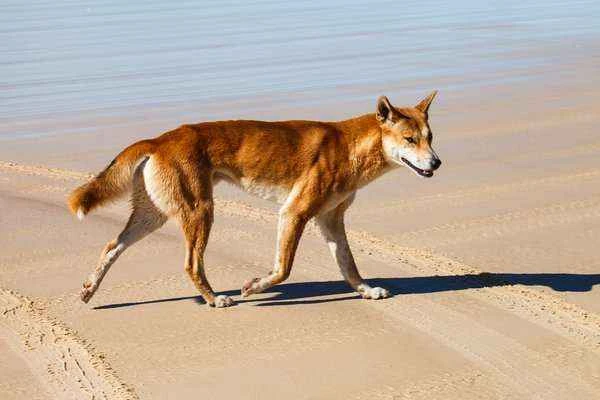
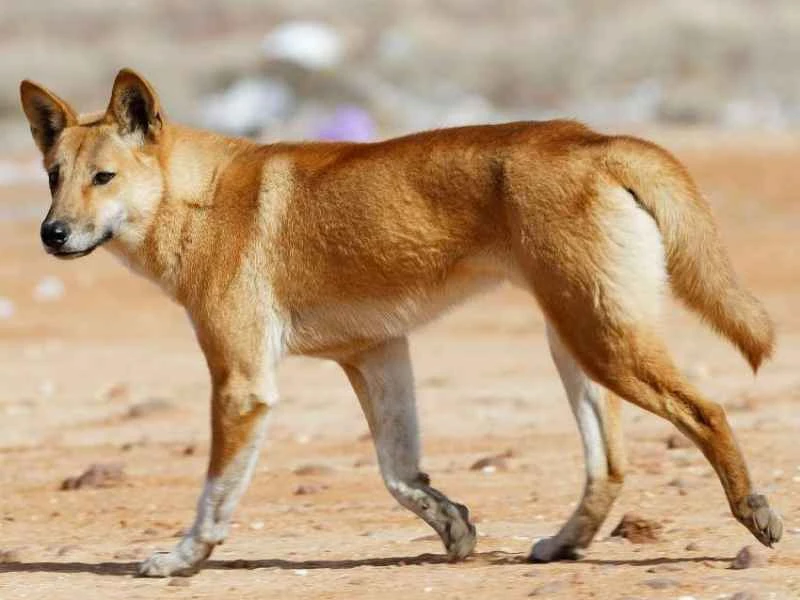
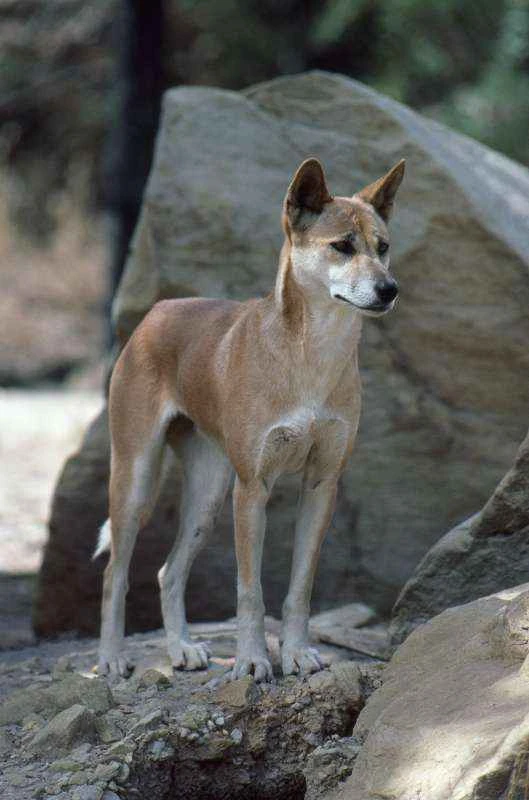
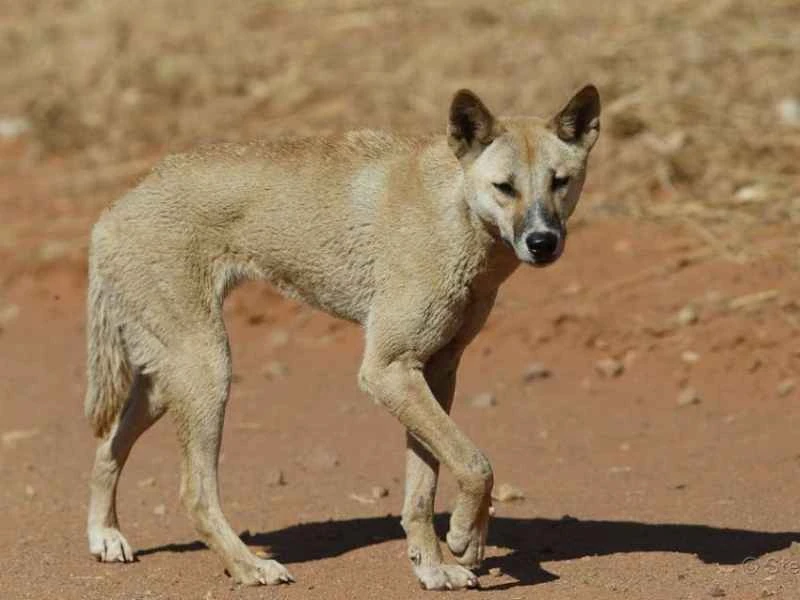
Medium-sized, with long limbs, a wedge-shaped head, erect ears, and a bushy, drooping tail; the most common coat color is sandy yellow to reddish brown, with a lighter belly, and black, white, or mottled individuals can also be seen; the gait is light and the endurance is strong.
Detailed introduction
The dingo is one of Australia's most iconic canids, with an appearance intermediate between a domestic dog and a wolf. It is typically sandy yellow to reddish-brown, but black, white, or spotted individuals can also exist. They are highly adapted apex/sub-apex predators and opportunistic scavengers, found from the arid outback to the tropical north and temperate forest edges. For the Australian ecosystem, dingos may regulate some prey populations through predation, but they also conflict with human livestock farming, thus existing in a state of both ecological value and management controversy.
Note: The taxonomic status of wild dogs varies across different sources: common spellings include *Canis lupus dingo* (a subspecies/lineage of gray wolf) or *Canis familiaris dingo* (a type/subspecies of domestic dog). On this species page, we use the most common scientific name spelling, *Canis lupus dingo* , and also provide another common usage in the "Scientific Name" field for consistent import and subsequent adjustments within the site.
Classification and nomenclature
The dingo belongs to the class Mammalia, order Carnivora, family Canidae, and genus Canis . The English name "Dingo" is the common name for this group of wild dogs in Australia. They are believed to have entered the Australian continent thousands of years ago with human activity and developed relatively stable morphological and behavioral characteristics through long-term survival in the wild.
It is important to note that there is gene exchange between wild dogs, domestic dogs, and mixed-breed dogs, and wild dog populations in some areas may contain varying degrees of domestic dog ancestry. This can affect appearance, size, reproductive rhythms, and behavioral characteristics, making the definition and protection of "purebred wild dogs" more complex in certain regions.
Appearance features
The dingo is a medium-sized dog with a well-proportioned body, long limbs, a narrow chest, a wedge-shaped head, erect ears, and a bushy, drooping tail. Adults typically stand 45–60 cm tall at the shoulder, with a head and body length of 85–120 cm and a tail length of 30–40 cm. They usually weigh around 13–20 kg, with males typically being larger and heavier.
The most common coat colors are sandy yellow, golden yellow, or reddish-brown, with lighter colors on the belly and inner sides of the limbs; black, white, or white-spotted individuals may also exist. Their coats are thick, adapted to environments with large temperature differences between day and night. Compared to many domestic dogs, wild dogs have longer muzzles, a more "wild" physique, and move with a light gait and great stamina.
Distribution range and habitat
Dingoes are widely distributed across much of the Australian continent, particularly in the inland semi-arid regions, the tropical north, and areas far from densely populated cities. They utilize a variety of habitats, including grasslands, scrublands, savannas, eucalyptus forest edges, desert edges, and mountain scrublands. Generally, dingoes prefer areas with secluded resting spots (scrublands, caves, ravines) and a stable supply of prey.
In some areas, fencing, roads, and land use changes can affect their range of activity and migration routes; the probability of hybridization with domestic dogs is also often related to the distance from human settlements.
Lifestyle Habits and Behaviors
Dingoes are typically more active at dawn, dusk, or night, resting in shady areas during the day. They can hunt alone or form small packs (similar to "family packs") to cooperate in hunting and defending their territory. Pack structure often revolves around breeding pairs and their offspring, communicating through vocalizations, scent marking, and body language.
Their calls are characterized by a mixture of howls, whimpers, and barks, but wild dogs bark less continuously than most domestic dogs. Territorial ranges vary depending on prey abundance, water availability, and human disturbance; footprints and feces are often used to mark routes and key locations.
feeding habits
Wild dogs are opportunistic predators and scavengers with a very broad diet. Common prey includes kangaroos, wallabies, rabbits, rodents, birds, reptiles, and some large invertebrates; they may also feed on fish and carrion in coastal or river valley areas. They adapt their strategies to environmental conditions: they hunt alone when the prey is small, and may cooperate in groups when the prey is large or well-defended.
In human-inhabited landscapes, wild dogs can also attack livestock (especially lambs, goats, and calves), which is a major cause of human-wildlife conflict. Reducing conflict often requires comprehensive measures, not just simple driving them away.
Reproduction and life cycle
Dingoes typically have a pronounced seasonal breeding pattern, mating and giving birth at relatively fixed times throughout the year (the exact timing varies slightly depending on the climate). The gestation period is approximately two months, with litters usually consisting of 4–6 pups. After birth, the pups are cared for by their mother in a burrow or secluded den, and other members of the pack may also participate in caring for the young and bringing back food.
Puppies are gradually weaned and learn hunting skills within a few months. In their teens, they will spread out to find new territories or breeding opportunities. Their lifespan in the wild is typically about 5–10 years, greatly affected by food, disease, human management, and road risks; a few individuals may live longer.
Relationship with humans
Dingoes hold a unique place in Australian culture and history, serving as part of Indigenous cultural narratives and the ecological landscape, while also having a complex relationship with modern society and livestock farming. They may help control the populations of some small to medium-sized prey or invasive species, but they can also cause losses to livestock.
When engaging in outdoor activities or camping, avoiding feeding animals, properly storing food and trash, and keeping an eye on pets and livestock at night can help reduce the chances of stray dogs approaching human campsites.
Protecting the status quo and threats
Wild dogs are not typically considered "globally endangered" and are often not assessed as a separate species on international conservation lists (because they are often taxonomically regarded as a subspecies/type of wolf or domestic dog). However, in some areas, wild dogs remain a concern for their "genetic integrity" and regional populations as key predators in native ecosystems.
Key pressures include: genetic dilution of "purebred" wild dogs due to crossbreeding with domestic dogs; habitat fragmentation and roadside deaths; localized population fluctuations caused by management measures such as poison baiting/killing; and the ecological ripple effects of changes in prey composition. The key to management and conservation lies in: maintaining a relatively stable wild dog population structure in important nature reserves, reducing uncontrolled contact with domestic dogs, and promoting more refined risk control programs in conflict zones.
Frequently Asked Questions
Q1: Is the dingo a wolf or a domestic dog?
There are differing opinions on its classification: some sources use *Canis lupus dingo* (a subspecies/lineage of wolf), while others use *Canis familiaris dingo* (a type/subspecies of domestic dog). In popular science and management, it is often simply referred to as Dingo.
Q2: Will stray dogs attack people?
In most cases, they will avoid humans, but risks may arise if they are fed, attracted by food, or if people or dogs get too close. Avoid feeding them in the wild or while camping, properly store food and trash, and manage your pets effectively.
Q3: What do dingoes eat?
Their diet is broad, including kangaroos, rabbits, rodents, birds, reptiles, and they also scaveng; in human landscapes, they sometimes attack livestock, which is a major source of conflict.
Q4: What are the main problems they face?
In addition to conflict management, some areas also face problems such as gene dilution, road fatalities, and habitat fragmentation caused by crossbreeding with domestic dogs. Within protected areas, the focus is more on maintaining stable population structures and reducing uncontrolled crossbreeding.


